
Texas freezes H-1B visa hiring across public institutions: Governor says jobs 'should have been filled by Texans'
The freeze signals a tougher approach to how taxpayer-funded institutions recruit foreign professionals, especially as the federal government reviews the programme amid concerns of misuse.
- Jan 28, 2026,
- Updated Jan 28, 2026 7:38 AM IST
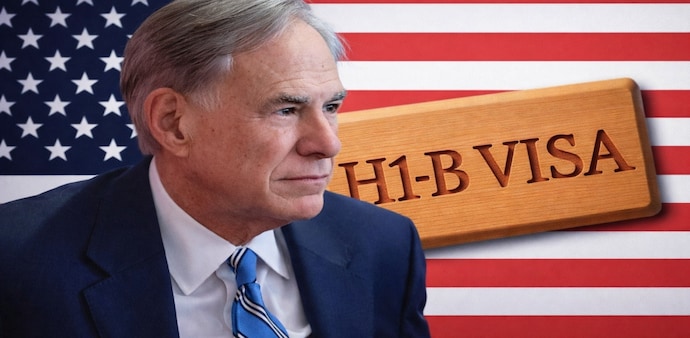
Texas Governor Greg Abbott has moved to shut down new H-1B visa filings across the state’s public system, ordering agencies and state-run universities to stop initiating petitions with immediate effect. The freeze, which Abbott said will remain in place through May 31, 2027, signals a tougher approach to how taxpayer-funded institutions recruit foreign professionals, especially as the federal government reviews the programme amid concerns of misuse.
"In light of recent reports of abuse in the federal H-1B visa programme, and amid the federal government's ongoing review of that programme to ensure American jobs are going to American workers, I am directing all state agencies to immediately freeze new H-1B visa petitions," Abbott said in a letter to agency heads.
The directive follows a state-level enquiry Abbott launched into H-1B usage in Texas public schools, universities, and affiliated institutions.
Why the freeze matters for universities and public hiring
The H-1B system allows US employers to sponsor foreign workers for specialised roles that generally require at least a bachelor’s degree. In Texas, public universities, academic medical centres and some school districts have leaned on the programme to fill gaps in areas like teaching, research and healthcare, jobs that can be hard to staff locally in certain disciplines or locations.
Each year, the programme issues 65,000 visas, with an additional 20,000 reserved for applicants with advanced degrees. Approvals typically cover a three-to-six-year period.
Abbott’s argument: the programme is being used beyond its intent
Abbott said state hiring should first protect opportunities for Texans, particularly when the positions are funded by the public. He also referenced President Donald Trump’s proclamation restricting some categories of non-immigrant workers, saying the H-1B framework was intended to add skills to the US workforce, not displace it.
"Evidence suggests that bad actors have exploited this programme by failing to make good-faith efforts to recruit qualified US workers before seeking to use foreign labour," Abbott said.
He went further, alleging that in some cases companies have removed American employees and replaced them with H-1B workers, “often at lower wages.”
What the new order does, and what agencies must submit next
Under Abbott’s instructions, any state agency led by an official appointed by the governor, as well as any public higher education institution, is barred from filing new H-1B petitions unless it receives written clearance from the Texas Workforce Commission. That restriction stays in force until the end of the Texas Legislature’s 90th Regular Session on May 31, 2027.
Abbott has also directed affected institutions to file a compliance report by March 27, 2026. The submission must spell out how many petitions were filed in 2025, how many visa holders remain under sponsorship, where they come from, what jobs they hold, when their visas expire, and what documentation exists to show recruitment efforts for qualified Texans before foreign hires were pursued.
The Texas Workforce Commission has been asked to issue any operational guidance needed to enforce the freeze.
The wider Trump-era squeeze on H-1B
Abbott’s move comes amid signals from Washington of a stricter visa policy. Last year, President Trump introduced a one-time $100,000 fee for new H-1B applicants as part of a broader second-term immigration push. More than 20 US states challenged the fee in court,S but Texas did not join that lawsuit.
Indian nationals remain the largest group in the H-1B pipeline. In FY 2024, they made up 71 per cent of approvals, with more than 283,000 petitions cleared. But FY 2025 data points to a sharper reshaping of who is benefiting: NFAP and USCIS data released in late 2025 showed approvals for traditional Indian IT services firms falling to a decade-low, down 37 per cent from the previous year.
Texas Governor Greg Abbott has moved to shut down new H-1B visa filings across the state’s public system, ordering agencies and state-run universities to stop initiating petitions with immediate effect. The freeze, which Abbott said will remain in place through May 31, 2027, signals a tougher approach to how taxpayer-funded institutions recruit foreign professionals, especially as the federal government reviews the programme amid concerns of misuse.
"In light of recent reports of abuse in the federal H-1B visa programme, and amid the federal government's ongoing review of that programme to ensure American jobs are going to American workers, I am directing all state agencies to immediately freeze new H-1B visa petitions," Abbott said in a letter to agency heads.
The directive follows a state-level enquiry Abbott launched into H-1B usage in Texas public schools, universities, and affiliated institutions.
Why the freeze matters for universities and public hiring
The H-1B system allows US employers to sponsor foreign workers for specialised roles that generally require at least a bachelor’s degree. In Texas, public universities, academic medical centres and some school districts have leaned on the programme to fill gaps in areas like teaching, research and healthcare, jobs that can be hard to staff locally in certain disciplines or locations.
Each year, the programme issues 65,000 visas, with an additional 20,000 reserved for applicants with advanced degrees. Approvals typically cover a three-to-six-year period.
Abbott’s argument: the programme is being used beyond its intent
Abbott said state hiring should first protect opportunities for Texans, particularly when the positions are funded by the public. He also referenced President Donald Trump’s proclamation restricting some categories of non-immigrant workers, saying the H-1B framework was intended to add skills to the US workforce, not displace it.
"Evidence suggests that bad actors have exploited this programme by failing to make good-faith efforts to recruit qualified US workers before seeking to use foreign labour," Abbott said.
He went further, alleging that in some cases companies have removed American employees and replaced them with H-1B workers, “often at lower wages.”
What the new order does, and what agencies must submit next
Under Abbott’s instructions, any state agency led by an official appointed by the governor, as well as any public higher education institution, is barred from filing new H-1B petitions unless it receives written clearance from the Texas Workforce Commission. That restriction stays in force until the end of the Texas Legislature’s 90th Regular Session on May 31, 2027.
Abbott has also directed affected institutions to file a compliance report by March 27, 2026. The submission must spell out how many petitions were filed in 2025, how many visa holders remain under sponsorship, where they come from, what jobs they hold, when their visas expire, and what documentation exists to show recruitment efforts for qualified Texans before foreign hires were pursued.
The Texas Workforce Commission has been asked to issue any operational guidance needed to enforce the freeze.
The wider Trump-era squeeze on H-1B
Abbott’s move comes amid signals from Washington of a stricter visa policy. Last year, President Trump introduced a one-time $100,000 fee for new H-1B applicants as part of a broader second-term immigration push. More than 20 US states challenged the fee in court,S but Texas did not join that lawsuit.
Indian nationals remain the largest group in the H-1B pipeline. In FY 2024, they made up 71 per cent of approvals, with more than 283,000 petitions cleared. But FY 2025 data points to a sharper reshaping of who is benefiting: NFAP and USCIS data released in late 2025 showed approvals for traditional Indian IT services firms falling to a decade-low, down 37 per cent from the previous year.