
US Birthright citizenship: Legal status of father now key for child’s citizenship, mother's role secondary
Trump’s executive order limits automatic birthright citizenship, traditionally protected under the Fourteenth Amendment, to children with at least one parent who is a U.S. citizen or lawful permanent resident
- Jul 30, 2025,
- Updated Jul 30, 2025 9:50 AM IST
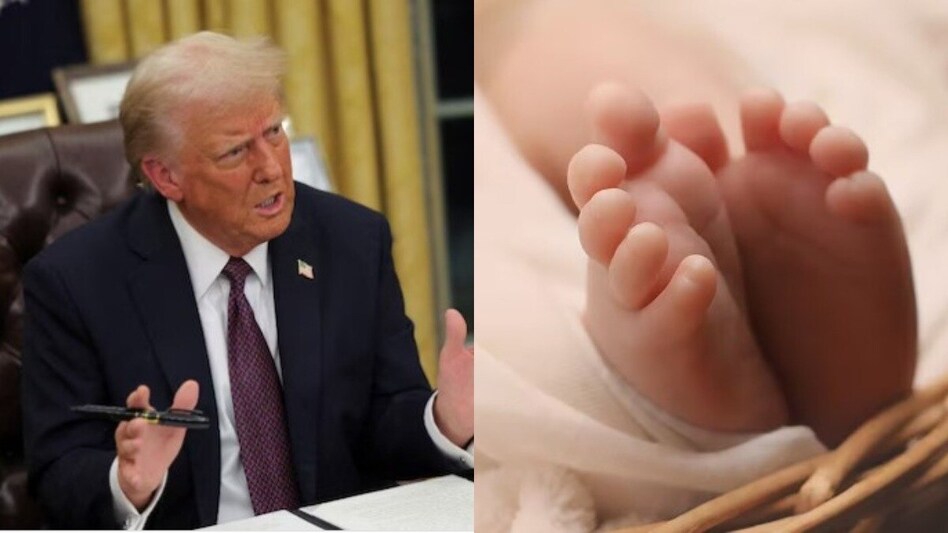
President Donald Trump’s administration is preparing to implement his executive order restricting birthright citizenship, one of the most controversial immigration reforms of his second term, pending a green light from the U.S. Supreme Court.
Trump’s executive order limits automatic birthright citizenship, traditionally protected under the Fourteenth Amendment, to children with at least one parent who is a U.S. citizen or lawful permanent resident. Children born to parents who are in the U.S. unlawfully or on temporary visas would no longer qualify, unless the father holds lawful status.
The Department of State has already released an implementation plan for Executive Order 14160, outlining how the policy would work once enacted.
Under the plan, children born to mothers who are “unlawfully” or “lawfully but temporarily” present in the U.S. would not be granted automatic citizenship unless the father is a U.S. citizen, national, or lawful permanent resident (LPR) at the time of birth.
Passport acceptance agents and adjudicators will now be required to collect original proof of parental citizenship or immigration status to verify the child's eligibility for U.S. citizenship through birth.
The Department of State’s guidance outlines acceptable parental categories that confer citizenship at birth under EO 14160:
-
U.S. citizens and nationals
-
Native Americans born in Canada admitted under INA 289
Advertisement -
Asylees
-
Conditional Permanent Residents
-
Lawful Permanent Residents (LPRs)
-
Refugees
If the mother does not fall into any of these categories, the father’s legal status will determine the child’s eligibility.
The Fourteenth Amendment, however, guarantees that “all persons born or naturalized in the United States, and subject to the jurisdiction thereof, are citizens of the United States.” The order is likely to face immediate legal challenges on constitutional grounds.
The administration is expected to defend the order as a national security measure and a tightening of long-standing interpretations, though critics argue it undercuts constitutional protections and targets vulnerable groups.
President Donald Trump’s administration is preparing to implement his executive order restricting birthright citizenship, one of the most controversial immigration reforms of his second term, pending a green light from the U.S. Supreme Court.
Trump’s executive order limits automatic birthright citizenship, traditionally protected under the Fourteenth Amendment, to children with at least one parent who is a U.S. citizen or lawful permanent resident. Children born to parents who are in the U.S. unlawfully or on temporary visas would no longer qualify, unless the father holds lawful status.
The Department of State has already released an implementation plan for Executive Order 14160, outlining how the policy would work once enacted.
Under the plan, children born to mothers who are “unlawfully” or “lawfully but temporarily” present in the U.S. would not be granted automatic citizenship unless the father is a U.S. citizen, national, or lawful permanent resident (LPR) at the time of birth.
Passport acceptance agents and adjudicators will now be required to collect original proof of parental citizenship or immigration status to verify the child's eligibility for U.S. citizenship through birth.
The Department of State’s guidance outlines acceptable parental categories that confer citizenship at birth under EO 14160:
-
U.S. citizens and nationals
-
Native Americans born in Canada admitted under INA 289
Advertisement -
Asylees
-
Conditional Permanent Residents
-
Lawful Permanent Residents (LPRs)
-
Refugees
If the mother does not fall into any of these categories, the father’s legal status will determine the child’s eligibility.
The Fourteenth Amendment, however, guarantees that “all persons born or naturalized in the United States, and subject to the jurisdiction thereof, are citizens of the United States.” The order is likely to face immediate legal challenges on constitutional grounds.
The administration is expected to defend the order as a national security measure and a tightening of long-standing interpretations, though critics argue it undercuts constitutional protections and targets vulnerable groups.