
US Travel warning: H-1B visa holders abroad must return by midnight Sept 21 or risk paying $100k
Under the new proclamation, any H-1B visa holder seeking to enter the U.S. after 12:01 am EDT (9:30 am IST) on Sunday must ensure that their employer has paid the $100,000 annual fee
- Sep 20, 2025,
- Updated Sep 20, 2025 4:06 PM IST
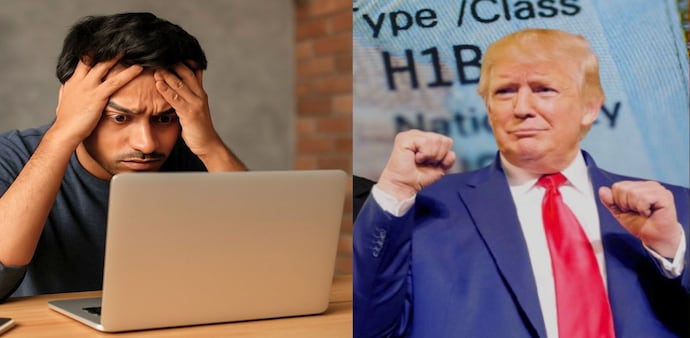
In a move that will affect thousands of foreign workers, the U.S. government has imposed a new travel ban on H-1B visa holders, which comes into effect on Sunday, September 21. The new requirement, part of an executive proclamation signed by President Donald Trump, mandates that employers pay a $100,000 annual fee for each H-1B worker, an amount more than 66 times higher than the previous administrative fee.
The policy is designed to curb what the administration calls the “systemic abuse” of the H-1B program but is likely to have significant ramifications for Indian workers, who make up 72% of H-1B visa holders.
New H-1B rule: Workers face $100,000 annual fee or be denied entry to the U.S.
Under the new proclamation, any H-1B visa holder seeking to enter the U.S. after 12:01 am EDT (9:30 am IST) on Sunday must ensure that their employer has paid the $100,000 annual fee. The fee applies not only to new H-1B applicants but also to extensions of existing visas. This steep price tag has led to concerns about how it will affect businesses, particularly in sectors like technology, which rely heavily on foreign skilled workers.
The travel ban and fee requirement will remain in effect for 12 months, though it could be extended if federal immigration agencies recommend doing so. Notably, the new policy allows the Department of Homeland Security to grant exceptions for specific foreign nationals or industries where H-1B workers are deemed to be in the “national interest” and pose no threat to U.S. security or welfare.
With the September 21 deadline lying hardly a day later, many H-1B visa holders, especially those currently in India, are racing against time to return to the U.S. before the ban is enforced.
Eminent New York-based immigration attorney Cyrus Mehta warned on X that “H-1B holders who are out of the U.S. on business or vacation will get stranded unless they get in before midnight September 21.” Mehta pointed out that those still in India may already have missed the cutoff, as “there is no way a direct flight from India will get in time.”
Tech giants brace for impact as Trump’s $100K H-1B fee takes effect
This announcement has sparked warnings from big tech companies, urging their H-1B workers to either stay in the U.S. or return quickly before the deadline. The sharp rise in costs from the previous $1,500 fee to $100,000 annually per worker has raised alarm, with many companies now facing additional financial pressure. “Companies hiring skilled foreign workers will now have to pay $100,000 annually for each H-1B visa,” said U.S. Commerce Secretary Howard Lutnick, adding that the full details are still being considered.
The change comes amid ongoing concerns that the H-1B system has been exploited, but critics argue that it could also hurt U.S. innovation by limiting the ability of tech firms to hire the talent they need.
In a move that will affect thousands of foreign workers, the U.S. government has imposed a new travel ban on H-1B visa holders, which comes into effect on Sunday, September 21. The new requirement, part of an executive proclamation signed by President Donald Trump, mandates that employers pay a $100,000 annual fee for each H-1B worker, an amount more than 66 times higher than the previous administrative fee.
The policy is designed to curb what the administration calls the “systemic abuse” of the H-1B program but is likely to have significant ramifications for Indian workers, who make up 72% of H-1B visa holders.
New H-1B rule: Workers face $100,000 annual fee or be denied entry to the U.S.
Under the new proclamation, any H-1B visa holder seeking to enter the U.S. after 12:01 am EDT (9:30 am IST) on Sunday must ensure that their employer has paid the $100,000 annual fee. The fee applies not only to new H-1B applicants but also to extensions of existing visas. This steep price tag has led to concerns about how it will affect businesses, particularly in sectors like technology, which rely heavily on foreign skilled workers.
The travel ban and fee requirement will remain in effect for 12 months, though it could be extended if federal immigration agencies recommend doing so. Notably, the new policy allows the Department of Homeland Security to grant exceptions for specific foreign nationals or industries where H-1B workers are deemed to be in the “national interest” and pose no threat to U.S. security or welfare.
With the September 21 deadline lying hardly a day later, many H-1B visa holders, especially those currently in India, are racing against time to return to the U.S. before the ban is enforced.
Eminent New York-based immigration attorney Cyrus Mehta warned on X that “H-1B holders who are out of the U.S. on business or vacation will get stranded unless they get in before midnight September 21.” Mehta pointed out that those still in India may already have missed the cutoff, as “there is no way a direct flight from India will get in time.”
Tech giants brace for impact as Trump’s $100K H-1B fee takes effect
This announcement has sparked warnings from big tech companies, urging their H-1B workers to either stay in the U.S. or return quickly before the deadline. The sharp rise in costs from the previous $1,500 fee to $100,000 annually per worker has raised alarm, with many companies now facing additional financial pressure. “Companies hiring skilled foreign workers will now have to pay $100,000 annually for each H-1B visa,” said U.S. Commerce Secretary Howard Lutnick, adding that the full details are still being considered.
The change comes amid ongoing concerns that the H-1B system has been exploited, but critics argue that it could also hurt U.S. innovation by limiting the ability of tech firms to hire the talent they need.