
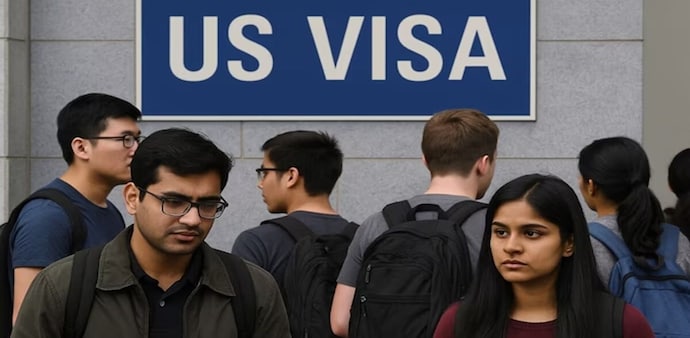
US visa fee rises: Pay $250 security on tourist, student, H-1B visas; Impact on Indians?
Trump’s One Big Beautiful Bill Act, signed on 4 July, introduces a US$250 “Visa Integrity Fee” for every non-immigrant visa class, B-1/B-2, F/M, H-1B, J and others, with only diplomats (A, G) exempt
- Jul 9, 2025,
- Updated Jul 9, 2025 4:05 PM IST
Indian tourists, students and H-1B professionals heading to the United States will soon pay a steep new surcharge. President Donald Trump’s One Big Beautiful Bill Act, signed on 4 July, introduces a US$250 “Visa Integrity Fee” for every non-immigrant visa class, B-1/B-2, F/M, H-1B, J and others, with only diplomats (A, G) exempt.
Pegged to inflation, the levy works like a security deposit and can be refunded only under strict compliance rules.
The law states the fee applies to “any alien issued a non-immigrant visa,” and the Department of Homeland Security will collect it at the moment a visa is issued.
What changes in 2026?
| Fee | Current cost (B-1/B-2) | New cost (from 2026)* |
| Visa application fee | US $185 | US $185 |
| Visa Integrity Fee | — | US $250 |
| I-94 surcharge | — | US $24 |
| ESTA or EVUS (where applicable) | — | US $13 / US $30 |
| Total for Indian tourist visa | US $185 Advertisement | ≈ US $472 |
*Indexed annually to the Consumer Price Index.
The bill also adds:
-
$24 I-94 fee for every arrival.
-
$13 ESTA fee for Visa Waiver travellers.
-
$30 EVUS fee for certain Chinese 10-year visa holders.
None of these charges are waivable, notes immigration‐law firm Fragomen.
Why a “security deposit”?
Trump officials say the fee will push visitors to obey immigration rules. If a traveller departs within five days of visa expiry (no extensions, no status changes) or secures a green card before the I-94 date, they may request a refund. Failure to comply sends the money to the US Treasury.
Key compliance hurdles
-
Refund is not automatic; applicants must file proof of departure or status adjustment.
Advertisement -
DHS can raise the base amount by regulation; CPI indexing means the charge grows every year.
Potential impacts on Indians
-
Deterrent to overstays: A cash deposit raises the price of breaking the rules.
-
Barrier to lawful visitors: For citizens of developing nations, the upfront cost nearly triples. Indian tourists will now budget about ₹40,000 before airfare.
-
Hit to cultural exchange: Universities and exchange sponsors warn that higher fees could shrink F-1 and J-1 enrolments.
Indian tourists, students and H-1B professionals heading to the United States will soon pay a steep new surcharge. President Donald Trump’s One Big Beautiful Bill Act, signed on 4 July, introduces a US$250 “Visa Integrity Fee” for every non-immigrant visa class, B-1/B-2, F/M, H-1B, J and others, with only diplomats (A, G) exempt.
Pegged to inflation, the levy works like a security deposit and can be refunded only under strict compliance rules.
The law states the fee applies to “any alien issued a non-immigrant visa,” and the Department of Homeland Security will collect it at the moment a visa is issued.
What changes in 2026?
| Fee | Current cost (B-1/B-2) | New cost (from 2026)* |
| Visa application fee | US $185 | US $185 |
| Visa Integrity Fee | — | US $250 |
| I-94 surcharge | — | US $24 |
| ESTA or EVUS (where applicable) | — | US $13 / US $30 |
| Total for Indian tourist visa | US $185 Advertisement | ≈ US $472 |
*Indexed annually to the Consumer Price Index.
The bill also adds:
-
$24 I-94 fee for every arrival.
-
$13 ESTA fee for Visa Waiver travellers.
-
$30 EVUS fee for certain Chinese 10-year visa holders.
None of these charges are waivable, notes immigration‐law firm Fragomen.
Why a “security deposit”?
Trump officials say the fee will push visitors to obey immigration rules. If a traveller departs within five days of visa expiry (no extensions, no status changes) or secures a green card before the I-94 date, they may request a refund. Failure to comply sends the money to the US Treasury.
Key compliance hurdles
-
Refund is not automatic; applicants must file proof of departure or status adjustment.
Advertisement -
DHS can raise the base amount by regulation; CPI indexing means the charge grows every year.
Potential impacts on Indians
-
Deterrent to overstays: A cash deposit raises the price of breaking the rules.
-
Barrier to lawful visitors: For citizens of developing nations, the upfront cost nearly triples. Indian tourists will now budget about ₹40,000 before airfare.
-
Hit to cultural exchange: Universities and exchange sponsors warn that higher fees could shrink F-1 and J-1 enrolments.