
Why Veolia Water Tech’s Global CEO Anne Le Guennec thinks India is a new place for manufacturers
French environmental services firm Veolia’s Anne Le Guennec and Gopal Madabhushi on how the company is combining tech with all their solutions and services.
- Jul 28, 2026,
- Updated Jul 28, 2026 4:19 PM IST
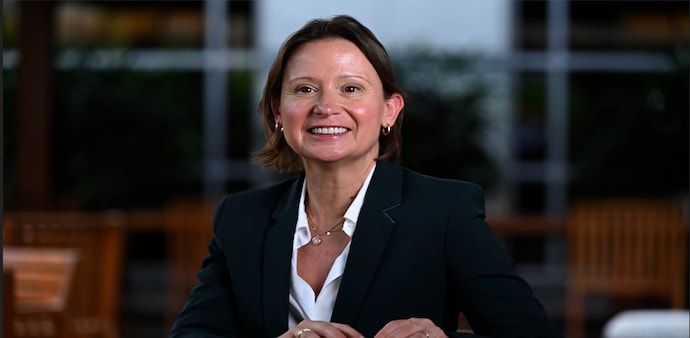
Veolia is a name in the water management, waste management and energy businesses. Based in France, it had a revenue of over €44 billion in FY25. Water is a big opportunity for the company in India. In an interaction with Business Today’s Krishna Gopalan, Anne Le Guennec, Global CEO Water Technologies Zone, and Gopal Madabhushi, Senior Vice President, Water Tech South Asia and Oceania, Veolia, shared their insights on what makes India unique. Excerpts:
Tell us about your 28 years with Veolia.
Anne Le Guennec: I have worked many jobs and in many geographies with the company. I had this chance, being a young engineer—because I'm a chemical engineer by background—to be hired by Veolia, and I sometimes say it was by chance because at that time I had no idea of what it meant to be in the environmental services. But one thing that I discovered quickly in my career is the usefulness of our people.
I started in the waste management business in France and realised how important it is. At that time, we were not really talking about recycling. We were just serving the cities, making sure that the place was clean. But the business has shifted from usefulness to innovation. And then I shifted to the water business, and our mission became not only to give access to water to everyone, but to accompany industries in sustaining progress. And today our purpose is exactly that one, and our GreenUp strategy is that. We want to make sure that we facilitate human progress while preserving the resources.
Today, we're combining everything in our three business lines: waste, water, and energy. Not only do we serve customers with our solutions, but we combine our solutions to make sure that the nexus on utilities goes beyond managing utilities and allows for innovation. One of Veolia’s strengths is the synergy between the three business lines.
Anne Le Guennec: That’s right because we are the only one working on those three business lines together. We realise how important it is for our customers, whether municipalities or industries, to make sure that whenever they treat water, they use as little energy and as few chemicals as possible and produce as few byproducts as possible. We are now going even further: not only do we aim to avoid using energy and chemicals, but we also want to recover materials. Today, what we see is that our customers are happy to recover this tiny gram of lithium or gold or salt that is in the sludge, in the water or in the brine. So, we also push the innovation to that extent where not only are we a utility, but we create value thanks to the combination of our business lines. Does that mean Veolia is more of a tech company?
Anne Le Guennec: We've existed for 170 years and have been a utility management company. But we turned the tide when we acquired Suez six years ago now. Now we're combining technologies and products. We manufacture, we develop, we invent. We have more than 4,500 patents, and we continue to be the first company filing patents in water technologies. Not only do we produce technology and we sell from the shelves, but we deliver through projects. Plus, we accompany customers with services and chemicals.
We empower our solutions with digital. For a very long time, we have developed what we call Hubgrade. This is our platform for monitoring. But, of course, now not only do we monitor, adjust and optimise, but we also bring AI on board. Through agentics, we're developing solutions with the majors in that field.
How do you compare yourself to peers on the technology front?
Anne Le Guennec: You have a lot of players using tech, to be fair. I don't think that you have any combining tech with all the solutions and services that we do. Innovation on our side, of course, comes from technologies by themselves. We do a lot of R&D. And India is a strong hub for R&D for us. Innovation is also about business models and how you manage customers' expectations. Veolia has had a long innings in India. If you must pick out three or four points that make this market unique or different from a water perspective, what would those be?
Anne Le Guennec: When I was driving through Mumbai today, I saw those big panels saying, "No water, no life." And I like it because I think awareness is very important. And India has come through this path where, in some geographies, it has been more difficult to realise that water is at the core of everything. At the core of life for municipalities and citizens, but also at the core of industries. And what we've seen today in India is the fit with our GreenUp strategy.
Because industries sometimes still consider water as sustainability, and they would say, "Oh no, we have right now because of uncertainties, we don't have time for sustainability." But we're not talking sustainability anymore. We're talking risk management. We're talking environmental security.
We see things moving faster in India, maybe compared to the past and compared to other geographies. In Europe, it takes a long time for regulations to change, and you need to bring stakeholders together. I really think that in India today we can have a fast-track development of things. In this time of uncertainty where all players are reshuffling supply chains, India will most probably be a very good place to be. If you must pick up one market at a certain period, does India remind you of any market of that nature? And for what reason?
Anne Le Guennec: I don't like comparisons because everybody is different. We don't bring solutions from France and models from France that we want to apply. This is not the way we work. The way we work is we look at the context, and everything is driven by needs. So needs in India, of course, some of them will be similar to things that we have experienced, but a lot of things will also be different, and we want to make sure that it's driven by our customers' needs.
So maybe solutions that would fit in India. First, the growth will be driven by new infrastructure because with only 30% of the wastewater being treated, there are a lot of needs still and development ongoing in fast-growing municipalities. So, for us, bringing the right solution at the right moment will be appropriate.
Gopal Madabhushi: Mumbai could be one example, but I think before I come to Mumbai, if you look at microelectronics, post-COVID, the Indian government is pushing for more manufacturing to make it as a "China Plus One" concept. And the first industry that they want to push is microelectronics, where we are very strong in APAC. In Singapore, we have multiple relationships with customers where we are supplying ultra-pure water and wastewater treatment. Does it make India a bit of a complex for different markets from what you have seen in other parts of the world?
Anne Le Guennec: Well, I would say for us it is complex, but it is fast-growing. So again, the very first driver will be new infrastructure, new development and how we can bring the expertise that we have developed elsewhere. But it is fast-growing, so in those types of geographies we will shift directly to the newest solutions. And this is really where we will bring technologies to treat water for hydrogen production or look at carbon capture as we do in France, transforming biogas into ethanol as we do. So we will not only bring conventional water treatment; we will be directly into the latest innovation that we have in Europe or in the US, bringing solutions to industries because we will be at the latest point in innovation. And of course we will bring digital on top of this.
Gopal Madabhushi: Absolutely. I think to your point, India is a complex market. I mean, not just for water, but I have spent time in railroad and in aviation, any other business for that matter. What we see is the customer demand for the highest level of quality and specification, but then they need the lowest price point and the shortest schedule and cycle time. So sometimes conflicting requirements may come into the picture, but we are well prepared because while we are a global company, we are also local. So, our teams are all local; they all understand, and our purpose of providing the service, providing the support to water, is nothing less than building the nation. That's how our teams think about it.
So, to give an example of India's specific needs, for India, energy is very important; energy security is important. You mentioned a very good point with the West Asia crisis that we are seeing. Energy prices are going up; how can industries become more self-sufficient?
So, for example, in one of our key F&B client, they make these potato chips, and we have already won a project more than a year ago where, in their facility we are not only treating the wastewater, but we are also having liquid digestion and solid digestion where we are going to generate biogas and generate energy, and that energy can be used for the treatment. This is in Gujarat, and there are more such types of opportunities—I cannot disclose right now—but more such types of opportunities are coming where they are looking at a full flow-sheet solution. They want drinking water, they want wastewater, biogas, energy, etc., and that is where we only have technology being in big play because we have hundreds of such references globally. The technology that India needs is already available elsewhere.
What is the India-specific strategy all about for Veolia?
Anne Le Guennec: India has this unique positioning of being at the same time an immense country, a huge country with a fast-growing pace and new development, and a manufacturing hub. So in this time of uncertainty, we see India, as you said in the beginning, being a new place for manufacturers, and we have our own manufacturing facilities that are for us really leading by example. The Hoskote plant that I had the chance to visit yesterday is, at the same time, one of the best I have in terms of management, health and safety, quality, and best practices. And we have this R&D centre that is one of the best we have around the world, with experts working on new offers. This is where not only are we looking at our solutions for India, but also for the rest of the world. We inaugurated our Customer Experience Center in Hoskote as well, bringing digital solutions and new virtual experiences. And we are working there on the solutions for tomorrow that will be on health, with treatment of micropollutants and the PFAS that are booming today in the US and Europe but will definitely be solutions needed by the rest of the world. We are working on cracking different molecules, and we are working on solutions that will be more India-for-India, like treating the water for textile, for example. So positioning of India is for us very strategic.
Gopal Madabhushi: Our strategy is India is not just for India but India for the world. We look at India very differently because we have both opportunities available. Now when we say India for the world, it is not just technology, engineering, manufacturing—all we export—but also taking some best practices from here and trying them out in different places. For example, zero liquid discharge. Zero liquid discharge is unique to India. The challenge is unique to India. In the rest of the world, in a lot of places, the discharge can be merged with surface water, ocean water, etc. But we have strong regulations coming into the picture. So, our teams here are taking the example of zero liquid discharge and sharing it with the rest of the world. So that approach can be followed there.
Veolia is a name in the water management, waste management and energy businesses. Based in France, it had a revenue of over €44 billion in FY25. Water is a big opportunity for the company in India. In an interaction with Business Today’s Krishna Gopalan, Anne Le Guennec, Global CEO Water Technologies Zone, and Gopal Madabhushi, Senior Vice President, Water Tech South Asia and Oceania, Veolia, shared their insights on what makes India unique. Excerpts:
Tell us about your 28 years with Veolia.
Anne Le Guennec: I have worked many jobs and in many geographies with the company. I had this chance, being a young engineer—because I'm a chemical engineer by background—to be hired by Veolia, and I sometimes say it was by chance because at that time I had no idea of what it meant to be in the environmental services. But one thing that I discovered quickly in my career is the usefulness of our people.
I started in the waste management business in France and realised how important it is. At that time, we were not really talking about recycling. We were just serving the cities, making sure that the place was clean. But the business has shifted from usefulness to innovation. And then I shifted to the water business, and our mission became not only to give access to water to everyone, but to accompany industries in sustaining progress. And today our purpose is exactly that one, and our GreenUp strategy is that. We want to make sure that we facilitate human progress while preserving the resources.
Today, we're combining everything in our three business lines: waste, water, and energy. Not only do we serve customers with our solutions, but we combine our solutions to make sure that the nexus on utilities goes beyond managing utilities and allows for innovation. One of Veolia’s strengths is the synergy between the three business lines.
Anne Le Guennec: That’s right because we are the only one working on those three business lines together. We realise how important it is for our customers, whether municipalities or industries, to make sure that whenever they treat water, they use as little energy and as few chemicals as possible and produce as few byproducts as possible. We are now going even further: not only do we aim to avoid using energy and chemicals, but we also want to recover materials. Today, what we see is that our customers are happy to recover this tiny gram of lithium or gold or salt that is in the sludge, in the water or in the brine. So, we also push the innovation to that extent where not only are we a utility, but we create value thanks to the combination of our business lines. Does that mean Veolia is more of a tech company?
Anne Le Guennec: We've existed for 170 years and have been a utility management company. But we turned the tide when we acquired Suez six years ago now. Now we're combining technologies and products. We manufacture, we develop, we invent. We have more than 4,500 patents, and we continue to be the first company filing patents in water technologies. Not only do we produce technology and we sell from the shelves, but we deliver through projects. Plus, we accompany customers with services and chemicals.
We empower our solutions with digital. For a very long time, we have developed what we call Hubgrade. This is our platform for monitoring. But, of course, now not only do we monitor, adjust and optimise, but we also bring AI on board. Through agentics, we're developing solutions with the majors in that field.
How do you compare yourself to peers on the technology front?
Anne Le Guennec: You have a lot of players using tech, to be fair. I don't think that you have any combining tech with all the solutions and services that we do. Innovation on our side, of course, comes from technologies by themselves. We do a lot of R&D. And India is a strong hub for R&D for us. Innovation is also about business models and how you manage customers' expectations. Veolia has had a long innings in India. If you must pick out three or four points that make this market unique or different from a water perspective, what would those be?
Anne Le Guennec: When I was driving through Mumbai today, I saw those big panels saying, "No water, no life." And I like it because I think awareness is very important. And India has come through this path where, in some geographies, it has been more difficult to realise that water is at the core of everything. At the core of life for municipalities and citizens, but also at the core of industries. And what we've seen today in India is the fit with our GreenUp strategy.
Because industries sometimes still consider water as sustainability, and they would say, "Oh no, we have right now because of uncertainties, we don't have time for sustainability." But we're not talking sustainability anymore. We're talking risk management. We're talking environmental security.
We see things moving faster in India, maybe compared to the past and compared to other geographies. In Europe, it takes a long time for regulations to change, and you need to bring stakeholders together. I really think that in India today we can have a fast-track development of things. In this time of uncertainty where all players are reshuffling supply chains, India will most probably be a very good place to be. If you must pick up one market at a certain period, does India remind you of any market of that nature? And for what reason?
Anne Le Guennec: I don't like comparisons because everybody is different. We don't bring solutions from France and models from France that we want to apply. This is not the way we work. The way we work is we look at the context, and everything is driven by needs. So needs in India, of course, some of them will be similar to things that we have experienced, but a lot of things will also be different, and we want to make sure that it's driven by our customers' needs.
So maybe solutions that would fit in India. First, the growth will be driven by new infrastructure because with only 30% of the wastewater being treated, there are a lot of needs still and development ongoing in fast-growing municipalities. So, for us, bringing the right solution at the right moment will be appropriate.
Gopal Madabhushi: Mumbai could be one example, but I think before I come to Mumbai, if you look at microelectronics, post-COVID, the Indian government is pushing for more manufacturing to make it as a "China Plus One" concept. And the first industry that they want to push is microelectronics, where we are very strong in APAC. In Singapore, we have multiple relationships with customers where we are supplying ultra-pure water and wastewater treatment. Does it make India a bit of a complex for different markets from what you have seen in other parts of the world?
Anne Le Guennec: Well, I would say for us it is complex, but it is fast-growing. So again, the very first driver will be new infrastructure, new development and how we can bring the expertise that we have developed elsewhere. But it is fast-growing, so in those types of geographies we will shift directly to the newest solutions. And this is really where we will bring technologies to treat water for hydrogen production or look at carbon capture as we do in France, transforming biogas into ethanol as we do. So we will not only bring conventional water treatment; we will be directly into the latest innovation that we have in Europe or in the US, bringing solutions to industries because we will be at the latest point in innovation. And of course we will bring digital on top of this.
Gopal Madabhushi: Absolutely. I think to your point, India is a complex market. I mean, not just for water, but I have spent time in railroad and in aviation, any other business for that matter. What we see is the customer demand for the highest level of quality and specification, but then they need the lowest price point and the shortest schedule and cycle time. So sometimes conflicting requirements may come into the picture, but we are well prepared because while we are a global company, we are also local. So, our teams are all local; they all understand, and our purpose of providing the service, providing the support to water, is nothing less than building the nation. That's how our teams think about it.
So, to give an example of India's specific needs, for India, energy is very important; energy security is important. You mentioned a very good point with the West Asia crisis that we are seeing. Energy prices are going up; how can industries become more self-sufficient?
So, for example, in one of our key F&B client, they make these potato chips, and we have already won a project more than a year ago where, in their facility we are not only treating the wastewater, but we are also having liquid digestion and solid digestion where we are going to generate biogas and generate energy, and that energy can be used for the treatment. This is in Gujarat, and there are more such types of opportunities—I cannot disclose right now—but more such types of opportunities are coming where they are looking at a full flow-sheet solution. They want drinking water, they want wastewater, biogas, energy, etc., and that is where we only have technology being in big play because we have hundreds of such references globally. The technology that India needs is already available elsewhere.
What is the India-specific strategy all about for Veolia?
Anne Le Guennec: India has this unique positioning of being at the same time an immense country, a huge country with a fast-growing pace and new development, and a manufacturing hub. So in this time of uncertainty, we see India, as you said in the beginning, being a new place for manufacturers, and we have our own manufacturing facilities that are for us really leading by example. The Hoskote plant that I had the chance to visit yesterday is, at the same time, one of the best I have in terms of management, health and safety, quality, and best practices. And we have this R&D centre that is one of the best we have around the world, with experts working on new offers. This is where not only are we looking at our solutions for India, but also for the rest of the world. We inaugurated our Customer Experience Center in Hoskote as well, bringing digital solutions and new virtual experiences. And we are working there on the solutions for tomorrow that will be on health, with treatment of micropollutants and the PFAS that are booming today in the US and Europe but will definitely be solutions needed by the rest of the world. We are working on cracking different molecules, and we are working on solutions that will be more India-for-India, like treating the water for textile, for example. So positioning of India is for us very strategic.
Gopal Madabhushi: Our strategy is India is not just for India but India for the world. We look at India very differently because we have both opportunities available. Now when we say India for the world, it is not just technology, engineering, manufacturing—all we export—but also taking some best practices from here and trying them out in different places. For example, zero liquid discharge. Zero liquid discharge is unique to India. The challenge is unique to India. In the rest of the world, in a lot of places, the discharge can be merged with surface water, ocean water, etc. But we have strong regulations coming into the picture. So, our teams here are taking the example of zero liquid discharge and sharing it with the rest of the world. So that approach can be followed there.