
Ayodhya real estate: Ram Mandir fuels a long-term growth story for the tier 2 city, here's why
Property prices in Ayodhya: The market has seen a rapid appreciation in property values, driven by massive infrastructure development and increased tourism.
- Nov 25, 2025,
- Updated Nov 26, 2025 11:58 AM IST
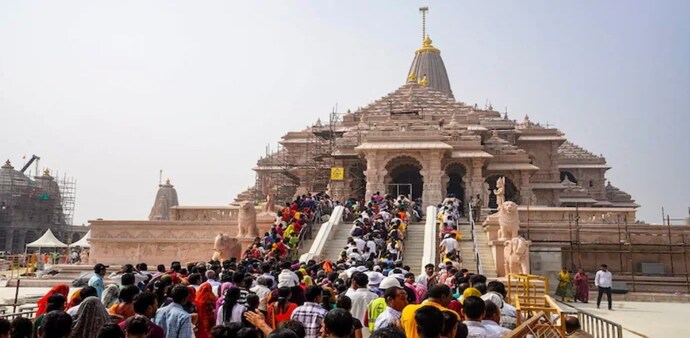
Prime Minister Narendra Modi is in Ayodhya today to hoist a sacred flat to mark completion of the Ram Mandir. With Ayodhya becoming a centre of spiritualism, religious tourism has emerged as the main source of revenue for the government. The temple town witnessed an unprecedented rise in visitor numbers already exceeding 22 crore by mid-October 2025, a significant rise from the 16.44 crore in 2024. The rising tourists' interest has fuelled the demand for real estate in the temple town.
The real estate sector in the city has seen stellar growth since 2019 when the Supreme court announced verdict in favour of the construction of Ram Temple. In fact, property prices near the temple zone have risen by 5 to 10 times and gained four to eight times on the outskirts of the city. However, real estate prices have seen a mild correction since the Pran Pratistha of Ram Lala by PM Modi on January 22, 2024.
The growth in realty prices is driven by the consecration of the Ram Mandir and other developments, positioning Ayodhya as a major religious tourism destination in Uttar Pradesh.
Since the inauguration of the Ram Mandir, Ayodhya has become a prime real estate investment destination, with significant growth in both the residential and commercial sectors. The market has seen a rapid appreciation in property values, driven by massive infrastructure development and increased tourism.
In terms of residential market, plot prices have surged manifold, especially in areas near the Ram Mandir, with more moderate prices available in peripheral areas like Faizabad Road and Raibareli Road. Realty players such as Omaxe and The House of Abhinandan Lodha have already entered the Ayodhya real estate market.
In the commercial market, booming tourism and infrastructure projects, such as the Ram Path and an international airport, have resulted in high demand for commercial spaces for hotels, retail, and offices. Prices in prime commercial areas have risen manifold with big hotel chains such as Taj and Radisson coming up with their properties near the Ram Temple. Several other hotel chains are also planning their entry into the Ayodhya market considering the astronomical rise in influx of domestic and international tourists in the coming months.
The UP government has undertaken infrastructural enhancements and urban development projects, increasing Ayodhya's appeal as a thriving hub for both residential and commercial projects.
The government is also promoting affordable housing in Ayodhya, the emerging destination for real estate among tier 2 cities. Ayodhya Development Authority in December last year launched the Vashisht Kunj Scheme comprising 600 residential plots near the Lucknow-Ayodhya Highway, developed in multiple phases. While Phase 1 registration and allotment are complete, Phase 2 registrations were recently extended due to high demand.
The Uttar Pradesh Awas Vikas Parishad (UPAVP) is also developing a Green Field Township in Ayodhya. This is a major housing and urban development initiative by the UPAVP. The scheme aims to develop a modern, eco-friendly township near Ayodhya city, featuring residential plots and a range of amenities.
Mohit Batra, Regional Director, Realistic Realtors said, "Viewed through a Tier-2 lens, Ayodhya’s real estate case aligns beautifully with where India’s next wave of growth is headed. Data shows that Tier-2 cities are not lagging — instead, they are outpacing many traditional hubs, delivering 17.6% capital appreciation on an average. That rising demand is not just from local buyers from NRIs but also from large corporates and developers as long-horizon investors. When we map this to Ayodhya, we see a compelling narrative: enhanced infrastructure, spiritual tourism, and plotted land demand are combining to make Ayodhya a Tier-2 micro-market in its own right. Thus, it's a call for investors not to treat it as a 'short-term' play around the temple, but as a long-term urban story: mixed-use projects, mid-tier residential, and tourist-driven hospitality real estate will likely define its next 5–7 years. The Tier-2 data legitimises Ayodhya’s potential beyond sentiment alone."
Sakshee Katiyal, Chairperson, Home & Soul said, "Investors are increasingly viewing Ayodhya not just as a devotional destination, but as a Tier-2 economic growth story in the making. Certain reports reveal that with the surge in development, Ayodhya now contributes about 1.5% to Uttar Pradesh’s GDP. That macro-economic momentum is resonating with NRIs and institutional players who normally look at ROI rather than sentiment."
Prime Minister Narendra Modi is in Ayodhya today to hoist a sacred flat to mark completion of the Ram Mandir. With Ayodhya becoming a centre of spiritualism, religious tourism has emerged as the main source of revenue for the government. The temple town witnessed an unprecedented rise in visitor numbers already exceeding 22 crore by mid-October 2025, a significant rise from the 16.44 crore in 2024. The rising tourists' interest has fuelled the demand for real estate in the temple town.
The real estate sector in the city has seen stellar growth since 2019 when the Supreme court announced verdict in favour of the construction of Ram Temple. In fact, property prices near the temple zone have risen by 5 to 10 times and gained four to eight times on the outskirts of the city. However, real estate prices have seen a mild correction since the Pran Pratistha of Ram Lala by PM Modi on January 22, 2024.
The growth in realty prices is driven by the consecration of the Ram Mandir and other developments, positioning Ayodhya as a major religious tourism destination in Uttar Pradesh.
Since the inauguration of the Ram Mandir, Ayodhya has become a prime real estate investment destination, with significant growth in both the residential and commercial sectors. The market has seen a rapid appreciation in property values, driven by massive infrastructure development and increased tourism.
In terms of residential market, plot prices have surged manifold, especially in areas near the Ram Mandir, with more moderate prices available in peripheral areas like Faizabad Road and Raibareli Road. Realty players such as Omaxe and The House of Abhinandan Lodha have already entered the Ayodhya real estate market.
In the commercial market, booming tourism and infrastructure projects, such as the Ram Path and an international airport, have resulted in high demand for commercial spaces for hotels, retail, and offices. Prices in prime commercial areas have risen manifold with big hotel chains such as Taj and Radisson coming up with their properties near the Ram Temple. Several other hotel chains are also planning their entry into the Ayodhya market considering the astronomical rise in influx of domestic and international tourists in the coming months.
The UP government has undertaken infrastructural enhancements and urban development projects, increasing Ayodhya's appeal as a thriving hub for both residential and commercial projects.
The government is also promoting affordable housing in Ayodhya, the emerging destination for real estate among tier 2 cities. Ayodhya Development Authority in December last year launched the Vashisht Kunj Scheme comprising 600 residential plots near the Lucknow-Ayodhya Highway, developed in multiple phases. While Phase 1 registration and allotment are complete, Phase 2 registrations were recently extended due to high demand.
The Uttar Pradesh Awas Vikas Parishad (UPAVP) is also developing a Green Field Township in Ayodhya. This is a major housing and urban development initiative by the UPAVP. The scheme aims to develop a modern, eco-friendly township near Ayodhya city, featuring residential plots and a range of amenities.
Mohit Batra, Regional Director, Realistic Realtors said, "Viewed through a Tier-2 lens, Ayodhya’s real estate case aligns beautifully with where India’s next wave of growth is headed. Data shows that Tier-2 cities are not lagging — instead, they are outpacing many traditional hubs, delivering 17.6% capital appreciation on an average. That rising demand is not just from local buyers from NRIs but also from large corporates and developers as long-horizon investors. When we map this to Ayodhya, we see a compelling narrative: enhanced infrastructure, spiritual tourism, and plotted land demand are combining to make Ayodhya a Tier-2 micro-market in its own right. Thus, it's a call for investors not to treat it as a 'short-term' play around the temple, but as a long-term urban story: mixed-use projects, mid-tier residential, and tourist-driven hospitality real estate will likely define its next 5–7 years. The Tier-2 data legitimises Ayodhya’s potential beyond sentiment alone."
Sakshee Katiyal, Chairperson, Home & Soul said, "Investors are increasingly viewing Ayodhya not just as a devotional destination, but as a Tier-2 economic growth story in the making. Certain reports reveal that with the surge in development, Ayodhya now contributes about 1.5% to Uttar Pradesh’s GDP. That macro-economic momentum is resonating with NRIs and institutional players who normally look at ROI rather than sentiment."