
'Erosion, not crash': CA points out harsh reality of Bengaluru housing market amid IT slowdown
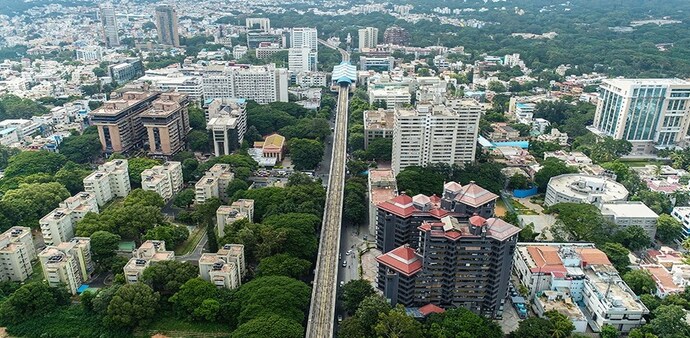
For aspiring homeowners, Bengaluru’s glittering skyline hides a harsh reality. Prices in IT hubs such as Whitefield, Sarjapur, and Electronic City have jumped beyond the reach of mid-level professionals.
- Sep 11, 2025,
- Updated Sep 11, 2025 4:42 PM IST
Bengaluru’s real estate market, long seen as one of the safest bets for investors and homebuyers, may be heading for turbulence as its biggest growth driver — high-paying IT jobs — shows signs of strain.
In a post on X (formerly Twitter), chartered accountant Nitin Kaushik sounded the alarm: "Is Bangalore’s Real Estate Bubble on Borrowed Time? India’s IT capital thrives on one engine: high-paying tech jobs. But here’s the risk no one’s pricing in:
- Layoffs in IT + AI replacing mid-level roles = Slower salary growth
- By 2028, disposable income could shrink drastically
- Real estate (which rose on the back of IT salaries) may face a demand shock
- A slowdown in spending power → ripple effects across restaurants, malls, startups
When the backbone (IT salaries) weakens, the city’s economy feels the tremors. Real estate doesn’t crash overnight. It erodes quietly — when buyers disappear, not sellers."
Homebuyers’ dilemma
For aspiring homeowners, Bengaluru’s glittering skyline hides a harsh reality. Prices in IT hubs such as Whitefield, Sarjapur, and Electronic City have jumped beyond the reach of mid-level professionals. Banks are cautious with big-ticket home loans, and job insecurity in the IT sector has left many hesitant to take on 20-25 year mortgages.
Some buyers who stretched finances to book under-construction flats are now struggling with delayed possession timelines and rising interest rates, further straining household budgets.
Renters under pressure
The rental market too has turned punishing. In the last two years, rents in prime localities have surged by 30-50%, driven by demand from returning tech workers and investors holding on to units for appreciation. Newcomers to the city often face steep upfront costs, with landlords demanding 10-12 months of advance rent as deposit. Students and junior employees are increasingly pushed into shared or cramped housing arrangements.
Ripple effect beyond real estate
Kaushik’s warning highlights how deeply intertwined Bengaluru’s economy is with IT salaries. A slowdown in disposable income not only threatens housing demand but could hit the city’s consumption-driven sectors — restaurants, malls, startups, and services that thrive on tech workers’ spending power.
While the present market still looks buoyant, Kaushik cautions that ignoring the early cracks could prove costly: “Real estate doesn’t crash overnight — it erodes quietly.”
Bengaluru’s real estate market, long seen as one of the safest bets for investors and homebuyers, may be heading for turbulence as its biggest growth driver — high-paying IT jobs — shows signs of strain.
In a post on X (formerly Twitter), chartered accountant Nitin Kaushik sounded the alarm: "Is Bangalore’s Real Estate Bubble on Borrowed Time? India’s IT capital thrives on one engine: high-paying tech jobs. But here’s the risk no one’s pricing in:
- Layoffs in IT + AI replacing mid-level roles = Slower salary growth
- By 2028, disposable income could shrink drastically
- Real estate (which rose on the back of IT salaries) may face a demand shock
- A slowdown in spending power → ripple effects across restaurants, malls, startups
When the backbone (IT salaries) weakens, the city’s economy feels the tremors. Real estate doesn’t crash overnight. It erodes quietly — when buyers disappear, not sellers."
Homebuyers’ dilemma
For aspiring homeowners, Bengaluru’s glittering skyline hides a harsh reality. Prices in IT hubs such as Whitefield, Sarjapur, and Electronic City have jumped beyond the reach of mid-level professionals. Banks are cautious with big-ticket home loans, and job insecurity in the IT sector has left many hesitant to take on 20-25 year mortgages.
Some buyers who stretched finances to book under-construction flats are now struggling with delayed possession timelines and rising interest rates, further straining household budgets.
Renters under pressure
The rental market too has turned punishing. In the last two years, rents in prime localities have surged by 30-50%, driven by demand from returning tech workers and investors holding on to units for appreciation. Newcomers to the city often face steep upfront costs, with landlords demanding 10-12 months of advance rent as deposit. Students and junior employees are increasingly pushed into shared or cramped housing arrangements.
Ripple effect beyond real estate
Kaushik’s warning highlights how deeply intertwined Bengaluru’s economy is with IT salaries. A slowdown in disposable income not only threatens housing demand but could hit the city’s consumption-driven sectors — restaurants, malls, startups, and services that thrive on tech workers’ spending power.
While the present market still looks buoyant, Kaushik cautions that ignoring the early cracks could prove costly: “Real estate doesn’t crash overnight — it erodes quietly.”