
₹20 lakh crore NCR Plan 2041: Will new cities and transit make homes more affordable?
Delhi-NCR's proposed ₹20 lakh crore Regional Plan 2041 aims to transform the region with new cities, faster transport networks and large-scale land development. But can the ambitious blueprint reverse soaring home prices and improve affordable housing supply?
- Jun 26, 2026,
- Updated Jun 26, 2026 12:22 PM IST
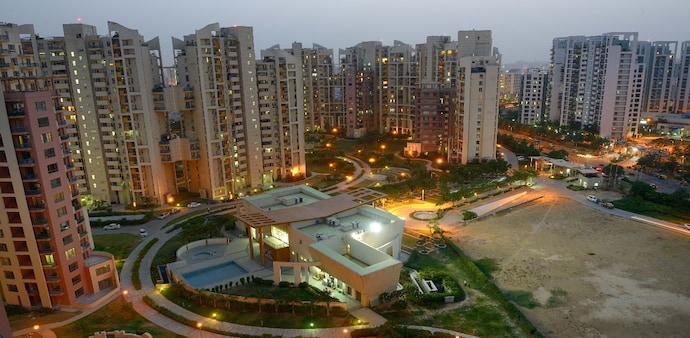
Delhi-NCR's residential property market has witnessed a sharp run-up in prices over the past few years, with developers increasingly prioritising premium and luxury projects over affordable housing. Against this backdrop, the proposed NCR Regional Plan 2041, which envisages investments of more than ₹20 lakh crore, is being seen as a potential game changer that could reshape the region's real estate landscape and expand housing supply.
The draft master plan proposes four new greenfield cities, high-speed transport corridors, large-scale land formalisation and transit-oriented development across the National Capital Region. While these measures could unlock fresh development opportunities, experts say whether they translate into affordable homes will depend largely on execution and market economics.
Population growth
The urgency behind the plan is reflected in NCR's demographic projections. The region's population is expected to nearly double from 5.82 crore in 2011 to 11.3 crore by 2041, creating enormous demand for housing, infrastructure and jobs. According to Knight Frank India, NCR will need to accommodate an additional population larger than Spain's over the next 15 years, requiring a fundamentally different urban planning approach.
Rather than expanding around Delhi alone, the Regional Plan proposes a multi-nodal development model with Sonipat, Meerut, Bhiwadi and Alwar emerging as independent growth centres. Each NCR state is also expected to propose a new greenfield city, commonly referred to as "Namo Cities", aimed at creating self-sustaining hubs of employment and housing.
MUST READ: Luxury vs affordable homes: How India's housing market is becoming increasingly
Land unlock and faster connectivity
One of the plan's biggest interventions is the proposed "Ring of Opportunity" along the Kundli-Manesar-Palwal (KMP) and Eastern Peripheral Expressway corridor. By formally notifying currently unplanned land parcels and defining their land-use norms, the plan could significantly increase the supply of developable land available for residential projects.
Connectivity is another major focus. The blueprint aims to enable travel between Delhi and major NCR cities within 30 minutes through Regional Rapid Transit Systems (RRTS) and other high-speed transport corridors. It also expands Transit-Oriented Development (TOD) zones to one kilometre around transit networks, allowing higher density and mixed-use development near transport hubs.
MUST READ: Sonipat vs Gurugram: Where should real estate investors put their money?
Can it improve affordability?
Greater land availability and improved connectivity could encourage housing development in emerging locations where land prices remain lower than established markets such as Gurugram and Noida. The plan also identifies brownfield redevelopment opportunities in Okhla, Badli, Faridabad, Bahadurgarh and the Ghaziabad-Meerut corridor, creating additional housing supply within existing urban areas.
However, Knight Frank notes that the Regional Plan largely reiterates existing affordable housing frameworks without addressing the commercial challenges that have prompted many developers to move towards premium housing. Lower margins in affordable projects remain a key hurdle.
Ultimately, the success of the NCR Regional Plan 2041 will depend on timely land notifications, infrastructure execution, financing and faster approvals. If implemented effectively, the plan could diversify NCR's housing market and moderate long-term price pressures. But without strong execution and sustained developer participation, the promise of more affordable homes may remain difficult to realise.
MUST READ: BT Explainer: Tenant or landlord - who bears repair costs in a rented home?
Delhi-NCR's residential property market has witnessed a sharp run-up in prices over the past few years, with developers increasingly prioritising premium and luxury projects over affordable housing. Against this backdrop, the proposed NCR Regional Plan 2041, which envisages investments of more than ₹20 lakh crore, is being seen as a potential game changer that could reshape the region's real estate landscape and expand housing supply.
The draft master plan proposes four new greenfield cities, high-speed transport corridors, large-scale land formalisation and transit-oriented development across the National Capital Region. While these measures could unlock fresh development opportunities, experts say whether they translate into affordable homes will depend largely on execution and market economics.
Population growth
The urgency behind the plan is reflected in NCR's demographic projections. The region's population is expected to nearly double from 5.82 crore in 2011 to 11.3 crore by 2041, creating enormous demand for housing, infrastructure and jobs. According to Knight Frank India, NCR will need to accommodate an additional population larger than Spain's over the next 15 years, requiring a fundamentally different urban planning approach.
Rather than expanding around Delhi alone, the Regional Plan proposes a multi-nodal development model with Sonipat, Meerut, Bhiwadi and Alwar emerging as independent growth centres. Each NCR state is also expected to propose a new greenfield city, commonly referred to as "Namo Cities", aimed at creating self-sustaining hubs of employment and housing.
MUST READ: Luxury vs affordable homes: How India's housing market is becoming increasingly
Land unlock and faster connectivity
One of the plan's biggest interventions is the proposed "Ring of Opportunity" along the Kundli-Manesar-Palwal (KMP) and Eastern Peripheral Expressway corridor. By formally notifying currently unplanned land parcels and defining their land-use norms, the plan could significantly increase the supply of developable land available for residential projects.
Connectivity is another major focus. The blueprint aims to enable travel between Delhi and major NCR cities within 30 minutes through Regional Rapid Transit Systems (RRTS) and other high-speed transport corridors. It also expands Transit-Oriented Development (TOD) zones to one kilometre around transit networks, allowing higher density and mixed-use development near transport hubs.
MUST READ: Sonipat vs Gurugram: Where should real estate investors put their money?
Can it improve affordability?
Greater land availability and improved connectivity could encourage housing development in emerging locations where land prices remain lower than established markets such as Gurugram and Noida. The plan also identifies brownfield redevelopment opportunities in Okhla, Badli, Faridabad, Bahadurgarh and the Ghaziabad-Meerut corridor, creating additional housing supply within existing urban areas.
However, Knight Frank notes that the Regional Plan largely reiterates existing affordable housing frameworks without addressing the commercial challenges that have prompted many developers to move towards premium housing. Lower margins in affordable projects remain a key hurdle.
Ultimately, the success of the NCR Regional Plan 2041 will depend on timely land notifications, infrastructure execution, financing and faster approvals. If implemented effectively, the plan could diversify NCR's housing market and moderate long-term price pressures. But without strong execution and sustained developer participation, the promise of more affordable homes may remain difficult to realise.
MUST READ: BT Explainer: Tenant or landlord - who bears repair costs in a rented home?