
You earn ₹20 lakh pa but still can’t buy a home in India: This advisor breaks down why
Since the pandemic, luxury housing has outperformed affordable segments, with premium homes accounting for a growing share of sales.
- Jun 20, 2025,
- Updated Jun 20, 2025 3:28 PM IST
India’s post-COVID property boom is hiding a darker trend: the resurgence of black money flows into real estate, pushing prices sky-high and freezing out honest homebuyers.
Avigyan Mitra, an investment advisor, says the sector has become “a trendy repository for black money,” with cash-fueled deals distorting market dynamics and squeezing the middle class.
In a LinkedIn post, Mitra explained that undeclared wealth finds fewer havens in traditional financial instruments—but real estate still offers cover.
“It’s nearly impossible to store large amounts of undeclared cash elsewhere,” Mitra wrote. “But this sector continues to accommodate cash components that would be impossible in other asset classes.”
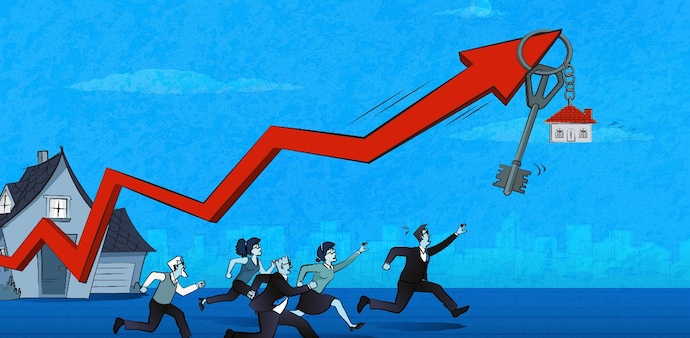
The result? Artificially inflated property prices that have little to do with documented income or market demand. “That guy earning INR 20 lakhs is competing with a rich buyer who uses the same flat as an untraceable deposit,” Mitra noted.
Developers are responding. Many now design projects to appeal not to families but to investors seeking to park unaccounted wealth. High-end amenities—gyms, pools, lounges—aren’t just about lifestyle. They’re tools to justify premium pricing that hides cash components.
“These ‘world-class’ facilities aren’t added because genuine homebuyers demand them,” Mitra added. “They’re included because cash-heavy buyers view property as an investment vehicle first and a residence second.”
Since the pandemic, luxury housing has outperformed affordable segments, with premium homes accounting for a growing share of sales. Analysts attribute this shift in part to speculative buying fueled by untraceable funds, especially in major cities.
The impact is clear: legitimate, salaried buyers are priced out, while developers and investors ride a bubble built on opacity. What’s sold as luxury living, critics say, is often just a high-gloss front for black money laundering.
India’s post-COVID property boom is hiding a darker trend: the resurgence of black money flows into real estate, pushing prices sky-high and freezing out honest homebuyers.
Avigyan Mitra, an investment advisor, says the sector has become “a trendy repository for black money,” with cash-fueled deals distorting market dynamics and squeezing the middle class.
In a LinkedIn post, Mitra explained that undeclared wealth finds fewer havens in traditional financial instruments—but real estate still offers cover.
“It’s nearly impossible to store large amounts of undeclared cash elsewhere,” Mitra wrote. “But this sector continues to accommodate cash components that would be impossible in other asset classes.”
The result? Artificially inflated property prices that have little to do with documented income or market demand. “That guy earning INR 20 lakhs is competing with a rich buyer who uses the same flat as an untraceable deposit,” Mitra noted.
Developers are responding. Many now design projects to appeal not to families but to investors seeking to park unaccounted wealth. High-end amenities—gyms, pools, lounges—aren’t just about lifestyle. They’re tools to justify premium pricing that hides cash components.
“These ‘world-class’ facilities aren’t added because genuine homebuyers demand them,” Mitra added. “They’re included because cash-heavy buyers view property as an investment vehicle first and a residence second.”
Since the pandemic, luxury housing has outperformed affordable segments, with premium homes accounting for a growing share of sales. Analysts attribute this shift in part to speculative buying fueled by untraceable funds, especially in major cities.
The impact is clear: legitimate, salaried buyers are priced out, while developers and investors ride a bubble built on opacity. What’s sold as luxury living, critics say, is often just a high-gloss front for black money laundering.