
'Big cities run on confidence, smaller ones on trust': Karan Bhagat explains how India’s wealth mindset changes with geography
Bhagat explained that people in India’s biggest metros — Mumbai, Delhi, Bengaluru and Chennai — tend to be more open-minded and confident about financial decisions.
- Nov 12, 2025,
- Updated Nov 12, 2025 6:54 PM IST
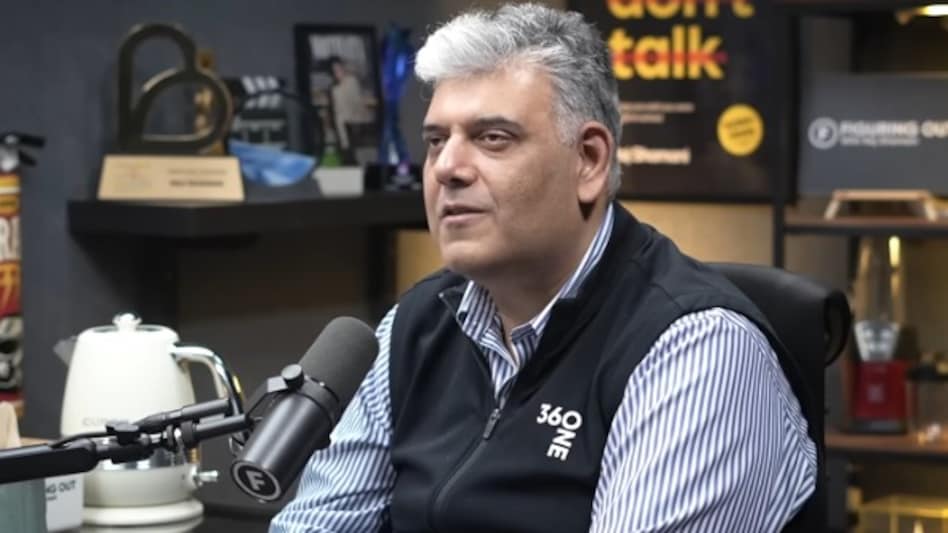
Karan Bhagat, Founder, Managing Director and CEO of 360 ONE, one of India’s leading wealth management firms, recently shared insights into how India’s wealthy think and behave differently when it comes to money, business, and investments.
In a podcast with Raj Shamani, Bhagat — who has spent over two decades advising some of the country’s richest individuals — discussed how geography and culture shape financial behaviour across different cities.
Bhagat explained that people in India’s biggest metros — Mumbai, Delhi, Bengaluru and Chennai — tend to be more open-minded and confident about financial decisions. “They’re comfortable dealing with different kinds of people and trust their own judgment,” he said. “They might take advice from experts, but at the end of the day, they rely on their own instincts.”
He added that big-city residents are more exposed to global trends and are willing to take calculated risks. “Many have travelled widely or studied abroad. They’re open to new investment products, startups, private equity or even international real estate,” Bhagat said.
However, as you move to Tier 2 cities such as Pune, Indore, Surat, Rajkot, Udaipur and Ahmedabad, the approach to money changes completely. “In these cities, relationships matter more than innovation,” Bhagat explained. “People prefer dealing locally. There’s a strong sense of trust and familiarity — that’s why independent financial advisors thrive here.”
He emphasized that credibility in these cities is built through personal relationships and word of mouth. “You can’t just walk in and sell a product,” he said. “You have to build trust first. People value who you are, not just what you offer.”
Bhagat also highlighted how regional culture influences investment preferences. In North India, wealth often aligns with status and visibility. “Once a family has made money, they want something that carries their name — a hotel, a car dealership, a real estate project,” he said. “It’s not only about profit but also prestige.”
By contrast, newer, first-generation wealthy families are more growth-focused. “They’re not chasing status symbols. They care about returns, scalability and financial independence,” Bhagat said.
In South India, the entrepreneurial mindset takes a different shape. “People there like to diversify,” he noted. “If they’re in real estate, they’ll also start a finance or insurance business. It’s a very conglomerate-style way of thinking.” Many South Indian business families, he added, have built structured, multi-generational enterprises with each member managing a different vertical.
In Western India, especially Mumbai and Ahmedabad, Bhagat said, the connection with the stock market runs deep. “Investing in equities or mutual funds is second nature. Even business owners are regular investors,” he said.
Meanwhile, Delhi and parts of North India remain more inclined toward real estate and infrastructure. “People in Delhi prefer hard assets — land, hotels, buildings. They see tangible wealth as a marker of legacy and pride,” Bhagat observed.
Summing up, Bhagat said India’s wealth landscape is as diverse as its people. “Tier 1 cities thrive on confidence and exposure, while Tier 2 cities are driven by trust and relationships,” he said. “Every region has its own definition of success — and that’s what makes India’s financial behaviour so unique.”
Karan Bhagat, Founder, Managing Director and CEO of 360 ONE, one of India’s leading wealth management firms, recently shared insights into how India’s wealthy think and behave differently when it comes to money, business, and investments.
In a podcast with Raj Shamani, Bhagat — who has spent over two decades advising some of the country’s richest individuals — discussed how geography and culture shape financial behaviour across different cities.
Bhagat explained that people in India’s biggest metros — Mumbai, Delhi, Bengaluru and Chennai — tend to be more open-minded and confident about financial decisions. “They’re comfortable dealing with different kinds of people and trust their own judgment,” he said. “They might take advice from experts, but at the end of the day, they rely on their own instincts.”
He added that big-city residents are more exposed to global trends and are willing to take calculated risks. “Many have travelled widely or studied abroad. They’re open to new investment products, startups, private equity or even international real estate,” Bhagat said.
However, as you move to Tier 2 cities such as Pune, Indore, Surat, Rajkot, Udaipur and Ahmedabad, the approach to money changes completely. “In these cities, relationships matter more than innovation,” Bhagat explained. “People prefer dealing locally. There’s a strong sense of trust and familiarity — that’s why independent financial advisors thrive here.”
He emphasized that credibility in these cities is built through personal relationships and word of mouth. “You can’t just walk in and sell a product,” he said. “You have to build trust first. People value who you are, not just what you offer.”
Bhagat also highlighted how regional culture influences investment preferences. In North India, wealth often aligns with status and visibility. “Once a family has made money, they want something that carries their name — a hotel, a car dealership, a real estate project,” he said. “It’s not only about profit but also prestige.”
By contrast, newer, first-generation wealthy families are more growth-focused. “They’re not chasing status symbols. They care about returns, scalability and financial independence,” Bhagat said.
In South India, the entrepreneurial mindset takes a different shape. “People there like to diversify,” he noted. “If they’re in real estate, they’ll also start a finance or insurance business. It’s a very conglomerate-style way of thinking.” Many South Indian business families, he added, have built structured, multi-generational enterprises with each member managing a different vertical.
In Western India, especially Mumbai and Ahmedabad, Bhagat said, the connection with the stock market runs deep. “Investing in equities or mutual funds is second nature. Even business owners are regular investors,” he said.
Meanwhile, Delhi and parts of North India remain more inclined toward real estate and infrastructure. “People in Delhi prefer hard assets — land, hotels, buildings. They see tangible wealth as a marker of legacy and pride,” Bhagat observed.
Summing up, Bhagat said India’s wealth landscape is as diverse as its people. “Tier 1 cities thrive on confidence and exposure, while Tier 2 cities are driven by trust and relationships,” he said. “Every region has its own definition of success — and that’s what makes India’s financial behaviour so unique.”