
Paying over ₹1,600 annually in ATM charges? How RBI's new rules can help you cut banking costs
Under the RBI directions, banks can charge customers a maximum of ₹23 per transaction, excluding applicable taxes, once they exhaust their prescribed free ATM transaction limits.
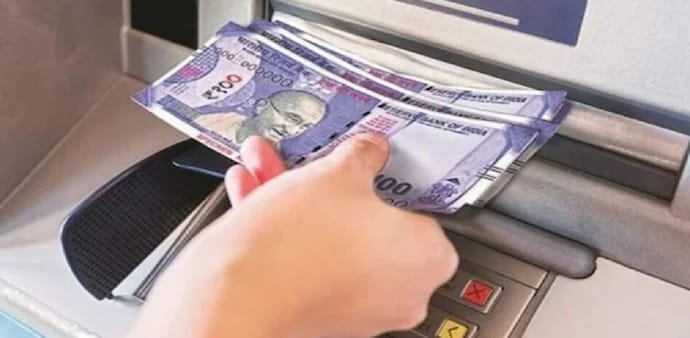
- Nov 28, 2026,
- Updated Nov 28, 2026 2:14 PM IST
Frequent cash withdrawals and balance enquiries at automated teller machines (ATMs) could be adding to your annual banking expenses. Customers making just five chargeable ATM transactions every month could end up paying more than ₹1,600 annually, highlighting how seemingly small banking charges can accumulate over time.
The Reserve Bank of India (RBI) on November 27 issued consolidated directions governing cash withdrawals through ATMs and point-of-sale (PoS) terminals. Effective immediately, the directions consolidate 17 earlier circulars issued between 2008 and 2022, while strengthening transparency around transaction charges and free withdrawal limits.
How ATM charges can add up
Under the RBI directions, banks can charge customers a maximum of ₹23 per transaction, excluding applicable taxes, once they exhaust their prescribed free ATM transaction limits.
Including 18% GST, the maximum charge works out to ₹27.14 per transaction.
A customer making five additional chargeable transactions every month could incur ₹135.70 in monthly charges, translating into ₹1,628.40 annually. For someone making 10 chargeable transactions every month, the annual expenditure could rise to ₹3,256.80.
MUST READ: SBI announces ATM charge waiver during bank strike; UPI, NEFT, RTGS services to continue
How additional ATM transactions can increase your annual banking costs
| Chargeable transactions per month | Monthly fee (₹) | Monthly GST (₹) Advertisement | Total monthly cost (₹) | Annual cost (₹) |
|---|---|---|---|---|
| 1 | 23 | 4.14 | 27.14 | 325.68 |
| 2 | 46 | 8.28 | 54.28 | 651.36 |
| 3 | 69 | 12.42 | 81.42 | 977.04 |
| 4 | 92 | 16.56 | 108.56 | 1,302.72 |
| 5 | 115 | 20.70 | 135.70 | 1,628.40 |
| 6 | 138 | 24.84 | 162.84 | 1,954.08 |
| 8 | 184 | 33.12 | 217.12 | 2,605.44 |
| 10 | 230 | 41.40 | 271.40 | 3,256.80 |
| 15 | 345 | 62.10 | 407.10 | 4,885.20 |
| 20 | 460 | 82.80 | 542.80 | 6,513.60 |
While these amounts may appear modest individually, they represent avoidable recurring expenses that could otherwise contribute towards household savings.
How many free ATM transactions are allowed?
Savings account holders are entitled to five free transactions every month at their own bank's ATMs.
At other banks' ATMs, customers receive three free monthly transactions in metropolitan centres and five in non-metro locations, subject to a combined monthly limit of five.
The RBI classifies Mumbai, New Delhi, Chennai, Kolkata, Bengaluru and Hyderabad as metropolitan centres for this purpose.
ALSO READ: ATMs may soon issue RuPay cards instantly, cutting branch visits and delivery wait; check details
Customers should remember that both financial and eligible non-financial transactions, including balance enquiries, can count towards prescribed limits. Banks may offer additional free transactions at their discretion.
Greater transparency around banking charges
The RBI has directed banks to establish mechanisms informing customers about the number of free transactions already utilised and the charges applicable to subsequent transactions.
Failed transactions resulting from technical glitches, cash unavailability, invalid PINs or specified bank-related issues cannot attract charges or count towards free transaction limits.
Banks must also prominently display withdrawal limits, applicable charges and free transaction entitlements.
How customers can reduce ATM expenses
Customers can minimise banking costs by prioritising their own bank's ATMs, planning cash withdrawals according to household requirements and using mobile banking for balance enquiries and account statements.
Eligible merchant PoS terminals provide another option, allowing withdrawals of up to ₹2,000 per transaction and ₹10,000 monthly, with charges capped at 1% of the withdrawal amount, if levied.
DO READ: UPI effect: ATM cash withdrawals fall even as cash in circulation rises