
Using ChatGPT or Claude to file your IT return? STOP & read this before you hit submit
While users are praising these tools for simplifying complex tax processes, experts caution that convenience should not come at the cost of accuracy, privacy, and compliance.
- Jun 21, 2026,
- Updated Jun 21, 2026 3:09 PM IST
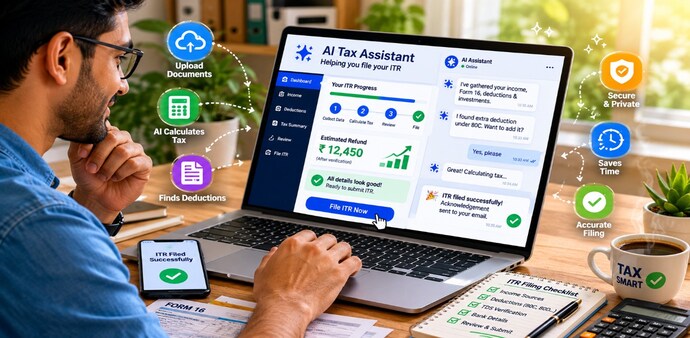
As India’s income tax filing season gathers pace, a growing number of taxpayers are turning to artificial intelligence tools such as ChatGPT and Claude to help prepare and file their Income Tax Returns (ITRs). While users are praising these tools for simplifying complex tax processes, experts caution that convenience should not come at the cost of accuracy, privacy, and compliance.
The debate has intensified after several professionals shared their experiences online, claiming AI assistants helped them navigate tax forms, understand deductions, identify discrepancies, and even complete filing workflows. Some users described the experience as having a chartered accountant guiding them through every step of the process.
Why Taxpayers are tapping AI
For many taxpayers, especially salaried individuals and NRIs, tax filing can be confusing and time-consuming. AI tools are increasingly being used to explain tax terminology, interpret Form 16 data, compare information with tax records, and guide users through the filing process. According to users who have experimented with AI-assisted filing, the technology offers three major benefits: faster processing, easier understanding of tax rules, and lower dependence on intermediaries.
The appeal comes at a time when India's tax framework is undergoing significant changes under the Income-tax Rules, 2026, introducing new compliance procedures, disclosures, and filing requirements. As a result, many taxpayers are seeking digital assistance to navigate the evolving system.
Hidden risks behind the convenience
Despite the enthusiasm, tax professionals warn that AI should be treated as an assistant rather than a replacement for qualified expertise.
Large language models can occasionally generate incorrect information, misinterpret tax provisions, or rely on outdated rules. While they may provide convincing explanations, they do not guarantee legal or tax accuracy. Industry experts and users alike stress that any AI-generated output should be carefully reviewed before submission.
Several users on online forums have reported instances where AI tools made calculation errors or referenced outdated tax provisions, requiring manual intervention and verification. Others noted that AI works best when users already possess a basic understanding of tax rules and can identify potential mistakes.
Privacy concerns a major issue
Another key concern is data security.
Filing an ITR requires sharing highly sensitive information, including PAN details, salary records, bank account information, investment data, and tax documents. Critics argue that uploading such information to AI platforms creates additional privacy risks, particularly if users are unaware of how their data is stored or processed.
While AI companies maintain that user data is protected through encryption and access controls, cybersecurity experts advise taxpayers to understand privacy policies carefully before uploading personal financial information. The concern is not unique to AI platforms, but it has become more prominent as individuals experiment with automated tax filing workflows.
What AI can safely help with
Experts say AI can be particularly useful for:
- Explaining tax concepts and terminology.
- Understanding the difference between old and new tax regimes.
- Reviewing Form 16 and other tax documents.
- Creating filing checklists.
- Identifying documents required before filing.
- Clarifying deductions and exemptions.
- Helping taxpayers understand notices or portal messages.
However, final calculations, disclosures, and submissions should ideally be reviewed manually or validated by a qualified tax professional, especially in cases involving capital gains, foreign income, business income, multiple employers, or complex investment structures.
As India’s income tax filing season gathers pace, a growing number of taxpayers are turning to artificial intelligence tools such as ChatGPT and Claude to help prepare and file their Income Tax Returns (ITRs). While users are praising these tools for simplifying complex tax processes, experts caution that convenience should not come at the cost of accuracy, privacy, and compliance.
The debate has intensified after several professionals shared their experiences online, claiming AI assistants helped them navigate tax forms, understand deductions, identify discrepancies, and even complete filing workflows. Some users described the experience as having a chartered accountant guiding them through every step of the process.
Why Taxpayers are tapping AI
For many taxpayers, especially salaried individuals and NRIs, tax filing can be confusing and time-consuming. AI tools are increasingly being used to explain tax terminology, interpret Form 16 data, compare information with tax records, and guide users through the filing process. According to users who have experimented with AI-assisted filing, the technology offers three major benefits: faster processing, easier understanding of tax rules, and lower dependence on intermediaries.
The appeal comes at a time when India's tax framework is undergoing significant changes under the Income-tax Rules, 2026, introducing new compliance procedures, disclosures, and filing requirements. As a result, many taxpayers are seeking digital assistance to navigate the evolving system.
Hidden risks behind the convenience
Despite the enthusiasm, tax professionals warn that AI should be treated as an assistant rather than a replacement for qualified expertise.
Large language models can occasionally generate incorrect information, misinterpret tax provisions, or rely on outdated rules. While they may provide convincing explanations, they do not guarantee legal or tax accuracy. Industry experts and users alike stress that any AI-generated output should be carefully reviewed before submission.
Several users on online forums have reported instances where AI tools made calculation errors or referenced outdated tax provisions, requiring manual intervention and verification. Others noted that AI works best when users already possess a basic understanding of tax rules and can identify potential mistakes.
Privacy concerns a major issue
Another key concern is data security.
Filing an ITR requires sharing highly sensitive information, including PAN details, salary records, bank account information, investment data, and tax documents. Critics argue that uploading such information to AI platforms creates additional privacy risks, particularly if users are unaware of how their data is stored or processed.
While AI companies maintain that user data is protected through encryption and access controls, cybersecurity experts advise taxpayers to understand privacy policies carefully before uploading personal financial information. The concern is not unique to AI platforms, but it has become more prominent as individuals experiment with automated tax filing workflows.
What AI can safely help with
Experts say AI can be particularly useful for:
- Explaining tax concepts and terminology.
- Understanding the difference between old and new tax regimes.
- Reviewing Form 16 and other tax documents.
- Creating filing checklists.
- Identifying documents required before filing.
- Clarifying deductions and exemptions.
- Helping taxpayers understand notices or portal messages.
However, final calculations, disclosures, and submissions should ideally be reviewed manually or validated by a qualified tax professional, especially in cases involving capital gains, foreign income, business income, multiple employers, or complex investment structures.