
4 Namo cities proposed in Delhi-NCR: All you need to know about connectivity, RRTS corridors, and more
Delhi facing land constraints and satellite cities witnessing rising congestion and property prices, policymakers are looking at decentralised growth as the solution
- Jun 24, 2026,
- Updated Jun 24, 2026 12:32 PM IST
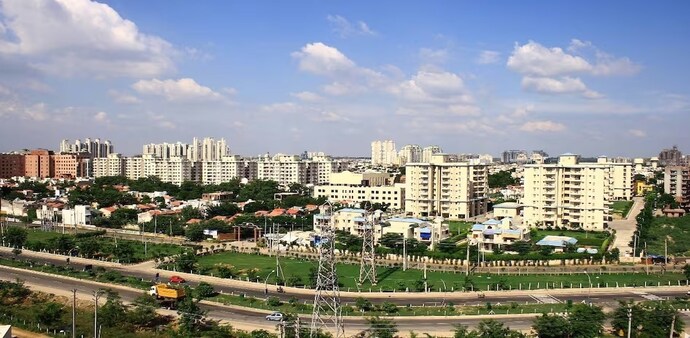
The National Capital Region (NCR) is preparing for one of its biggest urban transformations yet. Under the Regional Plan 2041, four new "Namo Cities" are proposed across the NCR to accommodate rapid population growth, improve connectivity and reduce pressure on Delhi and existing urban centres such as Noida, Gurugram and Ghaziabad.
NCR's urban future
NCR's population could nearly double by 2041, creating immense pressure on housing, transport networks and civic infrastructure. With Delhi facing land constraints and satellite cities witnessing rising congestion and property prices, policymakers are looking at decentralised growth as the solution. The proposed Namo Cities aim to create new economic and residential hubs outside the traditional growth centres.
MUST READ: Can Faridabad beat Gurugram, Noida for value-driven homebuyers?
What are Namo cities?
The proposed Namo Cities will be semi-greenfield urban hubs developed along the Namo Bharat RRTS (Regional Rapid Transit System) corridors. Unlike conventional city expansion, these cities will follow a Transit-Oriented Development (TOD) model, where residential, commercial, retail and recreational spaces are planned around high-capacity public transport stations. The goal is to minimise travel time, reduce dependence on private vehicles and promote sustainable urbanisation.
The NCR Planning Board has proposed four such cities, with one likely to be developed in each NCR state: Delhi, Haryana, Uttar Pradesh and Rajasthan. Their final locations will be selected through a competitive process among participating states.
The vision
A key feature of Regional Plan 2041 is the concept of a "30-minute NCR". The vision is to connect homes, workplaces and essential services through a network of RRTS corridors, metro systems, highways and rail infrastructure, enabling residents to travel between major urban centres within half an hour.
₹5,000 cr grant from the centre
To support the development of these new urban hubs, the Centre has announced assistance worth ₹5,000 crore over the next five years. The package includes grants, loans and guarantees aimed at accelerating infrastructure creation and attracting private investment. Industry experts believe the initiative could unlock fresh opportunities in real estate, logistics, manufacturing and commercial development.
ALSO READ: Sonipat vs Gurugram: Where should real estate investors put their money?
Future aim
The Namo Cities project represents a shift away from Delhi-centric growth towards a multi-nodal urban structure. If implemented successfully, the new cities could become self-sustaining centres with housing, jobs, education and healthcare integrated around fast public transport. Combined with the expanding Namo Bharat network and upcoming infrastructure projects such as Jewar Airport, the initiative has the potential to redefine how millions of people live, commute and work in the NCR by 2041.
The National Capital Region (NCR) is preparing for one of its biggest urban transformations yet. Under the Regional Plan 2041, four new "Namo Cities" are proposed across the NCR to accommodate rapid population growth, improve connectivity and reduce pressure on Delhi and existing urban centres such as Noida, Gurugram and Ghaziabad.
NCR's urban future
NCR's population could nearly double by 2041, creating immense pressure on housing, transport networks and civic infrastructure. With Delhi facing land constraints and satellite cities witnessing rising congestion and property prices, policymakers are looking at decentralised growth as the solution. The proposed Namo Cities aim to create new economic and residential hubs outside the traditional growth centres.
MUST READ: Can Faridabad beat Gurugram, Noida for value-driven homebuyers?
What are Namo cities?
The proposed Namo Cities will be semi-greenfield urban hubs developed along the Namo Bharat RRTS (Regional Rapid Transit System) corridors. Unlike conventional city expansion, these cities will follow a Transit-Oriented Development (TOD) model, where residential, commercial, retail and recreational spaces are planned around high-capacity public transport stations. The goal is to minimise travel time, reduce dependence on private vehicles and promote sustainable urbanisation.
The NCR Planning Board has proposed four such cities, with one likely to be developed in each NCR state: Delhi, Haryana, Uttar Pradesh and Rajasthan. Their final locations will be selected through a competitive process among participating states.
The vision
A key feature of Regional Plan 2041 is the concept of a "30-minute NCR". The vision is to connect homes, workplaces and essential services through a network of RRTS corridors, metro systems, highways and rail infrastructure, enabling residents to travel between major urban centres within half an hour.
₹5,000 cr grant from the centre
To support the development of these new urban hubs, the Centre has announced assistance worth ₹5,000 crore over the next five years. The package includes grants, loans and guarantees aimed at accelerating infrastructure creation and attracting private investment. Industry experts believe the initiative could unlock fresh opportunities in real estate, logistics, manufacturing and commercial development.
ALSO READ: Sonipat vs Gurugram: Where should real estate investors put their money?
Future aim
The Namo Cities project represents a shift away from Delhi-centric growth towards a multi-nodal urban structure. If implemented successfully, the new cities could become self-sustaining centres with housing, jobs, education and healthcare integrated around fast public transport. Combined with the expanding Namo Bharat network and upcoming infrastructure projects such as Jewar Airport, the initiative has the potential to redefine how millions of people live, commute and work in the NCR by 2041.