
Hiranandani warns of speculative property buying in Gurugram, Noida: 'Flipping is much higher in...'
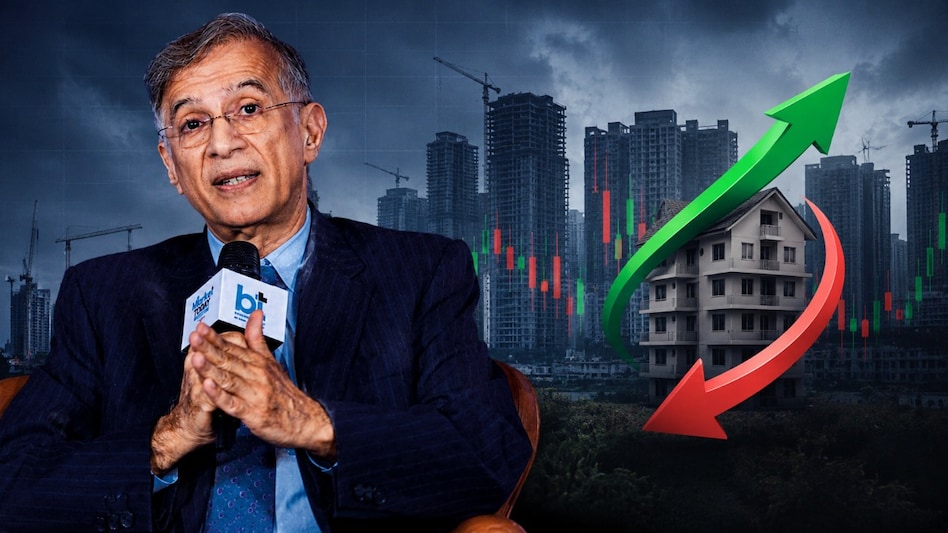
Hiranandani said concerns about flipping and short-term property speculation are particularly relevant in Gurugram and the wider National Capital Region
- Jun 8, 2026,
- Updated Jun 8, 2026 12:07 PM IST
Speculative property buying remains a far bigger risk in North India than in other parts of the country, according to Hiranandani Group Co-Founder and Managing Director Niranjan Hiranandani, who warned that excessive investor activity can amplify downturns and hurt both developers and the wider economy.
Hiranandani said concerns about flipping and short-term property speculation are particularly relevant in Gurugram and the wider National Capital Region.
"This concern is more relevant in North India. We are seeing this particularly in Gurugram. The story there is quite serious. If you recall, many of the problems that eventually led to the introduction of RERA were concentrated in Noida, Greater Noida, Gurugram, and the broader NCR region. Investor participation is much higher there," he said while speaking on The Neha Nagar Show.
Don't Miss: 'Bottom of the pyramid is not growing': Niranjan Hiranandani sounds alarm on affordable housing
According to Hiranandani, investor behaviour in western and southern India is markedly different.
"When you talk about flipping, the situation in western and southern India is very different. Here, investors do exist, but flipping is minimal. In our markets, flipping accounts for perhaps 5-7%, certainly not even 10%," he said.
By contrast, he said investor participation in parts of North India can be several times higher. "In North India, however, 40-50% of buyers can be investors, many of them short-term investors. In western and southern India, investors typically hold properties for three to five years before selling."
The real estate tycoon described a pattern where investors buy multiple apartments and quickly exit when prices rise, a practice he said has been common in some northern markets for years. "In North India, people often buy three apartments and quickly sell one if prices rise. That has been a common practice for years. It is much riskier."
Hiranandani said such activity amounts to speculation rather than genuine long-term investing and can become a major problem during downturns. "The consequences of such speculation are far more severe. During slowdowns, these investors often lack the capacity to continue investing. They are speculative investors, not genuine long-term investors."
"There is a difference between investing and speculation. Speculation is dangerous. It can harm the broader economy. Its negative effects also hit developers. Several large companies have suffered because of this, and some have ended up in insolvency proceedings before the NCLT," he added.
While acknowledging that speculative buying exists across the country, Hiranandani said the issue remains significantly more pronounced in North India than in western and southern markets.
Speculative property buying remains a far bigger risk in North India than in other parts of the country, according to Hiranandani Group Co-Founder and Managing Director Niranjan Hiranandani, who warned that excessive investor activity can amplify downturns and hurt both developers and the wider economy.
Hiranandani said concerns about flipping and short-term property speculation are particularly relevant in Gurugram and the wider National Capital Region.
"This concern is more relevant in North India. We are seeing this particularly in Gurugram. The story there is quite serious. If you recall, many of the problems that eventually led to the introduction of RERA were concentrated in Noida, Greater Noida, Gurugram, and the broader NCR region. Investor participation is much higher there," he said while speaking on The Neha Nagar Show.
Don't Miss: 'Bottom of the pyramid is not growing': Niranjan Hiranandani sounds alarm on affordable housing
According to Hiranandani, investor behaviour in western and southern India is markedly different.
"When you talk about flipping, the situation in western and southern India is very different. Here, investors do exist, but flipping is minimal. In our markets, flipping accounts for perhaps 5-7%, certainly not even 10%," he said.
By contrast, he said investor participation in parts of North India can be several times higher. "In North India, however, 40-50% of buyers can be investors, many of them short-term investors. In western and southern India, investors typically hold properties for three to five years before selling."
The real estate tycoon described a pattern where investors buy multiple apartments and quickly exit when prices rise, a practice he said has been common in some northern markets for years. "In North India, people often buy three apartments and quickly sell one if prices rise. That has been a common practice for years. It is much riskier."
Hiranandani said such activity amounts to speculation rather than genuine long-term investing and can become a major problem during downturns. "The consequences of such speculation are far more severe. During slowdowns, these investors often lack the capacity to continue investing. They are speculative investors, not genuine long-term investors."
"There is a difference between investing and speculation. Speculation is dangerous. It can harm the broader economy. Its negative effects also hit developers. Several large companies have suffered because of this, and some have ended up in insolvency proceedings before the NCLT," he added.
While acknowledging that speculative buying exists across the country, Hiranandani said the issue remains significantly more pronounced in North India than in western and southern markets.