
Old DDA flats to get a makeover? Delhi Master Plan 2047 proposes new redevelopment rules
A major change is the reduction in the minimum land requirement for group housing redevelopment from 40,000 square metres to 3,000 square metres. This could allow smaller and older societies to participate in redevelopment, including through plot amalgamation where required
- Aug 26, 2026,
- Updated Aug 26, 2026 8:05 AM IST
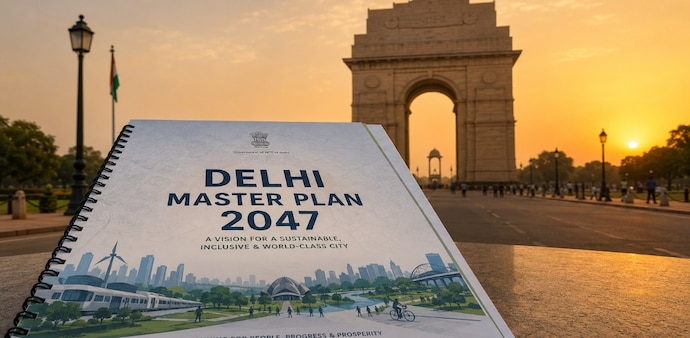
Residents of old houses, DDA flats, government colonies and housing societies in Delhi could get a new redevelopment route under the Delhi Master Plan 2047. Ageing and dilapidated buildings may be demolished and replaced with modern multi-storey complexes, with residents potentially receiving new and larger flats along with better infrastructure.
Higher FAR, More construction
Under the proposed framework, redevelopment projects may receive an additional Floor Area Ratio (FAR) of up to 1.5 times the base FAR. This will allow builders to construct more space on the same plot. However, this does not mean every resident will automatically get a flat 1.5 times larger. The size of the new home will depend on the plot, applicable FAR and the agreement between residents, the housing society or RWA and the developer.
The additional flats created after existing residents are rehabilitated may be sold commercially by the builder to recover costs and earn a profit.
Smaller societies can also redevelop
A major change is the reduction in the minimum land requirement for group housing redevelopment from 40,000 square metres to 3,000 square metres. This could allow smaller and older societies to participate in redevelopment, including through plot amalgamation where required.
The redevelopment drive is estimated to generate around 7 lakh additional homes, helping address Delhi's growing housing requirement.
New homes, Better facilities
Redeveloped housing complexes are expected to include lifts, underground or multi-level parking, wider roads, improved water and sewerage systems, parks and emergency shelter areas. The proposal also seeks to remove the general 18-metre height restriction, although height limits will continue in areas near airports, heritage structures and security-sensitive locations.
DON'T MISS: Delhi Master Plan 2047: 40 lakh homes, 100-storey towers and air taxis in capital’s future
Focus on green housing
The plan includes several environmental requirements. Wastewater will have to be treated and reused, while wet and green waste must be recycled. At least 5% of electricity requirements are proposed to come from renewable sources such as solar energy.
Rainwater harvesting through ponds and percolation pits is also proposed. At least 50% of society land is to be maintained as parks or greenery, while large shade-giving trees are planned across 30% of the total area.
Part of a larger housing plan
Delhi is estimated to need more than 40 lakh additional homes by 2047. The Master Plan proposes meeting this demand through redevelopment, transit-oriented development, land pooling and affordable housing. Around 18 lakh affordable homes are proposed near transit corridors, while land pooling across about 200 sq km could create nearly 12 lakh homes.
ALSO READ: Can Delhi’s canals become power plants? What Master Plan 2047 says on solar, hydro energy generation
Where will redevelopment apply?
The redevelopment model primarily targets old colonies, cooperative housing societies, DDA housing and government colonies. Decisions will involve residents and their RWAs or housing societies, while the DDA will oversee compliance.
However, the framework will not apply to unauthorised colonies, urban villages, slum clusters, the Yamuna floodplain or bungalow zones such as Lutyens' Delhi and Civil Lines.
Residents of old houses, DDA flats, government colonies and housing societies in Delhi could get a new redevelopment route under the Delhi Master Plan 2047. Ageing and dilapidated buildings may be demolished and replaced with modern multi-storey complexes, with residents potentially receiving new and larger flats along with better infrastructure.
Higher FAR, More construction
Under the proposed framework, redevelopment projects may receive an additional Floor Area Ratio (FAR) of up to 1.5 times the base FAR. This will allow builders to construct more space on the same plot. However, this does not mean every resident will automatically get a flat 1.5 times larger. The size of the new home will depend on the plot, applicable FAR and the agreement between residents, the housing society or RWA and the developer.
The additional flats created after existing residents are rehabilitated may be sold commercially by the builder to recover costs and earn a profit.
Smaller societies can also redevelop
A major change is the reduction in the minimum land requirement for group housing redevelopment from 40,000 square metres to 3,000 square metres. This could allow smaller and older societies to participate in redevelopment, including through plot amalgamation where required.
The redevelopment drive is estimated to generate around 7 lakh additional homes, helping address Delhi's growing housing requirement.
New homes, Better facilities
Redeveloped housing complexes are expected to include lifts, underground or multi-level parking, wider roads, improved water and sewerage systems, parks and emergency shelter areas. The proposal also seeks to remove the general 18-metre height restriction, although height limits will continue in areas near airports, heritage structures and security-sensitive locations.
DON'T MISS: Delhi Master Plan 2047: 40 lakh homes, 100-storey towers and air taxis in capital’s future
Focus on green housing
The plan includes several environmental requirements. Wastewater will have to be treated and reused, while wet and green waste must be recycled. At least 5% of electricity requirements are proposed to come from renewable sources such as solar energy.
Rainwater harvesting through ponds and percolation pits is also proposed. At least 50% of society land is to be maintained as parks or greenery, while large shade-giving trees are planned across 30% of the total area.
Part of a larger housing plan
Delhi is estimated to need more than 40 lakh additional homes by 2047. The Master Plan proposes meeting this demand through redevelopment, transit-oriented development, land pooling and affordable housing. Around 18 lakh affordable homes are proposed near transit corridors, while land pooling across about 200 sq km could create nearly 12 lakh homes.
ALSO READ: Can Delhi’s canals become power plants? What Master Plan 2047 says on solar, hydro energy generation
Where will redevelopment apply?
The redevelopment model primarily targets old colonies, cooperative housing societies, DDA housing and government colonies. Decisions will involve residents and their RWAs or housing societies, while the DDA will oversee compliance.
However, the framework will not apply to unauthorised colonies, urban villages, slum clusters, the Yamuna floodplain or bungalow zones such as Lutyens' Delhi and Civil Lines.