
A chilling Atlantic mystery: Why the ‘Cold Blob’ can affect the Indian monsoon?
Climate records dating back to the late 19th century show that while most of the world's oceans have steadily heated up due to human-induced climate change, this particular region stands out as an exception.
- Jun 13, 2026,
- Updated Jun 13, 2026 5:01 PM IST
As global temperatures continue to rise, one region of the world's oceans has puzzled scientists by doing the exact opposite. South of Greenland and stretching across parts of the North Atlantic lies an unusual patch of water that has remained cooler than the surrounding ocean for decades. Researchers call it the "North Atlantic Warming Hole" (NAWH), though it is more popularly known as the "Cold Blob."
Its existence appears paradoxical in an era of record-breaking heatwaves and warming seas, but scientists believe it may offer important clues about the future of the Earth's climate system.
What exactly is the 'Cold Blob'?
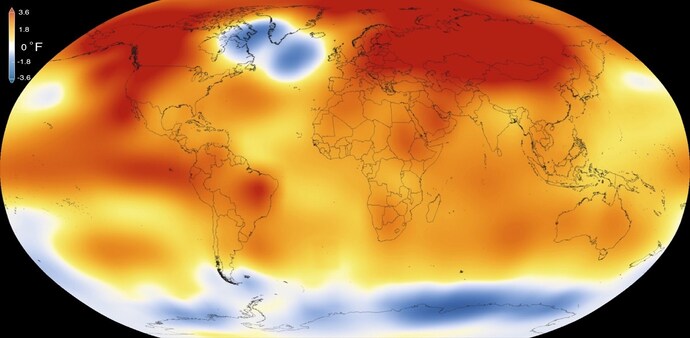
The Cold Blob is a large area of the North Atlantic Ocean, roughly located between Greenland, Iceland and the eastern coast of North America, where sea surface temperatures have warmed much less than the global average — or, in some periods, have actually cooled.
Climate records dating back to the late 19th century show that while most of the world's oceans have steadily heated up due to human-induced climate change, this particular region stands out as an exception. Scientists refer to it as a "warming hole" because it appears as a cool patch amid a globally warming ocean.
Why is this happening?
The leading explanation revolves around the Atlantic Meridional Overturning Circulation (AMOC), a vast network of ocean currents that includes the well-known Gulf Stream.
The AMOC functions like a giant conveyor belt:
- Warm, salty water flows northward from the tropics.
- As it reaches higher latitudes, it cools, becomes denser, and sinks.
- The cold, deep water then travels southward, completing the circulation loop.
However, climate change is disrupting this system. Rising temperatures are accelerating the melting of the Greenland Ice Sheet and Arctic sea ice, pouring large amounts of freshwater into the North Atlantic. Since freshwater is less dense and less salty than seawater, it makes it harder for surface waters to sink, potentially slowing down the AMOC.
A weaker AMOC would transport less tropical heat northward, leaving parts of the North Atlantic cooler than they otherwise would be — creating the Cold Blob.
Is the AMOC really slowing down?
There is broad scientific evidence suggesting that the AMOC has weakened compared with its historical strength, although the exact magnitude and long-term trend remain areas of active research.
Some studies indicate the circulation may be at its weakest in more than a millennium, while others caution that direct observations only span the past two decades and that uncertainties remain. Most climate models, however, project that the AMOC is likely to weaken further as greenhouse gas emissions continue.
Importantly, scientists do not expect a sudden collapse of the AMOC in the near future, but even a gradual slowdown could have significant consequences.
Why does the Cold Blob matter?
The Cold Blob is more than just an oceanographic curiosity. Because the North Atlantic plays a crucial role in regulating global climate, changes there can ripple across the world.
1. Changes in weather patterns: A cooler North Atlantic can alter the position and strength of the jet stream, influencing weather across Europe and North America. Some researchers have linked it to shifts in storm tracks and unusual rainfall patterns.
2. Sea-level rise along the US East Coast: A slowdown in the AMOC can contribute to higher regional sea levels because weaker ocean circulation redistributes water differently. This could exacerbate coastal flooding risks.
3. Impact on marine ecosystems: Marine species are highly sensitive to changes in water temperature and ocean circulation. A persistent Cold Blob can affect fish migration routes, plankton distribution and the productivity of North Atlantic fisheries.
4. Influence on the global climate system: The AMOC helps move heat around the planet. Any substantial weakening could affect monsoon systems, Arctic sea ice, and even climate conditions in parts of Africa and South America.
Could the Cold Blob affect the Indian monsoon?
Potentially, yes. Although the relationship is complex and still being studied, the AMOC influences large-scale atmospheric circulation patterns that can interact with tropical climate systems.
Several studies suggest that a weaker AMOC could alter the timing and intensity of the South Asian monsoon by changing temperature contrasts between land and ocean and by influencing global rainfall belts.
However, the Indian monsoon is shaped by many factors — including the El Niño-Southern Oscillation (ENSO), the Indian Ocean Dipole, and local ocean temperatures — so the Cold Blob is only one piece of a much larger puzzle.
Is the Cold Blob proof that global warming has stopped?
No. In fact, scientists often point to the Cold Blob as evidence of how climate change can produce complex and sometimes counterintuitive regional effects.
Globally, the oceans have absorbed more than 90% of the excess heat trapped by greenhouse gases, and average sea surface temperatures have reached record highs in recent years. The Cold Blob is a localized anomaly driven by changes in ocean circulation, not a sign that global warming is reversing.
Could the Cold Blob disappear?
That depends largely on how the AMOC evolves over the coming decades. If ocean circulation remains relatively stable, the Cold Blob may gradually shrink. But if freshwater input from Greenland continues to increase and the AMOC weakens further, the cool patch could persist or even become more pronounced.
Scientists are closely monitoring the region using satellites, ocean buoys and deep-sea instruments because changes in the Cold Blob could provide an early warning of broader shifts in the Earth's climate system.
As global temperatures continue to rise, one region of the world's oceans has puzzled scientists by doing the exact opposite. South of Greenland and stretching across parts of the North Atlantic lies an unusual patch of water that has remained cooler than the surrounding ocean for decades. Researchers call it the "North Atlantic Warming Hole" (NAWH), though it is more popularly known as the "Cold Blob."
Its existence appears paradoxical in an era of record-breaking heatwaves and warming seas, but scientists believe it may offer important clues about the future of the Earth's climate system.
What exactly is the 'Cold Blob'?
The Cold Blob is a large area of the North Atlantic Ocean, roughly located between Greenland, Iceland and the eastern coast of North America, where sea surface temperatures have warmed much less than the global average — or, in some periods, have actually cooled.
Climate records dating back to the late 19th century show that while most of the world's oceans have steadily heated up due to human-induced climate change, this particular region stands out as an exception. Scientists refer to it as a "warming hole" because it appears as a cool patch amid a globally warming ocean.
Why is this happening?
The leading explanation revolves around the Atlantic Meridional Overturning Circulation (AMOC), a vast network of ocean currents that includes the well-known Gulf Stream.
The AMOC functions like a giant conveyor belt:
- Warm, salty water flows northward from the tropics.
- As it reaches higher latitudes, it cools, becomes denser, and sinks.
- The cold, deep water then travels southward, completing the circulation loop.
However, climate change is disrupting this system. Rising temperatures are accelerating the melting of the Greenland Ice Sheet and Arctic sea ice, pouring large amounts of freshwater into the North Atlantic. Since freshwater is less dense and less salty than seawater, it makes it harder for surface waters to sink, potentially slowing down the AMOC.
A weaker AMOC would transport less tropical heat northward, leaving parts of the North Atlantic cooler than they otherwise would be — creating the Cold Blob.
Is the AMOC really slowing down?
There is broad scientific evidence suggesting that the AMOC has weakened compared with its historical strength, although the exact magnitude and long-term trend remain areas of active research.
Some studies indicate the circulation may be at its weakest in more than a millennium, while others caution that direct observations only span the past two decades and that uncertainties remain. Most climate models, however, project that the AMOC is likely to weaken further as greenhouse gas emissions continue.
Importantly, scientists do not expect a sudden collapse of the AMOC in the near future, but even a gradual slowdown could have significant consequences.
Why does the Cold Blob matter?
The Cold Blob is more than just an oceanographic curiosity. Because the North Atlantic plays a crucial role in regulating global climate, changes there can ripple across the world.
1. Changes in weather patterns: A cooler North Atlantic can alter the position and strength of the jet stream, influencing weather across Europe and North America. Some researchers have linked it to shifts in storm tracks and unusual rainfall patterns.
2. Sea-level rise along the US East Coast: A slowdown in the AMOC can contribute to higher regional sea levels because weaker ocean circulation redistributes water differently. This could exacerbate coastal flooding risks.
3. Impact on marine ecosystems: Marine species are highly sensitive to changes in water temperature and ocean circulation. A persistent Cold Blob can affect fish migration routes, plankton distribution and the productivity of North Atlantic fisheries.
4. Influence on the global climate system: The AMOC helps move heat around the planet. Any substantial weakening could affect monsoon systems, Arctic sea ice, and even climate conditions in parts of Africa and South America.
Could the Cold Blob affect the Indian monsoon?
Potentially, yes. Although the relationship is complex and still being studied, the AMOC influences large-scale atmospheric circulation patterns that can interact with tropical climate systems.
Several studies suggest that a weaker AMOC could alter the timing and intensity of the South Asian monsoon by changing temperature contrasts between land and ocean and by influencing global rainfall belts.
However, the Indian monsoon is shaped by many factors — including the El Niño-Southern Oscillation (ENSO), the Indian Ocean Dipole, and local ocean temperatures — so the Cold Blob is only one piece of a much larger puzzle.
Is the Cold Blob proof that global warming has stopped?
No. In fact, scientists often point to the Cold Blob as evidence of how climate change can produce complex and sometimes counterintuitive regional effects.
Globally, the oceans have absorbed more than 90% of the excess heat trapped by greenhouse gases, and average sea surface temperatures have reached record highs in recent years. The Cold Blob is a localized anomaly driven by changes in ocean circulation, not a sign that global warming is reversing.
Could the Cold Blob disappear?
That depends largely on how the AMOC evolves over the coming decades. If ocean circulation remains relatively stable, the Cold Blob may gradually shrink. But if freshwater input from Greenland continues to increase and the AMOC weakens further, the cool patch could persist or even become more pronounced.
Scientists are closely monitoring the region using satellites, ocean buoys and deep-sea instruments because changes in the Cold Blob could provide an early warning of broader shifts in the Earth's climate system.