
Artemis II: How will NASA bring astronauts back to Earth? Mathematics behind the process
The journey back is a carefully calculated sequence of maneuvers, system checks and high-speed reentry operations that will test the Orion spacecraft under extreme conditions.
- Apr 8, 2026,
- Updated Apr 8, 2026 12:08 PM IST
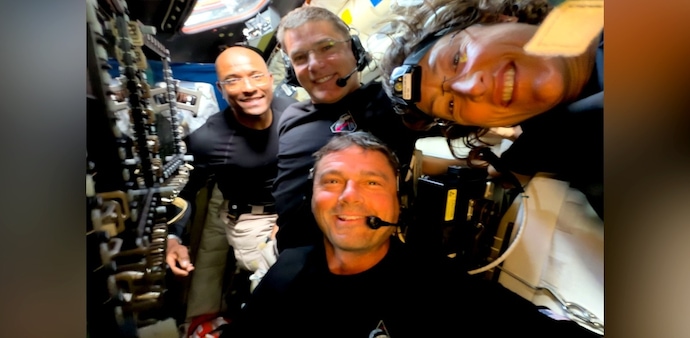
After completing a historic crewed flyby of the Moon, NASA's Artemis II mission is now focused on one of the most critical phases of deep space travel: safely returning astronauts to Earth. The journey back is not just a straight path home, but a carefully calculated sequence of manoeuvres, system checks and high-speed reentry operations that will test the Orion spacecraft under extreme conditions.
Leaving the Moon's influence
On April 7, the Orion spacecraft, named Integrity, began transitioning out of the Moon's gravitational pull and into Earth's gravitational influence. This shift is part of a trajectory strategy that uses the natural forces of both celestial bodies, similar to the path used during Apollo-era missions. By relying on gravity, NASA minimises fuel use while maintaining precise control over the spacecraft's route.
Fine-tuning the path
On April 8, mission teams are carrying out trajectory correction manoeuvres using Orion's onboard thrusters. These small but precise engine burns adjust the spacecraft's speed and direction to ensure it remains on course for a targeted landing zone in the Pacific Ocean.
Alongside navigation adjustments, astronauts are conducting key system tests, including life support performance checks and communication antenna evaluations. The crew is also testing specialised garments designed to help their bodies readjust to Earth's gravity by maintaining stable blood circulation.
What role will gravity play in Artemis II's return to Earth?
The Artemis II mission utilises a "free-return trajectory" to come back to Earth. Instead of using a lot of fuel to change direction, the spacecraft uses the Moon's gravity to bend its path. This "slingshot" effect sends the Orion capsule back towards Earth, where Earth's gravity then helps it complete the return journey, saving fuel.
Preparing for reentry
By April 9, the focus shifts fully to reentry readiness. The crew will secure all loose equipment, reposition their seats and suit up in protective gear designed for the intense descent through Earth's atmosphere. These preparations are essential, as even minor issues during reentry can pose significant risks.
The final descent
Reentry is scheduled for April 10 and marks the most intense phase of the mission. Orion will enter Earth's atmosphere at speeds of nearly 25,000 miles per hour, making it one of the fastest crewed reentries ever attempted. The spacecraft's heat shield will endure extreme temperatures as it slows down rapidly.
As Orion descends further, a series of parachutes will deploy to reduce its speed to about 20 miles per hour before splashdown. NASA is targeting a landing zone in the Pacific Ocean, likely west of Baja California or near Southern California, where recovery operations can be conducted efficiently.
Recovery and what comes next
Once the capsule lands, U.S. Navy recovery teams will retrieve the spacecraft and crew. Astronauts will undergo immediate medical evaluations aboard recovery ships before being transported back to shore. The mission does not end at splashdown. Engineers will spend months analyzing data from Orion's performance during reentry and throughout the mission.
After completing a historic crewed flyby of the Moon, NASA's Artemis II mission is now focused on one of the most critical phases of deep space travel: safely returning astronauts to Earth. The journey back is not just a straight path home, but a carefully calculated sequence of manoeuvres, system checks and high-speed reentry operations that will test the Orion spacecraft under extreme conditions.
Leaving the Moon's influence
On April 7, the Orion spacecraft, named Integrity, began transitioning out of the Moon's gravitational pull and into Earth's gravitational influence. This shift is part of a trajectory strategy that uses the natural forces of both celestial bodies, similar to the path used during Apollo-era missions. By relying on gravity, NASA minimises fuel use while maintaining precise control over the spacecraft's route.
Fine-tuning the path
On April 8, mission teams are carrying out trajectory correction manoeuvres using Orion's onboard thrusters. These small but precise engine burns adjust the spacecraft's speed and direction to ensure it remains on course for a targeted landing zone in the Pacific Ocean.
Alongside navigation adjustments, astronauts are conducting key system tests, including life support performance checks and communication antenna evaluations. The crew is also testing specialised garments designed to help their bodies readjust to Earth's gravity by maintaining stable blood circulation.
What role will gravity play in Artemis II's return to Earth?
The Artemis II mission utilises a "free-return trajectory" to come back to Earth. Instead of using a lot of fuel to change direction, the spacecraft uses the Moon's gravity to bend its path. This "slingshot" effect sends the Orion capsule back towards Earth, where Earth's gravity then helps it complete the return journey, saving fuel.
Preparing for reentry
By April 9, the focus shifts fully to reentry readiness. The crew will secure all loose equipment, reposition their seats and suit up in protective gear designed for the intense descent through Earth's atmosphere. These preparations are essential, as even minor issues during reentry can pose significant risks.
The final descent
Reentry is scheduled for April 10 and marks the most intense phase of the mission. Orion will enter Earth's atmosphere at speeds of nearly 25,000 miles per hour, making it one of the fastest crewed reentries ever attempted. The spacecraft's heat shield will endure extreme temperatures as it slows down rapidly.
As Orion descends further, a series of parachutes will deploy to reduce its speed to about 20 miles per hour before splashdown. NASA is targeting a landing zone in the Pacific Ocean, likely west of Baja California or near Southern California, where recovery operations can be conducted efficiently.
Recovery and what comes next
Once the capsule lands, U.S. Navy recovery teams will retrieve the spacecraft and crew. Astronauts will undergo immediate medical evaluations aboard recovery ships before being transported back to shore. The mission does not end at splashdown. Engineers will spend months analyzing data from Orion's performance during reentry and throughout the mission.