
Artemis II: What NASA's ambitious Moon mission means for India’s space ambitions after Chandrayaan-3
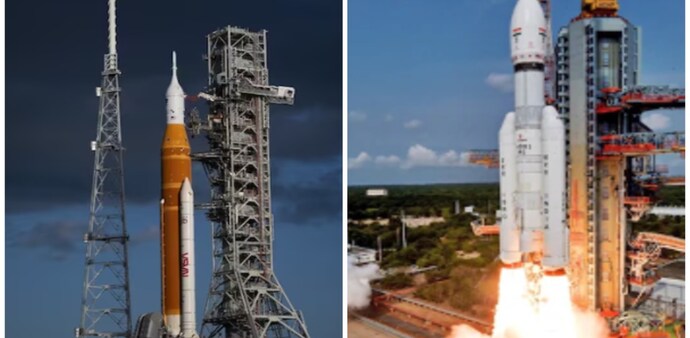
Chandrayaan-3 showed that India can land on the Moon but Artemis II shows what comes next—sending humans into deep space.
- Apr 1, 2026,
- Updated Apr 1, 2026 3:03 PM IST
As NASA gets ready to send astronauts around the Moon under Artemis II, the mission is being closely watched in India. It shows what the next stage of Moon exploration looks like—and where India stands after the success of Chandrayaan-3.
Artemis II: What the US mission will test
The US mission, expected to last about 10 days, will send four astronauts around the Moon and bring them back. It will test:
- Life-support systems in space
- Communication far from Earth
- Navigation during a Moon flyby
- Heat-shield performance during re-entry
These tests are needed before astronauts can land on the Moon again.
Chandrayaan-3: Big success, but different goal
For India, Chandrayaan-3 was a major achievement. It successfully landed near the Moon’s south pole in August 2023.
The mission was designed to:
- Prove India can land safely on the Moon
- Operate a rover on the surface
- Carry out basic experiments
India became the first country to land near the Moon’s south pole. But Artemis II is focused on something different—sending humans safely to deep space and back.
What India is doing next
According to a Reuters report in early 2025, India is now working step by step to build these capabilities and has already tested space docking, which is important for future missions. The broader plan includes:
- Gaganyaan missions to send astronauts into space
- Building an Indian space station
- Expanding human spaceflight systems
These are early steps before any human mission to the Moon.
Chandrayaan-4: The next Moon mission
India’s next planned Moon mission, Chandrayaan-4, will focus on more advanced tasks:
- Bringing samples back from the Moon
- Testing docking in space
- Ensuring safe return to Earth
The government has also shared long-term plans:
- Indian space station by 2035
- Possible human mission to the Moon by 2040
Why the Moon’s south pole matters
Both India and the US are interested in the Moon’s south pole because this region may have water ice, which could help:
- Support astronauts on the Moon
- Produce fuel for future missions
- Build long-term bases
India already has an advantage here because Chandrayaan-3 landed in this region.
India and the Artemis Accords
India has also joined the Artemis Accords, a US-led framework developed by NASA that sets basic rules for how countries should operate in space as more missions head to the Moon.
The accords focus on practical principles like sharing scientific data, being transparent about activities, helping astronauts in distress, and avoiding interference with other missions. They also allow countries to use space resources such as lunar ice, but in a coordinated and responsible way.
For India, joining the accords means being part of the global rule-making process for future Moon exploration, even though it is not directly part of the Artemis missions..
As NASA gets ready to send astronauts around the Moon under Artemis II, the mission is being closely watched in India. It shows what the next stage of Moon exploration looks like—and where India stands after the success of Chandrayaan-3.
Artemis II: What the US mission will test
The US mission, expected to last about 10 days, will send four astronauts around the Moon and bring them back. It will test:
- Life-support systems in space
- Communication far from Earth
- Navigation during a Moon flyby
- Heat-shield performance during re-entry
These tests are needed before astronauts can land on the Moon again.
Chandrayaan-3: Big success, but different goal
For India, Chandrayaan-3 was a major achievement. It successfully landed near the Moon’s south pole in August 2023.
The mission was designed to:
- Prove India can land safely on the Moon
- Operate a rover on the surface
- Carry out basic experiments
India became the first country to land near the Moon’s south pole. But Artemis II is focused on something different—sending humans safely to deep space and back.
What India is doing next
According to a Reuters report in early 2025, India is now working step by step to build these capabilities and has already tested space docking, which is important for future missions. The broader plan includes:
- Gaganyaan missions to send astronauts into space
- Building an Indian space station
- Expanding human spaceflight systems
These are early steps before any human mission to the Moon.
Chandrayaan-4: The next Moon mission
India’s next planned Moon mission, Chandrayaan-4, will focus on more advanced tasks:
- Bringing samples back from the Moon
- Testing docking in space
- Ensuring safe return to Earth
The government has also shared long-term plans:
- Indian space station by 2035
- Possible human mission to the Moon by 2040
Why the Moon’s south pole matters
Both India and the US are interested in the Moon’s south pole because this region may have water ice, which could help:
- Support astronauts on the Moon
- Produce fuel for future missions
- Build long-term bases
India already has an advantage here because Chandrayaan-3 landed in this region.
India and the Artemis Accords
India has also joined the Artemis Accords, a US-led framework developed by NASA that sets basic rules for how countries should operate in space as more missions head to the Moon.
The accords focus on practical principles like sharing scientific data, being transparent about activities, helping astronauts in distress, and avoiding interference with other missions. They also allow countries to use space resources such as lunar ice, but in a coordinated and responsible way.
For India, joining the accords means being part of the global rule-making process for future Moon exploration, even though it is not directly part of the Artemis missions..