
NASA's Artemis II mission: Why the astronauts won't be landing on the Lunar surface and more
Curious about who's going, how far they'll travel, and why landing isn't part of the plan? We've got all the answers right here.
- Apr 1, 2026,
- Updated Apr 1, 2026 1:35 PM IST
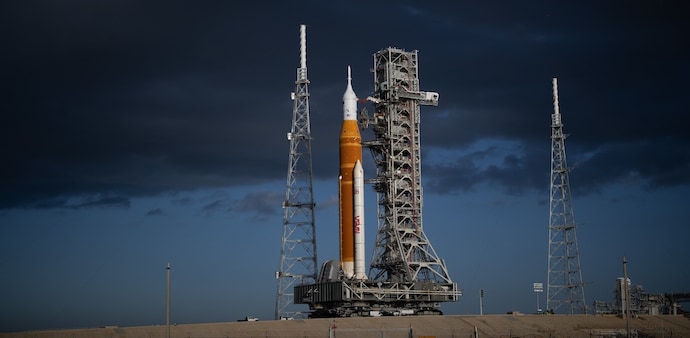
NASA's Artemis II mission is making history, as this is the first time in over 50 years that astronauts will travel to the Moon. But unlike the iconic Apollo landings, this crew won't be stepping onto the lunar surface. Artemis II is a critical test flight designed to prove that NASA's new spacecraft and rocket are truly ready for deep space. Think of it as a dress rehearsal before the main event. Curious about who's going, how far they'll travel, and why landing isn't part of the plan? We've got all the answers right here.
DON'T MISS | Worth a risk? Artemis II astronauts will lose contact with Earth for nearly an hour - NASA
Why will the astronauts not land on the Lunar surface?
The Artemis program is not built to put Artemis 2 on the Moon since the Orion spacecraft has no landing capability, and NASA is taking a staged testing approach before committing to a moon landing.
NASA's Artemis 1 mission marked a historic milestone in lunar exploration. In late 2022, an uncrewed Orion spacecraft successfully completed a Moon orbit mission — the first launch of NASA's Space Launch System (SLS) rocket.
It was Orion's second test flight, following its Earth orbit mission in December 2014. Building on this success, Artemis 2 is the next step: a crewed Moon mission with astronauts aboard.
"The approximately 10-day Artemis II flight test will launch on the agency’s powerful Space Launch System rocket, prove the Orion spacecraft’s life-support systems, and validate the capabilities and techniques needed for humans to live and work in deep space," according to NASA.
Orion will carry life support systems for the first time, and the crew will test their ability to manoeuvre the spacecraft in Earth's orbit before committing to an engine burn to reach the moon.
DON'T MISS | Artemis II launch: Will Indians be able to see NASA’s Moon mission in the sky?
Why does it continue to be risky to send humans to the Moon?
Sending humans to the Moon remains one of the riskiest missions despite advancements in space tech due to the challenges involved in navigating the treacherous, crater-filled south pole, high-speed reentry speeds, and the severe, unshielded deep-space radiation.
Due to this, NASA estimates pose a roughly 1-in-30 risk of failure for the Artemis lunar surface missions, significantly higher than the 1-in-200 risk for International Space Station missions.
- Dangerous landing zone: The Moon's South Pole is no flat Apollo landing strip — it is steep, cratered, and boulder-strewn, making a controlled touchdown one of the hardest feats in space exploration.
- Invisible radiation threat: The moment a spacecraft leaves the Earth's magnetic bubble, invisible high-energy particles start hitting the body. Solar storms can flare without warning, turning a routine day in space into a medical emergency in no time.
- Re-entry is no cakewalk: Orion tears through the Earth's atmosphere at speeds of more than 3,900 km/h/. The heat generated can erode heat shields that protect astronauts during descent.
- More systems, more ways to fail: Modern spacecraft have integrated systems that leave little room for error. Hydrogen leaks, shield erosion, and power failures have all surfaced during testing.
- No help: There is no rescue or quick fix in deep space. Every life-or-death decision has to be made autonomously within seconds.
NASA's Artemis II mission is making history, as this is the first time in over 50 years that astronauts will travel to the Moon. But unlike the iconic Apollo landings, this crew won't be stepping onto the lunar surface. Artemis II is a critical test flight designed to prove that NASA's new spacecraft and rocket are truly ready for deep space. Think of it as a dress rehearsal before the main event. Curious about who's going, how far they'll travel, and why landing isn't part of the plan? We've got all the answers right here.
DON'T MISS | Worth a risk? Artemis II astronauts will lose contact with Earth for nearly an hour - NASA
Why will the astronauts not land on the Lunar surface?
The Artemis program is not built to put Artemis 2 on the Moon since the Orion spacecraft has no landing capability, and NASA is taking a staged testing approach before committing to a moon landing.
NASA's Artemis 1 mission marked a historic milestone in lunar exploration. In late 2022, an uncrewed Orion spacecraft successfully completed a Moon orbit mission — the first launch of NASA's Space Launch System (SLS) rocket.
It was Orion's second test flight, following its Earth orbit mission in December 2014. Building on this success, Artemis 2 is the next step: a crewed Moon mission with astronauts aboard.
"The approximately 10-day Artemis II flight test will launch on the agency’s powerful Space Launch System rocket, prove the Orion spacecraft’s life-support systems, and validate the capabilities and techniques needed for humans to live and work in deep space," according to NASA.
Orion will carry life support systems for the first time, and the crew will test their ability to manoeuvre the spacecraft in Earth's orbit before committing to an engine burn to reach the moon.
DON'T MISS | Artemis II launch: Will Indians be able to see NASA’s Moon mission in the sky?
Why does it continue to be risky to send humans to the Moon?
Sending humans to the Moon remains one of the riskiest missions despite advancements in space tech due to the challenges involved in navigating the treacherous, crater-filled south pole, high-speed reentry speeds, and the severe, unshielded deep-space radiation.
Due to this, NASA estimates pose a roughly 1-in-30 risk of failure for the Artemis lunar surface missions, significantly higher than the 1-in-200 risk for International Space Station missions.
- Dangerous landing zone: The Moon's South Pole is no flat Apollo landing strip — it is steep, cratered, and boulder-strewn, making a controlled touchdown one of the hardest feats in space exploration.
- Invisible radiation threat: The moment a spacecraft leaves the Earth's magnetic bubble, invisible high-energy particles start hitting the body. Solar storms can flare without warning, turning a routine day in space into a medical emergency in no time.
- Re-entry is no cakewalk: Orion tears through the Earth's atmosphere at speeds of more than 3,900 km/h/. The heat generated can erode heat shields that protect astronauts during descent.
- More systems, more ways to fail: Modern spacecraft have integrated systems that leave little room for error. Hydrogen leaks, shield erosion, and power failures have all surfaced during testing.
- No help: There is no rescue or quick fix in deep space. Every life-or-death decision has to be made autonomously within seconds.