
BT Explainer: Why NASA calls Artemis III one of history’s most complex space missions
Artemis III is the third major mission in NASA's Artemis programme, which aims to return humans to the Moon and establish a long-term presence there.
- Jun 8, 2026,
- Updated Jun 8, 2026 5:01 PM IST
More than five decades after humans last walked on the Moon, NASA's Artemis programme is laying the groundwork for a sustained lunar presence and future missions to Mars. A key milestone in that journey is the Artemis III mission, which NASA describes as one of the most complex space missions ever attempted.
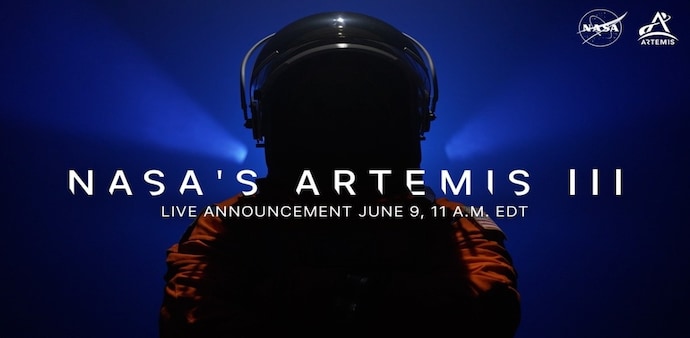
Building anticipation around the mission, NASA said in a post on X (formerly Twitter): "Coming soon: one of history’s most complex missions. Tune in on Tuesday, June 9, at 11am ET, to meet the astronauts flying aboard Artemis III, the mission that will test docking capabilities with commercial landers in low Earth orbit — an important step to crewed lunar landings."
The announcement has renewed interest in the Artemis programme and highlighted the crucial role Artemis III will play in preparing astronauts for future lunar missions.
What is Artemis III?
Artemis III is the third major mission in NASA's Artemis programme, which aims to return humans to the Moon and establish a long-term presence there.
The programme has unfolded in stages:
- Artemis I (2022): An uncrewed test flight that successfully sent NASA's Orion spacecraft around the Moon and back to Earth.
- Artemis II (planned for 2026): The first crewed Artemis mission, carrying astronauts on a flyby around the Moon.
- Artemis III (planned for 2027): A crewed mission focused on testing critical technologies and spacecraft operations required for future lunar landings.
While Artemis III was initially conceived as the mission that would land astronauts on the Moon, NASA has since revised its plans to prioritise extensive testing of mission systems before attempting a crewed lunar landing.
Why is Artemis III important?
NASA considers Artemis III a vital stepping stone toward returning humans to the lunar surface.
The mission will test how astronauts, spacecraft and commercial landing systems work together in orbit before undertaking a lunar landing mission. The objective is to validate complex operations and reduce risk for future deep-space missions.
According to NASA, Artemis III will demonstrate docking procedures with commercial lunar landers in low Earth orbit, helping engineers and astronauts gain experience with systems that will eventually be used near the Moon.
How will the mission work?
a
Once in Earth orbit, astronauts will conduct a series of rendezvous and docking manoeuvres with commercial lunar landing systems being developed by private-sector partners.
These operations will test:
- Precision spacecraft docking and undocking
- Crew transfers between vehicles
- Communications and navigation systems
- Integrated mission operations involving multiple spacecraft
- Life-support and safety systems needed for future lunar missions
The mission's complexity stems from coordinating several independently developed spacecraft and systems into a single crewed operation.
Role of commercial partners
NASA's lunar ambitions increasingly rely on partnerships with private companies.
Commercial landers being developed under NASA's Human Landing System programme are expected to play a central role in future Moon missions. Artemis III will provide an opportunity to verify that these systems can safely operate with Orion and support astronauts during future lunar expeditions.
The mission reflects NASA's broader strategy of combining government-led exploration with commercial innovation.
Why the Moon's South Pole matters
Although Artemis III will not attempt a lunar landing under the current plan, future Artemis missions remain focused on the Moon's south polar region.
Scientists believe the area contains significant deposits of water ice trapped inside permanently shadowed craters. These resources could be used to provide drinking water, generate oxygen and even produce rocket fuel, making long-term lunar habitation more feasible.
The region is also considered one of the most scientifically intriguing locations on the Moon.
Preparing for the Next Giant Leap
The Artemis programme is about far more than repeating the achievements of the Apollo era.
NASA hopes to use lessons learned from Artemis missions to:
- Establish a sustainable human presence on the Moon
- Build infrastructure for long-duration exploration
- Advance technologies needed for Mars missions
- Expand international and commercial participation in space exploration
For that vision to succeed, Artemis III must prove that the intricate choreography between astronauts, Orion and commercial landers can be performed safely and reliably. If successful, Artemis III will bring NASA one step closer to achieving its ultimate goal: returning astronauts to the Moon and using it as a launchpad for future journeys deeper into the solar system.
More than five decades after humans last walked on the Moon, NASA's Artemis programme is laying the groundwork for a sustained lunar presence and future missions to Mars. A key milestone in that journey is the Artemis III mission, which NASA describes as one of the most complex space missions ever attempted.
Building anticipation around the mission, NASA said in a post on X (formerly Twitter): "Coming soon: one of history’s most complex missions. Tune in on Tuesday, June 9, at 11am ET, to meet the astronauts flying aboard Artemis III, the mission that will test docking capabilities with commercial landers in low Earth orbit — an important step to crewed lunar landings."
The announcement has renewed interest in the Artemis programme and highlighted the crucial role Artemis III will play in preparing astronauts for future lunar missions.
What is Artemis III?
Artemis III is the third major mission in NASA's Artemis programme, which aims to return humans to the Moon and establish a long-term presence there.
The programme has unfolded in stages:
- Artemis I (2022): An uncrewed test flight that successfully sent NASA's Orion spacecraft around the Moon and back to Earth.
- Artemis II (planned for 2026): The first crewed Artemis mission, carrying astronauts on a flyby around the Moon.
- Artemis III (planned for 2027): A crewed mission focused on testing critical technologies and spacecraft operations required for future lunar landings.
While Artemis III was initially conceived as the mission that would land astronauts on the Moon, NASA has since revised its plans to prioritise extensive testing of mission systems before attempting a crewed lunar landing.
Why is Artemis III important?
NASA considers Artemis III a vital stepping stone toward returning humans to the lunar surface.
The mission will test how astronauts, spacecraft and commercial landing systems work together in orbit before undertaking a lunar landing mission. The objective is to validate complex operations and reduce risk for future deep-space missions.
According to NASA, Artemis III will demonstrate docking procedures with commercial lunar landers in low Earth orbit, helping engineers and astronauts gain experience with systems that will eventually be used near the Moon.
How will the mission work?
a
Once in Earth orbit, astronauts will conduct a series of rendezvous and docking manoeuvres with commercial lunar landing systems being developed by private-sector partners.
These operations will test:
- Precision spacecraft docking and undocking
- Crew transfers between vehicles
- Communications and navigation systems
- Integrated mission operations involving multiple spacecraft
- Life-support and safety systems needed for future lunar missions
The mission's complexity stems from coordinating several independently developed spacecraft and systems into a single crewed operation.
Role of commercial partners
NASA's lunar ambitions increasingly rely on partnerships with private companies.
Commercial landers being developed under NASA's Human Landing System programme are expected to play a central role in future Moon missions. Artemis III will provide an opportunity to verify that these systems can safely operate with Orion and support astronauts during future lunar expeditions.
The mission reflects NASA's broader strategy of combining government-led exploration with commercial innovation.
Why the Moon's South Pole matters
Although Artemis III will not attempt a lunar landing under the current plan, future Artemis missions remain focused on the Moon's south polar region.
Scientists believe the area contains significant deposits of water ice trapped inside permanently shadowed craters. These resources could be used to provide drinking water, generate oxygen and even produce rocket fuel, making long-term lunar habitation more feasible.
The region is also considered one of the most scientifically intriguing locations on the Moon.
Preparing for the Next Giant Leap
The Artemis programme is about far more than repeating the achievements of the Apollo era.
NASA hopes to use lessons learned from Artemis missions to:
- Establish a sustainable human presence on the Moon
- Build infrastructure for long-duration exploration
- Advance technologies needed for Mars missions
- Expand international and commercial participation in space exploration
For that vision to succeed, Artemis III must prove that the intricate choreography between astronauts, Orion and commercial landers can be performed safely and reliably. If successful, Artemis III will bring NASA one step closer to achieving its ultimate goal: returning astronauts to the Moon and using it as a launchpad for future journeys deeper into the solar system.