
China’s 10-month desert miracle: Scientists use bacteria to create fertile soil
The country already operates one of the world’s largest anti-desertification programmes, including the massive “Great Green Wall” tree-planting initiative. But traditional methods — planting trees, transporting topsoil, and large-scale irrigation — are expensive, water-intensive, and often slow.
- May 29, 2026,
- Updated May 29, 2026 3:06 PM IST
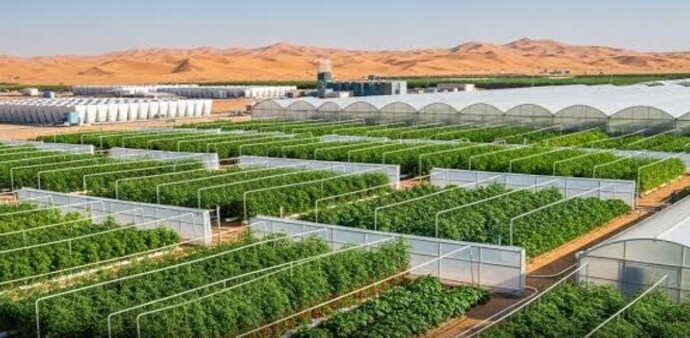
In a development that could reshape the future of agriculture in arid regions, Chinese scientists are using naturally occurring bacteria to transform desert land into fertile soil in less than a year. The breakthrough, which has drawn growing attention from climate and agricultural researchers, offers a potential new weapon against desertification — one of the biggest environmental threats facing Asia and Africa.
The technique relies on specially selected microorganisms that can bind loose sand particles together, improve water retention, and gradually create conditions suitable for plant growth. Instead of relying on decades-long ecological restoration projects, researchers say the microbial process can dramatically accelerate soil formation, with visible fertility improvements appearing within just 10 months.
How the process works
At the centre of the experiment are soil-enhancing bacteria capable of producing sticky biological compounds known as extracellular polymeric substances. These compounds act like a natural glue, binding desert sand into stable clusters that resemble organic soil.
Once sprayed onto sandy terrain along with nutrients and organic matter, the bacteria begin altering the physical structure of the desert surface. The treated land starts retaining moisture for longer periods, reducing erosion caused by wind and helping microorganisms, fungi, and eventually plants establish themselves.
Scientists involved in the project say the microbial activity mimics natural soil-building processes that usually take decades or even centuries.
The transformation is not simply cosmetic. According to researchers, treated plots have shown:
- Improved water absorption and retention
- Higher organic carbon levels
- Reduced soil temperature fluctuations
- Faster plant germination rates
- Stronger resistance to desert wind erosion
In several test areas, grasses and crops reportedly began growing on previously barren sand within months.
Why this matters
China has spent decades battling desertification, particularly in northern and western regions where expanding deserts threaten farmland, infrastructure, and human settlements. The Gobi Desert alone has long been associated with severe dust storms affecting parts of China, Mongolia, Korea, and even Japan.
The country already operates one of the world’s largest anti-desertification programmes, including the massive “Great Green Wall” tree-planting initiative. But traditional methods — planting trees, transporting topsoil, and large-scale irrigation — are expensive, water-intensive, and often slow.
The bacterial approach could offer a cheaper and faster alternative.
If scalable, the technology may help reclaim degraded land for agriculture, improve food security, and reduce the economic damage caused by land degradation. It could also become a major climate adaptation tool for countries facing worsening droughts due to global warming.
Could this work outside China?
The implications extend far beyond China. Large parts of India, the Middle East, and Africa face increasing desertification pressures linked to rising temperatures, groundwater depletion, and unsustainable land use.
India, for example, has more than 90 million hectares affected by land degradation and desertification, according to government estimates. Regions in Rajasthan, Gujarat, Haryana, and parts of the Deccan plateau remain vulnerable to soil degradation and water stress.
Experts believe microbial soil restoration could eventually support:
- Re-greening projects in semi-arid regions
- Restoration of degraded farmland
- Carbon sequestration efforts
- Dust storm reduction
- Sustainable agriculture in water-scarce zones
The science behind “living soil”
The concept is part of a broader field known as “engineered biological soil crusts.” In nature, deserts often contain thin biological layers made of bacteria, algae, fungi, and lichens that stabilize sand and support ecosystems.
Chinese researchers are essentially accelerating and engineering this natural phenomenon. Some studies suggest these microbial crusts can also capture atmospheric carbon dioxide and nitrogen, potentially improving soil fertility without heavy chemical fertilizer use.
However, scientists caution that large-scale deployment still faces challenges. Long-term ecological impacts, biodiversity effects, water requirements, and cost efficiency across different climates remain under study.
The United Nations estimates that desertification affects billions of people worldwide and threatens food production across vast regions of the planet. As climate change intensifies drought cycles and heatwaves, restoring damaged land is becoming an urgent priority.
In a development that could reshape the future of agriculture in arid regions, Chinese scientists are using naturally occurring bacteria to transform desert land into fertile soil in less than a year. The breakthrough, which has drawn growing attention from climate and agricultural researchers, offers a potential new weapon against desertification — one of the biggest environmental threats facing Asia and Africa.
The technique relies on specially selected microorganisms that can bind loose sand particles together, improve water retention, and gradually create conditions suitable for plant growth. Instead of relying on decades-long ecological restoration projects, researchers say the microbial process can dramatically accelerate soil formation, with visible fertility improvements appearing within just 10 months.
How the process works
At the centre of the experiment are soil-enhancing bacteria capable of producing sticky biological compounds known as extracellular polymeric substances. These compounds act like a natural glue, binding desert sand into stable clusters that resemble organic soil.
Once sprayed onto sandy terrain along with nutrients and organic matter, the bacteria begin altering the physical structure of the desert surface. The treated land starts retaining moisture for longer periods, reducing erosion caused by wind and helping microorganisms, fungi, and eventually plants establish themselves.
Scientists involved in the project say the microbial activity mimics natural soil-building processes that usually take decades or even centuries.
The transformation is not simply cosmetic. According to researchers, treated plots have shown:
- Improved water absorption and retention
- Higher organic carbon levels
- Reduced soil temperature fluctuations
- Faster plant germination rates
- Stronger resistance to desert wind erosion
In several test areas, grasses and crops reportedly began growing on previously barren sand within months.
Why this matters
China has spent decades battling desertification, particularly in northern and western regions where expanding deserts threaten farmland, infrastructure, and human settlements. The Gobi Desert alone has long been associated with severe dust storms affecting parts of China, Mongolia, Korea, and even Japan.
The country already operates one of the world’s largest anti-desertification programmes, including the massive “Great Green Wall” tree-planting initiative. But traditional methods — planting trees, transporting topsoil, and large-scale irrigation — are expensive, water-intensive, and often slow.
The bacterial approach could offer a cheaper and faster alternative.
If scalable, the technology may help reclaim degraded land for agriculture, improve food security, and reduce the economic damage caused by land degradation. It could also become a major climate adaptation tool for countries facing worsening droughts due to global warming.
Could this work outside China?
The implications extend far beyond China. Large parts of India, the Middle East, and Africa face increasing desertification pressures linked to rising temperatures, groundwater depletion, and unsustainable land use.
India, for example, has more than 90 million hectares affected by land degradation and desertification, according to government estimates. Regions in Rajasthan, Gujarat, Haryana, and parts of the Deccan plateau remain vulnerable to soil degradation and water stress.
Experts believe microbial soil restoration could eventually support:
- Re-greening projects in semi-arid regions
- Restoration of degraded farmland
- Carbon sequestration efforts
- Dust storm reduction
- Sustainable agriculture in water-scarce zones
The science behind “living soil”
The concept is part of a broader field known as “engineered biological soil crusts.” In nature, deserts often contain thin biological layers made of bacteria, algae, fungi, and lichens that stabilize sand and support ecosystems.
Chinese researchers are essentially accelerating and engineering this natural phenomenon. Some studies suggest these microbial crusts can also capture atmospheric carbon dioxide and nitrogen, potentially improving soil fertility without heavy chemical fertilizer use.
However, scientists caution that large-scale deployment still faces challenges. Long-term ecological impacts, biodiversity effects, water requirements, and cost efficiency across different climates remain under study.
The United Nations estimates that desertification affects billions of people worldwide and threatens food production across vast regions of the planet. As climate change intensifies drought cycles and heatwaves, restoring damaged land is becoming an urgent priority.