
Cosmic chaos: NASA simulations reveal Earth could be ejected by a rogue star before the Sun dies
Mercury, for instance, is already the wild card of the inner planets. Its orbit grows more eccentric over time, increasing the chance it could crash into Venus or fall into the Sun. With a rogue star in the mix, Mercury is often the first to go.
- Jun 1, 2025,
- Updated Jun 1, 2025 3:35 PM IST
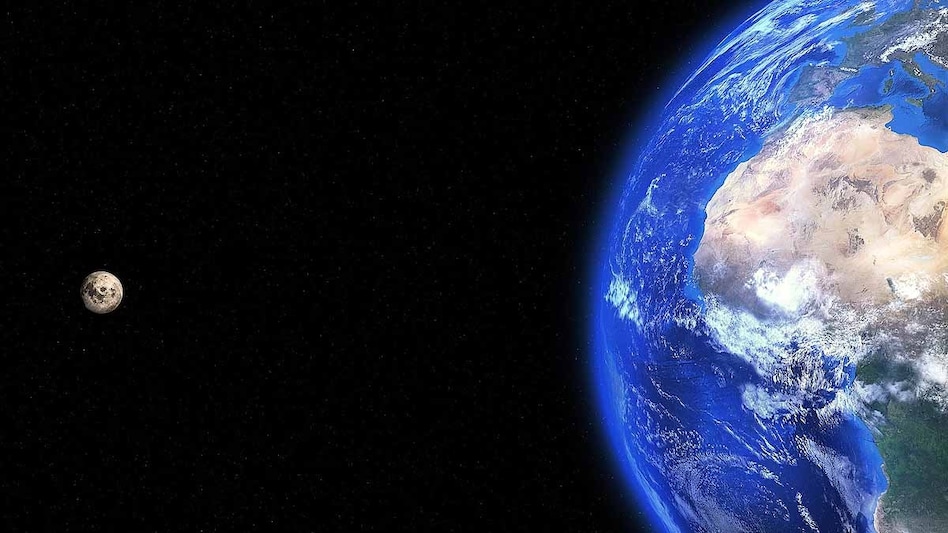
It won’t be the Sun’s fiery death that seals Earth’s fate — at least, not necessarily. A new astronomical study suggests a far more chaotic possibility: our planet could be hurled into the void of interstellar space by the passing of a rogue star. While the timeline spans billions of years, the implications are immediate.
Researchers have modeled how these cosmic flybys disrupt planetary orbits, and the results suggest the solar system’s grip on its planets may be weaker than once believed.
For decades, scientists treated the solar system as a mostly self-contained unit, its planets orbiting in a predictable ballet. But the Milky Way is a crowded stage. Stars occasionally drift close — sometimes too close — and when they do, the gravitational choreography can spiral into chaos.
A new study published in Icarus dives into that danger zone, running 2,000 simulations using NASA’s Horizons System, a precision orbital tracker. The results show that near-passing stars could slash the solar system’s long-term stability by about 50%. Some planets weather these encounters better than others.
Mercury, for instance, is already the wild card of the inner planets. Its orbit grows more eccentric over time, increasing the chance it could crash into Venus or fall into the Sun. With a rogue star in the mix, Mercury is often the first to go. Mars and Pluto also show significant vulnerability — Pluto has nearly a 4% chance of being ejected entirely.
Earth fares better in isolation, but the danger rises if another destabilised planet knocks it off course. The simulations show a disturbing trend: once a flyby shakes the solar system, the resulting chaos can drag even relatively stable orbits into disarray.
The researchers distinguish two forms of orbital instability — internal and external. Internal chaos rarely leads to large-scale ejections. But when stars wander too close, “the nature of stellar-driven instabilities is more violent,” often sending multiple planets adrift. These events, according to the study, occur in nearly half of the simulated scenarios involving stellar intruders.
Earth’s risk from these encounters is hundreds of times higher than previously estimated. It’s a stark reminder that our planet’s future may not hinge on the Sun’s lifecycle — but rather on a stranger passing through.
It won’t be the Sun’s fiery death that seals Earth’s fate — at least, not necessarily. A new astronomical study suggests a far more chaotic possibility: our planet could be hurled into the void of interstellar space by the passing of a rogue star. While the timeline spans billions of years, the implications are immediate.
Researchers have modeled how these cosmic flybys disrupt planetary orbits, and the results suggest the solar system’s grip on its planets may be weaker than once believed.
For decades, scientists treated the solar system as a mostly self-contained unit, its planets orbiting in a predictable ballet. But the Milky Way is a crowded stage. Stars occasionally drift close — sometimes too close — and when they do, the gravitational choreography can spiral into chaos.
A new study published in Icarus dives into that danger zone, running 2,000 simulations using NASA’s Horizons System, a precision orbital tracker. The results show that near-passing stars could slash the solar system’s long-term stability by about 50%. Some planets weather these encounters better than others.
Mercury, for instance, is already the wild card of the inner planets. Its orbit grows more eccentric over time, increasing the chance it could crash into Venus or fall into the Sun. With a rogue star in the mix, Mercury is often the first to go. Mars and Pluto also show significant vulnerability — Pluto has nearly a 4% chance of being ejected entirely.
Earth fares better in isolation, but the danger rises if another destabilised planet knocks it off course. The simulations show a disturbing trend: once a flyby shakes the solar system, the resulting chaos can drag even relatively stable orbits into disarray.
The researchers distinguish two forms of orbital instability — internal and external. Internal chaos rarely leads to large-scale ejections. But when stars wander too close, “the nature of stellar-driven instabilities is more violent,” often sending multiple planets adrift. These events, according to the study, occur in nearly half of the simulated scenarios involving stellar intruders.
Earth’s risk from these encounters is hundreds of times higher than previously estimated. It’s a stark reminder that our planet’s future may not hinge on the Sun’s lifecycle — but rather on a stranger passing through.