
From defence to disaster relief: How India’s new OptoSAR satellite could transform surveillance
The satellite was developed after five years of indigenous research, environmental testing, and payload validation. The company says the platform can support both civilian and strategic applications, making it a “dual-use” Earth observation system.
- May 4, 2026,
- Updated May 4, 2026 5:45 AM IST
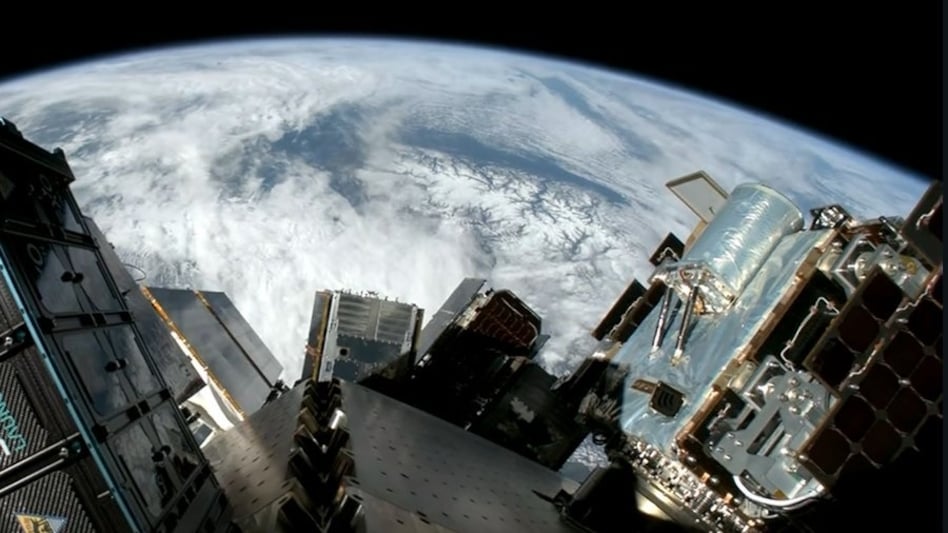
India’s private space sector marked another milestone on Sunday as Bengaluru-based start-up GalaxEye successfully launched its “Mission Drishti” satellite aboard SpaceX’s Falcon 9 rocket from California.
The mission is being described as a breakthrough for Earth observation technology because Mission Drishti combines two critical imaging systems — electro-optical (EO) and synthetic aperture radar (SAR) — into a single operational satellite platform. According to the company, this makes it the world’s first “OptoSAR” satellite.
What makes Mission Drishti different?
Traditional Earth observation satellites generally rely on either optical imaging or radar imaging.
Electro-optical sensors function much like high-resolution cameras in space. They capture detailed images but are heavily dependent on daylight and clear weather conditions. Cloud cover, rain, fog, or darkness can significantly reduce their effectiveness.
Synthetic aperture radar, or SAR, works differently. It uses radar pulses to generate images and can operate day or night, even through clouds and adverse weather conditions.
Mission Drishti combines both capabilities into one platform, potentially offering continuous and more reliable Earth observation data.
This integration could solve one of the biggest limitations in satellite imaging: interruptions caused by weather and low-light conditions. By combining optical clarity with radar persistence, the satellite is expected to generate “decision-grade” intelligence for governments, businesses, and security agencies.
Why this matters for India
The launch comes at a time when India is aggressively expanding its private space ecosystem after regulatory reforms opened the sector to start-ups and private investment.
For years, India’s space ambitions were driven almost entirely by Indian Space Research Organisation. But recent policy changes have allowed private companies to design satellites, build launch systems, and create commercial applications around space-based data.
Mission Drishti reflects this shift.
The satellite was developed after five years of indigenous research, environmental testing, and payload validation. The company says the platform can support both civilian and strategic applications, making it a “dual-use” Earth observation system.
Defence, agriculture & disaster monitoring
The practical uses of OptoSAR technology are wide-ranging:
- For defence and border surveillance, the satellite can provide continuous imaging even during cloudy weather or nighttime conditions. This capability is particularly important in regions where visibility is often poor.
- In agriculture, the system can help track crop health, soil moisture, and irrigation patterns with greater consistency.
- For disaster management agencies, the satellite could improve flood mapping, cyclone tracking, wildfire assessment, and damage evaluation after natural disasters.
- The technology could also support maritime monitoring, infrastructure planning, urban development, and environmental tracking.
Lt Gen AK Bhatt (Retd), Director General of the Indian Space Association, said the achievement placed GalaxEye among a small group of global players capable of integrating optical and SAR capabilities on a single platform.
Bigger push toward space-based intelligence
The mission also aligns with India’s broader Earth observation ambitions. ISRO’s latest annual report mentions 29 active Earth observation satellites already supporting areas such as resource mapping, weather forecasting, surveillance, and communication.
GalaxEye now plans to scale Mission Drishti into a constellation of 10 satellites by 2030. The goal is to create a sovereign, high-frequency Earth observation network capable of delivering real-time insights for both domestic and global markets.
India’s private space sector marked another milestone on Sunday as Bengaluru-based start-up GalaxEye successfully launched its “Mission Drishti” satellite aboard SpaceX’s Falcon 9 rocket from California.
The mission is being described as a breakthrough for Earth observation technology because Mission Drishti combines two critical imaging systems — electro-optical (EO) and synthetic aperture radar (SAR) — into a single operational satellite platform. According to the company, this makes it the world’s first “OptoSAR” satellite.
What makes Mission Drishti different?
Traditional Earth observation satellites generally rely on either optical imaging or radar imaging.
Electro-optical sensors function much like high-resolution cameras in space. They capture detailed images but are heavily dependent on daylight and clear weather conditions. Cloud cover, rain, fog, or darkness can significantly reduce their effectiveness.
Synthetic aperture radar, or SAR, works differently. It uses radar pulses to generate images and can operate day or night, even through clouds and adverse weather conditions.
Mission Drishti combines both capabilities into one platform, potentially offering continuous and more reliable Earth observation data.
This integration could solve one of the biggest limitations in satellite imaging: interruptions caused by weather and low-light conditions. By combining optical clarity with radar persistence, the satellite is expected to generate “decision-grade” intelligence for governments, businesses, and security agencies.
Why this matters for India
The launch comes at a time when India is aggressively expanding its private space ecosystem after regulatory reforms opened the sector to start-ups and private investment.
For years, India’s space ambitions were driven almost entirely by Indian Space Research Organisation. But recent policy changes have allowed private companies to design satellites, build launch systems, and create commercial applications around space-based data.
Mission Drishti reflects this shift.
The satellite was developed after five years of indigenous research, environmental testing, and payload validation. The company says the platform can support both civilian and strategic applications, making it a “dual-use” Earth observation system.
Defence, agriculture & disaster monitoring
The practical uses of OptoSAR technology are wide-ranging:
- For defence and border surveillance, the satellite can provide continuous imaging even during cloudy weather or nighttime conditions. This capability is particularly important in regions where visibility is often poor.
- In agriculture, the system can help track crop health, soil moisture, and irrigation patterns with greater consistency.
- For disaster management agencies, the satellite could improve flood mapping, cyclone tracking, wildfire assessment, and damage evaluation after natural disasters.
- The technology could also support maritime monitoring, infrastructure planning, urban development, and environmental tracking.
Lt Gen AK Bhatt (Retd), Director General of the Indian Space Association, said the achievement placed GalaxEye among a small group of global players capable of integrating optical and SAR capabilities on a single platform.
Bigger push toward space-based intelligence
The mission also aligns with India’s broader Earth observation ambitions. ISRO’s latest annual report mentions 29 active Earth observation satellites already supporting areas such as resource mapping, weather forecasting, surveillance, and communication.
GalaxEye now plans to scale Mission Drishti into a constellation of 10 satellites by 2030. The goal is to create a sovereign, high-frequency Earth observation network capable of delivering real-time insights for both domestic and global markets.