
From lush green to dry sands? These 10 US cities could see major climate impact by 2080
While the projections are based on a high-emissions future rather than a guaranteed outcome, the researchers say the findings underscore how profoundly climate change could reshape the United States within the lifetime of today's younger generations.
- Jul 10, 2026,
- Updated Jul 10, 2026 3:00 AM IST
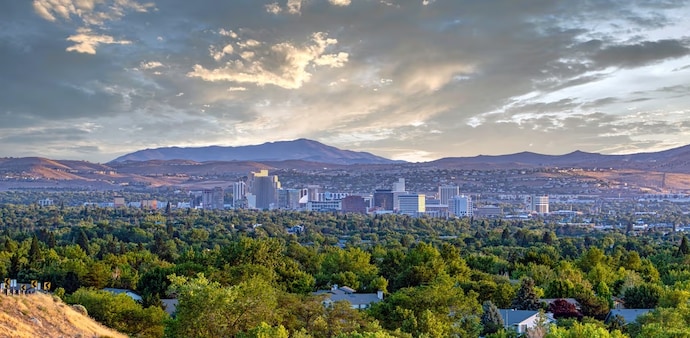
What if the city you call home no longer looked anything like it does today? A new climate study suggests that by 2080, parts of the western United States could undergo exactly that kind of transformation, with 10 cities projected to develop desert-like conditions if greenhouse gas emissions continue on their current trajectory.
The findings offer a glimpse into how rising temperatures and dwindling rainfall could redraw America's ecological map over the coming decades.
Published in a peer-reviewed journal, the study combined satellite observations, machine learning and future climate projections to examine how ecosystems across the contiguous United States are likely to change under a high-emissions scenario.
Researchers found that several cities could lose the climatic conditions that currently sustain their vegetation, giving way to much drier landscapes.
The cities identified in the study are:
- Bakersfield, California
- Reno, Nevada
- Lancaster, California
- Pueblo, Colorado
- Kennewick, Washington
- Richland, Washington
- Pasco, Washington
- Yakima, Washington
- Grand Junction, Colorado
- Bend, Oregon
Researchers caution that "becoming a desert" does not mean these cities will be engulfed by sand dunes. Instead, their surrounding ecosystems are expected to take on characteristics of modern desert regions, marked by lower rainfall, hotter temperatures and vegetation adapted to increasingly arid conditions.
The study projects that as the climate warms, forests and woodlands in parts of the western US could gradually give way to shrublands, grasslands and deserts. Ecosystems are expected to shift northward and to higher elevations as temperatures rise and water becomes scarcer.
Such changes extend beyond the landscape. Desert-like conditions could place greater strain on water resources, increase wildfire risk, reduce agricultural productivity and alter local biodiversity. Cities may also see higher demand for electricity and water as hotter, longer summers become more common.
While the projections are based on a high-emissions future rather than a guaranteed outcome, the researchers say the findings underscore how profoundly climate change could reshape the United States within the lifetime of today's younger generations. Aggressive efforts to curb greenhouse gas emissions, they note, could help limit the extent of these ecological shifts.
What if the city you call home no longer looked anything like it does today? A new climate study suggests that by 2080, parts of the western United States could undergo exactly that kind of transformation, with 10 cities projected to develop desert-like conditions if greenhouse gas emissions continue on their current trajectory.
The findings offer a glimpse into how rising temperatures and dwindling rainfall could redraw America's ecological map over the coming decades.
Published in a peer-reviewed journal, the study combined satellite observations, machine learning and future climate projections to examine how ecosystems across the contiguous United States are likely to change under a high-emissions scenario.
Researchers found that several cities could lose the climatic conditions that currently sustain their vegetation, giving way to much drier landscapes.
The cities identified in the study are:
- Bakersfield, California
- Reno, Nevada
- Lancaster, California
- Pueblo, Colorado
- Kennewick, Washington
- Richland, Washington
- Pasco, Washington
- Yakima, Washington
- Grand Junction, Colorado
- Bend, Oregon
Researchers caution that "becoming a desert" does not mean these cities will be engulfed by sand dunes. Instead, their surrounding ecosystems are expected to take on characteristics of modern desert regions, marked by lower rainfall, hotter temperatures and vegetation adapted to increasingly arid conditions.
The study projects that as the climate warms, forests and woodlands in parts of the western US could gradually give way to shrublands, grasslands and deserts. Ecosystems are expected to shift northward and to higher elevations as temperatures rise and water becomes scarcer.
Such changes extend beyond the landscape. Desert-like conditions could place greater strain on water resources, increase wildfire risk, reduce agricultural productivity and alter local biodiversity. Cities may also see higher demand for electricity and water as hotter, longer summers become more common.
While the projections are based on a high-emissions future rather than a guaranteed outcome, the researchers say the findings underscore how profoundly climate change could reshape the United States within the lifetime of today's younger generations. Aggressive efforts to curb greenhouse gas emissions, they note, could help limit the extent of these ecological shifts.