
Guest from space: Bacteria found on Chinese space station resists radiation. Will it threaten astronauts?
Researchers highlighted that the new microbe differs structurally and functionally in two key proteins. These differences may boost its ability to form biofilms, handle oxidative stress, and repair radiation-induced damage — key survival skills in the space environment.
- May 22, 2025,
- Updated May 22, 2025 3:41 PM IST
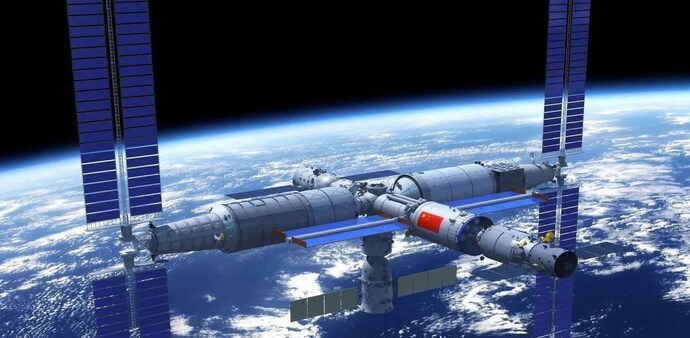
Tucked within the sterile folds of China’s Tiangong Space Station, scientists have uncovered a microscopic stowaway with survival instincts fine-tuned for life beyond Earth. A new species of bacteria, Niallia tiangongensis, has been discovered on board, marking the first time a novel microbe has been identified aboard the orbiting laboratory. Unearthed from samples taken during the Shenzhou 15 mission and now detailed in the International Journal of Systematic and Evolutionary Microbiology, this rod-shaped, spore-forming aerobic bacterium may hold clues to how life endures — and adapts — among the stars.
According to the published paper, Niallia tiangongensis closely resembles the Earth-dwelling Niallia circulans but carries several mutations that set it apart — mutations that scientists believe could be critical for future space biology research.
"Understanding the characteristics of microbes during long-term space missions is essential for safeguarding the health of astronauts and maintaining the functionality of spacecraft," the researchers wrote.
This newly identified strain demonstrated notable resilience, recovering from space radiation and withstanding oxidative stress — two of the most severe threats in low Earth orbit. It also displayed a “unique ability” to hydrolyse gelatin, a trait that could prove useful in nutrient-scarce environments like space habitats.
Researchers highlighted that Niallia tiangongensis differs structurally and functionally in two key proteins. These differences may boost its ability to form biofilms, handle oxidative stress, and repair radiation-induced damage — key survival skills in the space environment.
Although it’s unclear whether the bacterium poses any health risk to Tiangong’s crew, the discovery underscores the importance of monitoring microbial life in spacecraft. Controlling bacterial presence is crucial not just for astronaut safety, but to prevent potential system contamination.
While Niallia tiangongensis is the first of its kind to be found aboard Tiangong, it's not the only spacefaring bacteria scientists have encountered. Novel species have been previously discovered on the International Space Station, including some with the potential to assist in growing food on Mars. More recently, NASA found 26 unknown bacterial species in its highly controlled clean rooms.
Still, the new microbe’s ties to Niallia circulans — a species known to cause sepsis in immunocompromised individuals — raise red flags. The ability to break down gelatin could signal pathogenic potential, making its continued study not just fascinating, but necessary.
Tucked within the sterile folds of China’s Tiangong Space Station, scientists have uncovered a microscopic stowaway with survival instincts fine-tuned for life beyond Earth. A new species of bacteria, Niallia tiangongensis, has been discovered on board, marking the first time a novel microbe has been identified aboard the orbiting laboratory. Unearthed from samples taken during the Shenzhou 15 mission and now detailed in the International Journal of Systematic and Evolutionary Microbiology, this rod-shaped, spore-forming aerobic bacterium may hold clues to how life endures — and adapts — among the stars.
According to the published paper, Niallia tiangongensis closely resembles the Earth-dwelling Niallia circulans but carries several mutations that set it apart — mutations that scientists believe could be critical for future space biology research.
"Understanding the characteristics of microbes during long-term space missions is essential for safeguarding the health of astronauts and maintaining the functionality of spacecraft," the researchers wrote.
This newly identified strain demonstrated notable resilience, recovering from space radiation and withstanding oxidative stress — two of the most severe threats in low Earth orbit. It also displayed a “unique ability” to hydrolyse gelatin, a trait that could prove useful in nutrient-scarce environments like space habitats.
Researchers highlighted that Niallia tiangongensis differs structurally and functionally in two key proteins. These differences may boost its ability to form biofilms, handle oxidative stress, and repair radiation-induced damage — key survival skills in the space environment.
Although it’s unclear whether the bacterium poses any health risk to Tiangong’s crew, the discovery underscores the importance of monitoring microbial life in spacecraft. Controlling bacterial presence is crucial not just for astronaut safety, but to prevent potential system contamination.
While Niallia tiangongensis is the first of its kind to be found aboard Tiangong, it's not the only spacefaring bacteria scientists have encountered. Novel species have been previously discovered on the International Space Station, including some with the potential to assist in growing food on Mars. More recently, NASA found 26 unknown bacterial species in its highly controlled clean rooms.
Still, the new microbe’s ties to Niallia circulans — a species known to cause sepsis in immunocompromised individuals — raise red flags. The ability to break down gelatin could signal pathogenic potential, making its continued study not just fascinating, but necessary.