
New York, Dallas, Seattle among US cities sinking fast, study warns 34 million at risk from floods
The report finds that nearly 20% of urban land across the US is experiencing this descent, largely due to the excessive extraction of groundwater. This phenomenon doesn't just compound flood risks along coastlines; it poses a grave threat to inland cities as well.
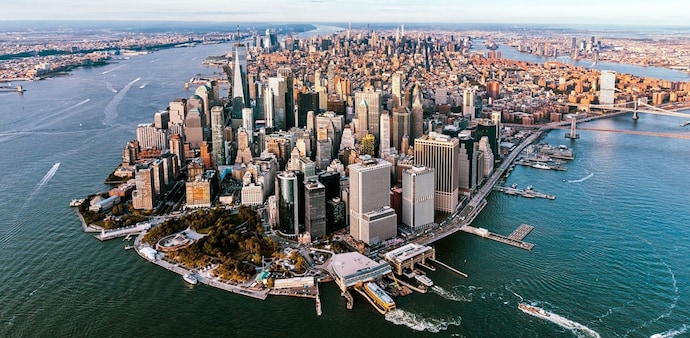
- Jun 2, 2025,
- Updated Jun 2, 2025 3:18 PM IST
In a stark warning amplified by new research, many of America's largest cities — from the coasts to the heartland — are not just battling rising seas but are also slowly sinking. The dual threat now places over 34 million Americans in jeopardy, as scientists uncover a nationwide pattern of land subsidence that could accelerate climate-driven flooding and infrastructural collapse. While global warming has long signaled trouble at the edges, it turns out the danger is also beneath our feet.
Rising sea levels have become one of the most visible consequences of climate change, driven by melting polar ice and expanding oceans. But a new layer of risk is emerging — one that's hidden underground. A recent study highlighted by Newsweek reveals that major American cities like New York, Dallas, and Seattle are steadily sinking, a trend known as subsidence.
The report finds that nearly 20% of urban land across the US is experiencing this descent, largely due to the excessive extraction of groundwater. This phenomenon doesn't just compound flood risks along coastlines; it poses a grave threat to inland cities as well.
"While often considered solely a coastal hazard due to the relative sea-level rise, subsidence also threatens inland urban areas, causing increased flood risks, structural damage and transportation disruptions," the study states.
Researchers estimate around 34 million people live in areas already impacted, with over 29,000 buildings situated in zones classified as high or very high risk for damage.
This pattern mirrors concerns seen in Miami, where coastal properties are gradually sinking, and in parts of New Zealand, where subsidence — fuelled by dredging and land reclamation — is accelerating damage.
Climate change exacerbates the crisis. As rising temperatures and prolonged droughts increase water demands, more groundwater is pumped from beneath the surface. This extraction compacts the soil, dragging buildings, roads, and infrastructure down with it.
"This shortens the timeline for when cities reach critical thresholds for chronic flooding," said Leonard Ohenhen, lead author of the study, told Newsweek. He emphasized how rising demand for water is tightening the window for effective climate action.
In a stark warning amplified by new research, many of America's largest cities — from the coasts to the heartland — are not just battling rising seas but are also slowly sinking. The dual threat now places over 34 million Americans in jeopardy, as scientists uncover a nationwide pattern of land subsidence that could accelerate climate-driven flooding and infrastructural collapse. While global warming has long signaled trouble at the edges, it turns out the danger is also beneath our feet.
Rising sea levels have become one of the most visible consequences of climate change, driven by melting polar ice and expanding oceans. But a new layer of risk is emerging — one that's hidden underground. A recent study highlighted by Newsweek reveals that major American cities like New York, Dallas, and Seattle are steadily sinking, a trend known as subsidence.
The report finds that nearly 20% of urban land across the US is experiencing this descent, largely due to the excessive extraction of groundwater. This phenomenon doesn't just compound flood risks along coastlines; it poses a grave threat to inland cities as well.
"While often considered solely a coastal hazard due to the relative sea-level rise, subsidence also threatens inland urban areas, causing increased flood risks, structural damage and transportation disruptions," the study states.
Researchers estimate around 34 million people live in areas already impacted, with over 29,000 buildings situated in zones classified as high or very high risk for damage.
This pattern mirrors concerns seen in Miami, where coastal properties are gradually sinking, and in parts of New Zealand, where subsidence — fuelled by dredging and land reclamation — is accelerating damage.
Climate change exacerbates the crisis. As rising temperatures and prolonged droughts increase water demands, more groundwater is pumped from beneath the surface. This extraction compacts the soil, dragging buildings, roads, and infrastructure down with it.
"This shortens the timeline for when cities reach critical thresholds for chronic flooding," said Leonard Ohenhen, lead author of the study, told Newsweek. He emphasized how rising demand for water is tightening the window for effective climate action.