
NISAR mission launch: Countdown begins as ISRO, NASA shake hands on Rs 10,000 cr radar satellite
The 2,392-kg Earth observation satellite will be inserted into a 743-km sun-synchronous orbit about 19 minutes after liftoff
- Jul 30, 2025,
- Updated Jul 30, 2025 5:21 PM IST
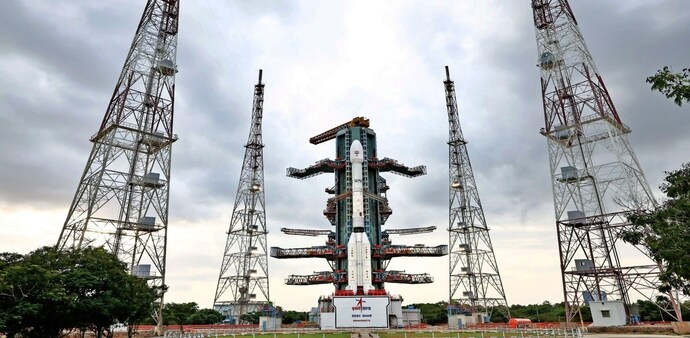
India and the United States are set to script a new chapter in space cooperation with the launch of NISAR—NASA-ISRO Synthetic Aperture Radar, aboard the GSLV-F16 rocket from Sriharikota at 5:40 p.m. IST today, July 30, 2025.
The 2,392-kg Earth observation satellite will be inserted into a 743-km sun-synchronous orbit about 19 minutes after liftoff. Final countdown for the launch began at 2:10 p.m. IST on Tuesday.
Standing 52 metres tall, the GSLV Mk II is ISRO’s largest operational rocket and will carry NISAR, billed as one of the most advanced radar satellites ever developed. The mission marks the first joint satellite project between ISRO and NASA, and is designed to collect high-resolution, dual-frequency radar data across the globe every 12 days.
“NISAR is not just a satellite; it is India’s scientific handshake with the world,” said Union Science Minister Jitendra Singh. He called the collaboration a landmark aligned with Prime Minister Narendra Modi’s vision of India as a Vishwa Bandhu, or global partner.
Nilesh M. Desai, Director of ISRO’s Space Applications Centre, called the project “a historic moment for both ISRO and NASA.” Speaking to ANI, Desai said the radar satellite is “one of the costliest missions ever” and a true reflection of “cooperation between two great democratic nations.”
Space scientist R.C. Kapoor described NISAR as “the most advanced Earth observation satellite” to date. “It will generate a tremendous amount of data daily, which will be extremely valuable for scientists, disaster managers, policymakers, and environmental researchers,” he said.
Designed to deliver reliable, all-weather, day-and-night coverage, NISAR will play a crucial role in tracking climate change, crop conditions, and surface deformation linked to natural disasters like earthquakes and landslides.
The launch will be livestreamed by ISRO and NASA.
India and the United States are set to script a new chapter in space cooperation with the launch of NISAR—NASA-ISRO Synthetic Aperture Radar, aboard the GSLV-F16 rocket from Sriharikota at 5:40 p.m. IST today, July 30, 2025.
The 2,392-kg Earth observation satellite will be inserted into a 743-km sun-synchronous orbit about 19 minutes after liftoff. Final countdown for the launch began at 2:10 p.m. IST on Tuesday.
Standing 52 metres tall, the GSLV Mk II is ISRO’s largest operational rocket and will carry NISAR, billed as one of the most advanced radar satellites ever developed. The mission marks the first joint satellite project between ISRO and NASA, and is designed to collect high-resolution, dual-frequency radar data across the globe every 12 days.
“NISAR is not just a satellite; it is India’s scientific handshake with the world,” said Union Science Minister Jitendra Singh. He called the collaboration a landmark aligned with Prime Minister Narendra Modi’s vision of India as a Vishwa Bandhu, or global partner.
Nilesh M. Desai, Director of ISRO’s Space Applications Centre, called the project “a historic moment for both ISRO and NASA.” Speaking to ANI, Desai said the radar satellite is “one of the costliest missions ever” and a true reflection of “cooperation between two great democratic nations.”
Space scientist R.C. Kapoor described NISAR as “the most advanced Earth observation satellite” to date. “It will generate a tremendous amount of data daily, which will be extremely valuable for scientists, disaster managers, policymakers, and environmental researchers,” he said.
Designed to deliver reliable, all-weather, day-and-night coverage, NISAR will play a crucial role in tracking climate change, crop conditions, and surface deformation linked to natural disasters like earthquakes and landslides.
The launch will be livestreamed by ISRO and NASA.