
Record ocean heat, melting glaciers marked 2025: Why Asia is entering a new era of climate extremes
According to the World Meteorological Organization's (WMO) State of the Climate in Asia 2025 report, Asia is warming nearly twice as fast as the global average, making it one of the world's fastest-heating regions.
- Jul 2, 2026,
- Updated Jul 2, 2026 1:13 PM IST
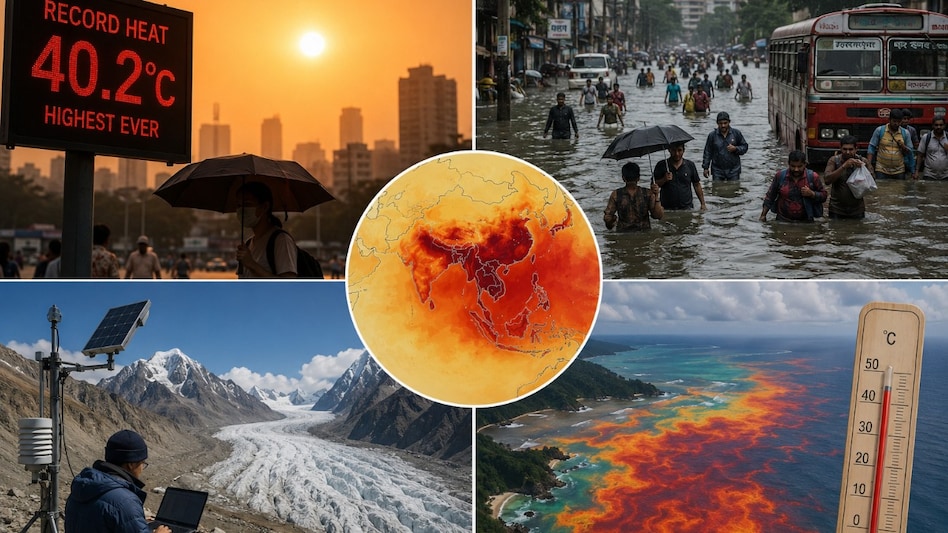
The warning signs arrived almost simultaneously. Record-breaking heat scorched cities across East Asia. Torrential rains submerged communities in South and Southeast Asia. High in the Himalayas, every glacier monitored by scientists continued to lose ice, while oceans surrounding the continent reached their hottest levels ever recorded. Together, they tell a story far bigger than another year of extreme weather.
According to the World Meteorological Organization's (WMO) State of the Climate in Asia 2025 report, Asia is warming nearly twice as fast as the global average, making it one of the world's fastest-heating regions.
The report argues that rising temperatures are no longer producing isolated disasters — they are amplifying one another, creating cascading risks for water supplies, food security, infrastructure and the lives of billions across the continent.
Asia's warming is accelerating
The WMO found that Asia's warming trend between 1991 and 2025 was almost double that recorded during the 1961–1990 period. The continent's average temperature in 2025 was nearly 1°C above the 1991–2020 average, placing it among the warmest years ever documented.
The consequences were evident across the region. Japan, China and South Korea all endured their hottest summers on record, while prolonged heatwaves swept through Central Asia, West Asia and the Arabian Peninsula, placing unprecedented pressure on electricity grids, healthcare systems and water resources.
Oceans are sending an equally worrying signal
While heat on land captured headlines, the seas surrounding Asia quietly set records of their own.
Ocean heat content reached its highest level since observations began. Between July and September, marine heatwaves covered more than 10 million square kilometres of ocean, disrupting marine ecosystems and adding more energy to storms.
Warmer oceans also increase evaporation, allowing the atmosphere to hold more moisture that can later fall as intense rainfall. They fuel stronger tropical cyclones, accelerate sea-level rise and worsen ocean acidification, threatening fisheries and coastal communities that depend on healthy marine ecosystems.
Himalayas are losing their frozen reserves
The report highlights another alarming trend unfolding in the mountains often referred to as Earth's "Third Pole." All 23 glaciers monitored by the WMO recorded a loss of mass during 2025, driven by above-average temperatures and reduced winter snowfall.
This extends well beyond the mountains themselves. Himalayan glaciers feed major river systems including the Ganga, Brahmaputra, Indus, Mekong and Yangtze. Continued glacier retreat threatens long-term freshwater supplies for hundreds of millions of people while increasing the likelihood of glacial lake outburst floods, landslides and sudden ice collapses.
Too much water in some places, too little in others
Climate change is also reshaping Asia's rainfall patterns. Heavy monsoon rains and tropical cyclones triggered destructive floods across countries such as Pakistan, Sri Lanka and Vietnam, causing widespread displacement and infrastructure damage.
At the same time, parts of West Asia, particularly Iran, grappled with persistent drought and worsening water scarcity. Dust and sand storms further intensified environmental stress across already fragile landscapes.
Scientists say these seemingly opposite extremes are connected. A warmer atmosphere can hold more moisture, leading to heavier downpours in some regions while accelerating evaporation and drying soils elsewhere.
Asia facing interconnected climate risks
The WMO's findings reinforce a growing scientific consensus: climate hazards are becoming increasingly interconnected.
Warmer oceans feed stronger storms. Rising temperatures melt glaciers. Shrinking ice alters river flows. Extreme rainfall and drought can occur within the same season, affecting agriculture, energy production, public health and economic growth simultaneously.
For Asia, home to nearly 60% of the world's population, these cascading impacts pose one of the defining development challenges of the coming decades.
Early warnings remain the strongest defence
Despite the worsening outlook, the report points to one area where progress is making a measurable difference.
Countries with stronger weather monitoring networks and impact-based early warning systems have been more successful in reducing deaths during extreme weather events.
The WMO says continued investment in forecasting, climate observations and disaster preparedness will be essential as rising temperatures, hotter oceans and retreating glaciers continue to reshape Asia's climate, making extreme weather not an exception, but an increasingly common reality.
The warning signs arrived almost simultaneously. Record-breaking heat scorched cities across East Asia. Torrential rains submerged communities in South and Southeast Asia. High in the Himalayas, every glacier monitored by scientists continued to lose ice, while oceans surrounding the continent reached their hottest levels ever recorded. Together, they tell a story far bigger than another year of extreme weather.
According to the World Meteorological Organization's (WMO) State of the Climate in Asia 2025 report, Asia is warming nearly twice as fast as the global average, making it one of the world's fastest-heating regions.
The report argues that rising temperatures are no longer producing isolated disasters — they are amplifying one another, creating cascading risks for water supplies, food security, infrastructure and the lives of billions across the continent.
Asia's warming is accelerating
The WMO found that Asia's warming trend between 1991 and 2025 was almost double that recorded during the 1961–1990 period. The continent's average temperature in 2025 was nearly 1°C above the 1991–2020 average, placing it among the warmest years ever documented.
The consequences were evident across the region. Japan, China and South Korea all endured their hottest summers on record, while prolonged heatwaves swept through Central Asia, West Asia and the Arabian Peninsula, placing unprecedented pressure on electricity grids, healthcare systems and water resources.
Oceans are sending an equally worrying signal
While heat on land captured headlines, the seas surrounding Asia quietly set records of their own.
Ocean heat content reached its highest level since observations began. Between July and September, marine heatwaves covered more than 10 million square kilometres of ocean, disrupting marine ecosystems and adding more energy to storms.
Warmer oceans also increase evaporation, allowing the atmosphere to hold more moisture that can later fall as intense rainfall. They fuel stronger tropical cyclones, accelerate sea-level rise and worsen ocean acidification, threatening fisheries and coastal communities that depend on healthy marine ecosystems.
Himalayas are losing their frozen reserves
The report highlights another alarming trend unfolding in the mountains often referred to as Earth's "Third Pole." All 23 glaciers monitored by the WMO recorded a loss of mass during 2025, driven by above-average temperatures and reduced winter snowfall.
This extends well beyond the mountains themselves. Himalayan glaciers feed major river systems including the Ganga, Brahmaputra, Indus, Mekong and Yangtze. Continued glacier retreat threatens long-term freshwater supplies for hundreds of millions of people while increasing the likelihood of glacial lake outburst floods, landslides and sudden ice collapses.
Too much water in some places, too little in others
Climate change is also reshaping Asia's rainfall patterns. Heavy monsoon rains and tropical cyclones triggered destructive floods across countries such as Pakistan, Sri Lanka and Vietnam, causing widespread displacement and infrastructure damage.
At the same time, parts of West Asia, particularly Iran, grappled with persistent drought and worsening water scarcity. Dust and sand storms further intensified environmental stress across already fragile landscapes.
Scientists say these seemingly opposite extremes are connected. A warmer atmosphere can hold more moisture, leading to heavier downpours in some regions while accelerating evaporation and drying soils elsewhere.
Asia facing interconnected climate risks
The WMO's findings reinforce a growing scientific consensus: climate hazards are becoming increasingly interconnected.
Warmer oceans feed stronger storms. Rising temperatures melt glaciers. Shrinking ice alters river flows. Extreme rainfall and drought can occur within the same season, affecting agriculture, energy production, public health and economic growth simultaneously.
For Asia, home to nearly 60% of the world's population, these cascading impacts pose one of the defining development challenges of the coming decades.
Early warnings remain the strongest defence
Despite the worsening outlook, the report points to one area where progress is making a measurable difference.
Countries with stronger weather monitoring networks and impact-based early warning systems have been more successful in reducing deaths during extreme weather events.
The WMO says continued investment in forecasting, climate observations and disaster preparedness will be essential as rising temperatures, hotter oceans and retreating glaciers continue to reshape Asia's climate, making extreme weather not an exception, but an increasingly common reality.