
Skywatchers, get ready: 96% of the Moon will disappear as Earth casts its shadow on August 28
No special eye protection is required for a lunar eclipse. However, it recommends using quality binoculars or a telescope to observe the advancing shadow and the Moon’s changing colour in greater detail. Stargazers should check TimeAndDate.com for location-specific timings.
- Aug 27, 2026,
- Updated Aug 27, 2026 9:00 PM IST
Get ready for a dramatic celestial spectacle as the night sky prepares to put on a rare show on August 27–28. Skywatchers across large parts of North America, South America, Africa and Europe will see Earth’s shadow sweep across the Moon, covering nearly 96% of its visible surface and leaving only a thin crescent that is lit directly by the Sun.
Eclipse to Reach Maximum at 12:12 a.m. EDT
The eclipse will occur as Earth moves between the Sun and the Moon during the full moon phase. According to Space.com, the alignment will allow Earth’s dark inner shadow, known as the umbra, to gradually spread across the Moon’s cratered surface.
ALSO READ: The Moon is drifting away from Earth — and the reason starts in our oceans
The umbral phase is scheduled to begin at 10:33 p.m. EDT on August 27, or 0233 GMT on August 28, according to eclipse timings published by TimeandDate.com. The partial eclipse will reach its maximum at 12:12 a.m. EDT on August 28, corresponding to 0412 GMT.
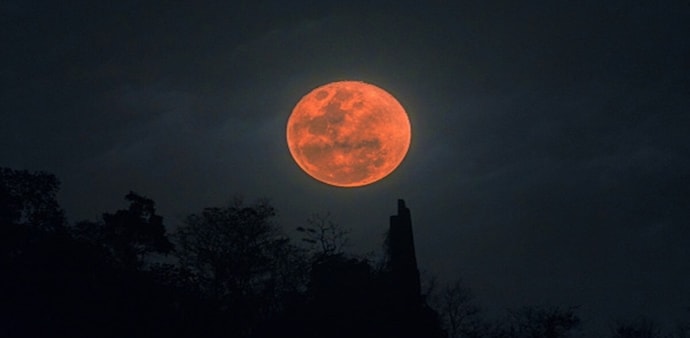
At the peak, the shadowed portion of the Moon could develop a reddish-orange glow. This happens when sunlight passes through Earth’s atmosphere, where it is filtered and bent toward the lunar surface. The effect is commonly called a “Blood Moon”, although the term is more often associated with a total lunar eclipse.
Viewing Times Depend on Location
The eclipse will be visible from Earth’s night side wherever the Moon is above the horizon. While each stage occurs simultaneously worldwide, local viewing times will vary.
In California and other parts of the US West Coast, the maximum eclipse will take place shortly after midnight local time on August 27–28. In the United Kingdom, viewers will see the peak shortly before sunrise on August 28, with the moon appearing low in the southwestern sky.
ALSO READ: NASA invites ISRO to join Moon Base programme as part of Artemis framework
No special eye protection is required for a lunar eclipse. However, it recommends using quality binoculars or a telescope to observe the advancing shadow and the Moon’s changing colour in greater detail. Stargazers should check TimeAndDate.com for location-specific timings.
Get ready for a dramatic celestial spectacle as the night sky prepares to put on a rare show on August 27–28. Skywatchers across large parts of North America, South America, Africa and Europe will see Earth’s shadow sweep across the Moon, covering nearly 96% of its visible surface and leaving only a thin crescent that is lit directly by the Sun.
Eclipse to Reach Maximum at 12:12 a.m. EDT
The eclipse will occur as Earth moves between the Sun and the Moon during the full moon phase. According to Space.com, the alignment will allow Earth’s dark inner shadow, known as the umbra, to gradually spread across the Moon’s cratered surface.
ALSO READ: The Moon is drifting away from Earth — and the reason starts in our oceans
The umbral phase is scheduled to begin at 10:33 p.m. EDT on August 27, or 0233 GMT on August 28, according to eclipse timings published by TimeandDate.com. The partial eclipse will reach its maximum at 12:12 a.m. EDT on August 28, corresponding to 0412 GMT.
At the peak, the shadowed portion of the Moon could develop a reddish-orange glow. This happens when sunlight passes through Earth’s atmosphere, where it is filtered and bent toward the lunar surface. The effect is commonly called a “Blood Moon”, although the term is more often associated with a total lunar eclipse.
Viewing Times Depend on Location
The eclipse will be visible from Earth’s night side wherever the Moon is above the horizon. While each stage occurs simultaneously worldwide, local viewing times will vary.
In California and other parts of the US West Coast, the maximum eclipse will take place shortly after midnight local time on August 27–28. In the United Kingdom, viewers will see the peak shortly before sunrise on August 28, with the moon appearing low in the southwestern sky.
ALSO READ: NASA invites ISRO to join Moon Base programme as part of Artemis framework
No special eye protection is required for a lunar eclipse. However, it recommends using quality binoculars or a telescope to observe the advancing shadow and the Moon’s changing colour in greater detail. Stargazers should check TimeAndDate.com for location-specific timings.