
'Within 200 years': Doomsday glacier nears imminent collapse, threatening catastrophic sea level rise
Rob Larter, a marine geophysicist with the British Antarctic Survey, said that Thwaites has been retreating for over 80 years and that the pace of its decline is expected to increase.
- Sep 24, 2024,
- Updated Sep 24, 2024 3:22 PM IST
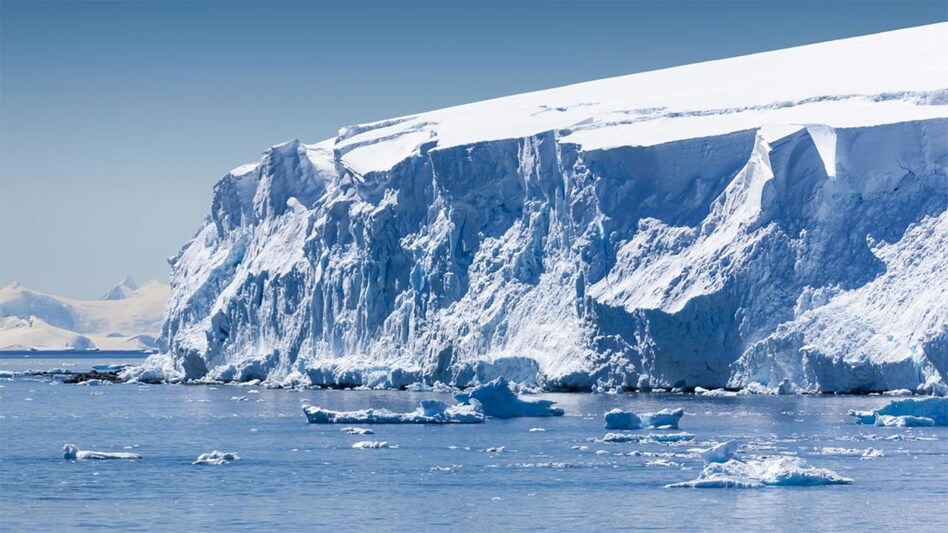
Researchers have found that Antarctica’s Thwaites Glacier, often called the "Doomsday Glacier," is melting faster than expected, posing a significant threat to global sea levels. Eric Rignot, a glaciologist with the International Thwaites Glacier Collaboration (ITGC), expressed concern that the glacier is already in a state of collapse.
Since 2018, the ITGC has conducted ice-breaking expeditions and used underwater robots to monitor the glacier, which spans 74,000 square miles—about the size of Florida. Warm seawater flowing underneath the glacier has accelerated its melting, with the retreating process speeding up considerably over the last 30 years.
Rob Larter, a marine geophysicist with the British Antarctic Survey, said that Thwaites has been retreating for over 80 years and that the pace of its decline is expected to increase.
Experts warn that the glacier could collapse entirely within 200 years, potentially causing global sea levels to rise by up to 10 feet, which would affect coastal areas worldwide.
A robotic probe, Icefin, was sent to the glacier’s grounding line, where ice starts to rise from the seabed, and found that warm water has infiltrated deep crevices, contributing to rapid melting. The retreat may have started in the 1940s, possibly triggered by a major El Niño event.
While some earlier predictions of a chain reaction involving other ice shelves collapsing may have been overstated, researchers caution that both Thwaites and the larger Antarctic Ice Sheet could disappear by the 23rd century, even if fossil fuel usage is reduced. Scientists are working to improve models and timelines for the glacier’s collapse.
Researchers have found that Antarctica’s Thwaites Glacier, often called the "Doomsday Glacier," is melting faster than expected, posing a significant threat to global sea levels. Eric Rignot, a glaciologist with the International Thwaites Glacier Collaboration (ITGC), expressed concern that the glacier is already in a state of collapse.
Since 2018, the ITGC has conducted ice-breaking expeditions and used underwater robots to monitor the glacier, which spans 74,000 square miles—about the size of Florida. Warm seawater flowing underneath the glacier has accelerated its melting, with the retreating process speeding up considerably over the last 30 years.
Rob Larter, a marine geophysicist with the British Antarctic Survey, said that Thwaites has been retreating for over 80 years and that the pace of its decline is expected to increase.
Experts warn that the glacier could collapse entirely within 200 years, potentially causing global sea levels to rise by up to 10 feet, which would affect coastal areas worldwide.
A robotic probe, Icefin, was sent to the glacier’s grounding line, where ice starts to rise from the seabed, and found that warm water has infiltrated deep crevices, contributing to rapid melting. The retreat may have started in the 1940s, possibly triggered by a major El Niño event.
While some earlier predictions of a chain reaction involving other ice shelves collapsing may have been overstated, researchers caution that both Thwaites and the larger Antarctic Ice Sheet could disappear by the 23rd century, even if fossil fuel usage is reduced. Scientists are working to improve models and timelines for the glacier’s collapse.