
Made-in-India chips soon: CG Power opens first semiconductor OSAT plant in Sanand
The facility, known as G1, is the first of its kind in India to offer comprehensive services across traditional and advanced packaging technologies, marking a significant milestone in the country's semiconductor journey.
- Aug 28, 2025,
- Updated Aug 28, 2025 8:35 PM IST
Engineering firm CG Power and Industrial Solutions Limited announced on Thursday (August 28) that its subsidiary, CG Semi Private Limited, has inaugurated its first Outsourced Semiconductor Assembly and Test (OSAT) facility in Sanand, Gujarat. The facility, known as G1, is the first of its kind in India to offer comprehensive services across traditional and advanced packaging technologies, marking a significant milestone in the country's semiconductor journey.
With this launch, CG Semi becomes one of India’s earliest full-service OSAT providers, offering both traditional and advanced packaging solutions. The company said the milestone strengthens India’s semiconductor ecosystem and aligns with the country’s vision of becoming self-reliant while also catering to global demand.
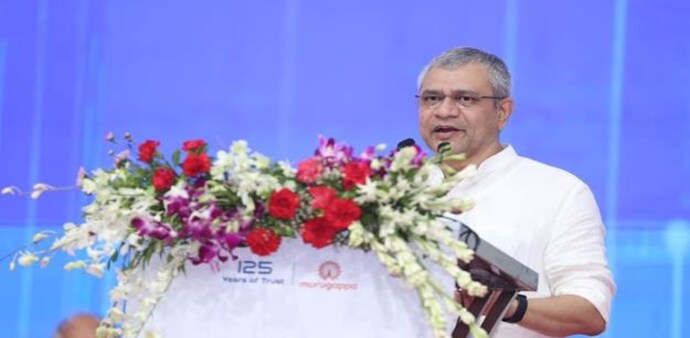
At the inauguration, Union Minister for Electronics and Information Technology (MeitY), Ashwini Vaishnaw, said: “This pilot line (G1 facility) will produce 0.5 million chips per day, and our first Made-in-India chip will come from here.” He added that production at the new plant will begin soon.
Vaishnaw further explained that the pilot line is crucial for qualifying chips for customer approval ahead of large-scale commercial production. Target customers include companies in the automobile, consumer electronics, microcontroller, and broader electronics sectors.
The Sanand facility is a joint venture between CG Power, Japan’s Renesas Electronics Corporation, and Thailand’s Stars Micro. The upcoming full-scale unit, referred to as the G2 facility, will be built over 28–32 acres with a production capacity of 14.5 million units per day. Engineering services firm Jacobs, which has designed several leading semiconductor fabs globally, is the turnkey contractor for the project.
Vaishnaw highlighted the importance of the OSAT Pilot Line in fulfilling India's semiconductor goals, emphasising the ease of commercial plants commencing full-scale production once chips are approved. Vaishnaw stated, "Chips manufactured here will be used for customer qualification," which is crucial for the India Semiconductor Mission's success. The facility is also on track to begin commercial production by 2026.
The development of two state-of-the-art facilities in Sanand — G1 and its under-construction counterpart G2 — is supported by a Rs 7,600 crore investment by CG Semi in collaboration with Renesas and Stars Microelectronics. The G2 facility, expected to be completed by 2026, will increase capacity to approximately 14.5 million units daily, generating over 5,000 jobs.
Vellayan Subbiah, Chairman of CG Power, said: "This facility represents more than a milestone for me or for CG Semi; it is a national milestone. It shows how the Government and Industry can come together with conviction, capital, and scale to achieve the vision set by our Honourable Prime Minister. Every chip we make here is a step toward India’s technological sovereignty." This sentiment reflects the collaboration between government and industry in advancing technological self-sufficiency.
The government has partnered with 270 universities to equip them with advanced semiconductor design tools, leading to the successful fabrication of 20 chips by 17 institutions. Vaishnaw emphasised that this initiative empowers India's youth and strengthens the country's position as a global hub for semiconductor talent.
Engineering firm CG Power and Industrial Solutions Limited announced on Thursday (August 28) that its subsidiary, CG Semi Private Limited, has inaugurated its first Outsourced Semiconductor Assembly and Test (OSAT) facility in Sanand, Gujarat. The facility, known as G1, is the first of its kind in India to offer comprehensive services across traditional and advanced packaging technologies, marking a significant milestone in the country's semiconductor journey.
With this launch, CG Semi becomes one of India’s earliest full-service OSAT providers, offering both traditional and advanced packaging solutions. The company said the milestone strengthens India’s semiconductor ecosystem and aligns with the country’s vision of becoming self-reliant while also catering to global demand.
At the inauguration, Union Minister for Electronics and Information Technology (MeitY), Ashwini Vaishnaw, said: “This pilot line (G1 facility) will produce 0.5 million chips per day, and our first Made-in-India chip will come from here.” He added that production at the new plant will begin soon.
Vaishnaw further explained that the pilot line is crucial for qualifying chips for customer approval ahead of large-scale commercial production. Target customers include companies in the automobile, consumer electronics, microcontroller, and broader electronics sectors.
The Sanand facility is a joint venture between CG Power, Japan’s Renesas Electronics Corporation, and Thailand’s Stars Micro. The upcoming full-scale unit, referred to as the G2 facility, will be built over 28–32 acres with a production capacity of 14.5 million units per day. Engineering services firm Jacobs, which has designed several leading semiconductor fabs globally, is the turnkey contractor for the project.
Vaishnaw highlighted the importance of the OSAT Pilot Line in fulfilling India's semiconductor goals, emphasising the ease of commercial plants commencing full-scale production once chips are approved. Vaishnaw stated, "Chips manufactured here will be used for customer qualification," which is crucial for the India Semiconductor Mission's success. The facility is also on track to begin commercial production by 2026.
The development of two state-of-the-art facilities in Sanand — G1 and its under-construction counterpart G2 — is supported by a Rs 7,600 crore investment by CG Semi in collaboration with Renesas and Stars Microelectronics. The G2 facility, expected to be completed by 2026, will increase capacity to approximately 14.5 million units daily, generating over 5,000 jobs.
Vellayan Subbiah, Chairman of CG Power, said: "This facility represents more than a milestone for me or for CG Semi; it is a national milestone. It shows how the Government and Industry can come together with conviction, capital, and scale to achieve the vision set by our Honourable Prime Minister. Every chip we make here is a step toward India’s technological sovereignty." This sentiment reflects the collaboration between government and industry in advancing technological self-sufficiency.
The government has partnered with 270 universities to equip them with advanced semiconductor design tools, leading to the successful fabrication of 20 chips by 17 institutions. Vaishnaw emphasised that this initiative empowers India's youth and strengthens the country's position as a global hub for semiconductor talent.