
‘Stop chasing Google, Microsoft’: IBM’s Ruchir Puri urges young engineers to explore beyond Big Tech
Puri cited John Deere, the agricultural equipment manufacturer, as an example of a company that has quietly built significant technological capability, using AI and automation to transform farming.
- Nov 13, 2025,
- Updated Nov 13, 2025 3:07 PM IST
As AI transforms every industry, IBM leaders say fresh graduates should look for impact and innovation across sectors — not just inside Silicon Valley’s biggest names.
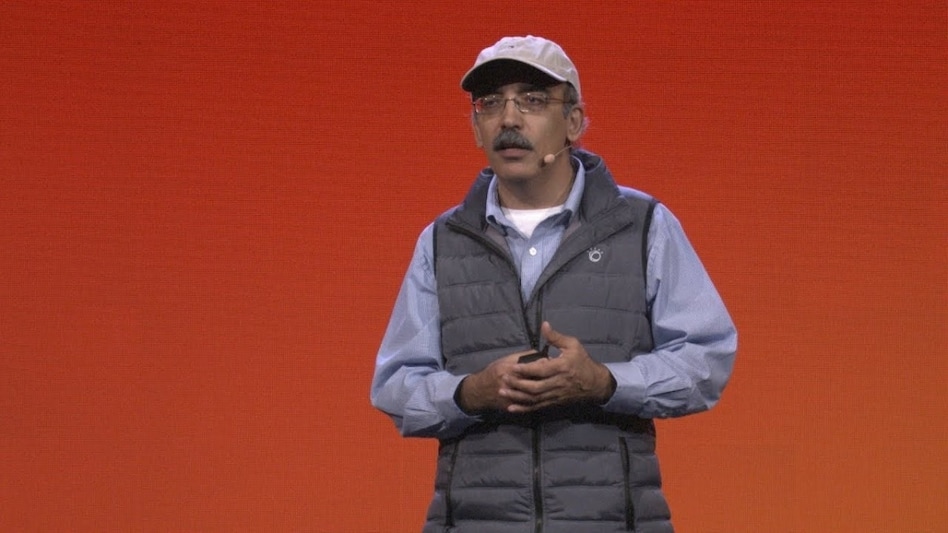
IBM’s Chief Scientist Ruchir Puri has a message for young engineers entering a turbulent job market — stop chasing only the big tech names. Speaking to Business Insider, Puri advised fresh graduates to broaden their horizons and explore opportunities beyond the likes of Google, Microsoft, and even IBM itself.
“Stop only chasing the tech giants everyone else is pining after,” Puri said, noting that software engineers are now essential far beyond traditional technology companies. “Artificial intelligence is transforming every sector — from agriculture to retail — and meaningful work is happening everywhere.”
Puri cited John Deere, the agricultural equipment manufacturer, as an example of a company that has quietly built significant technological capability, using AI and automation to transform farming. “Graduates often overlook such enterprises while focusing narrowly on Silicon Valley,” he added, urging young job seekers to look “beyond a narrow set of technology companies” to the “massive enterprise landscape” being reshaped by AI.
His comments come amid a shifting employment landscape for tech talent. According to an August report from Handshake, job postings fell 16% year-over-year, while applications per posting jumped 26%, reflecting a tighter hiring market. Even as investment in AI surges, major tech firms like Salesforce, Meta, Microsoft, and Amazon have announced sweeping layoffs in 2025. IBM itself confirmed earlier this month that it would cut thousands of positions globally in the fourth quarter.
Yet, IBM’s leadership remains optimistic about the opportunities emerging in AI. CEO Arvind Krishna, in an interview with CNN, echoed Puri’s sentiment and said the company plans to increase hiring of recent graduates over the next year — particularly for AI-focused roles.
“People are talking about layoffs or hiring freezes, but I actually want to say we are the opposite,” Krishna said. “We expect to hire more people out of college over the next 12 months than we have in recent years.”
While automation will inevitably displace some roles, Krishna said the overall outlook remains positive. “On the net mix, it’s a plus for us,” he noted, emphasizing the growing need for skills in AI, quantum computing, and enterprise technology.
Puri’s and Krishna’s shared message underscores a broader shift in the tech employment narrative — from chasing prestige to finding purpose. For young engineers, the next wave of innovation may not be born inside the familiar Big Tech towers, but in the factories, fields, and logistics networks quietly reinventing themselves through AI.
As AI transforms every industry, IBM leaders say fresh graduates should look for impact and innovation across sectors — not just inside Silicon Valley’s biggest names.
IBM’s Chief Scientist Ruchir Puri has a message for young engineers entering a turbulent job market — stop chasing only the big tech names. Speaking to Business Insider, Puri advised fresh graduates to broaden their horizons and explore opportunities beyond the likes of Google, Microsoft, and even IBM itself.
“Stop only chasing the tech giants everyone else is pining after,” Puri said, noting that software engineers are now essential far beyond traditional technology companies. “Artificial intelligence is transforming every sector — from agriculture to retail — and meaningful work is happening everywhere.”
Puri cited John Deere, the agricultural equipment manufacturer, as an example of a company that has quietly built significant technological capability, using AI and automation to transform farming. “Graduates often overlook such enterprises while focusing narrowly on Silicon Valley,” he added, urging young job seekers to look “beyond a narrow set of technology companies” to the “massive enterprise landscape” being reshaped by AI.
His comments come amid a shifting employment landscape for tech talent. According to an August report from Handshake, job postings fell 16% year-over-year, while applications per posting jumped 26%, reflecting a tighter hiring market. Even as investment in AI surges, major tech firms like Salesforce, Meta, Microsoft, and Amazon have announced sweeping layoffs in 2025. IBM itself confirmed earlier this month that it would cut thousands of positions globally in the fourth quarter.
Yet, IBM’s leadership remains optimistic about the opportunities emerging in AI. CEO Arvind Krishna, in an interview with CNN, echoed Puri’s sentiment and said the company plans to increase hiring of recent graduates over the next year — particularly for AI-focused roles.
“People are talking about layoffs or hiring freezes, but I actually want to say we are the opposite,” Krishna said. “We expect to hire more people out of college over the next 12 months than we have in recent years.”
While automation will inevitably displace some roles, Krishna said the overall outlook remains positive. “On the net mix, it’s a plus for us,” he noted, emphasizing the growing need for skills in AI, quantum computing, and enterprise technology.
Puri’s and Krishna’s shared message underscores a broader shift in the tech employment narrative — from chasing prestige to finding purpose. For young engineers, the next wave of innovation may not be born inside the familiar Big Tech towers, but in the factories, fields, and logistics networks quietly reinventing themselves through AI.