
The backbone of AI is data...: Gurnani says India can leverage its biggest AI advantage
India’s vast data pool could give the country a distinctive edge in the global AI race, provided it is combined with practical use cases, according to AIONOS Co-Founder and VC CP Gurnani. “The backbone of AI is data,” Gurnani said, arguing that India can turn its data advantage into locally relevant and scalable AI applications.
- Sep 10, 2026,
- Updated Sep 10, 2026 8:15 PM IST
India’s vast data pool could become a key advantage in the artificial intelligence race if it is combined with practical use cases and locally relevant applications, according to CP Gurnani, Co-Founder and VC, AIONOS.
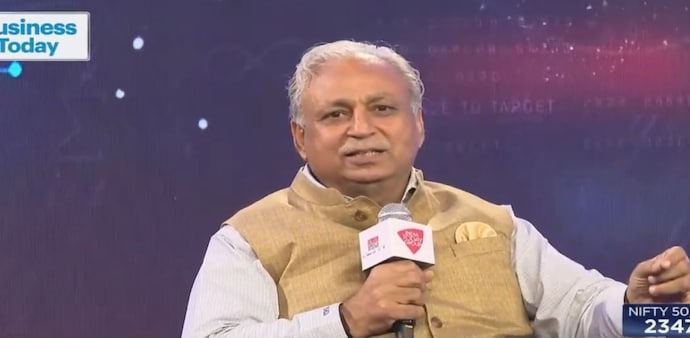
“The backbone of AI is data. Backbone of AI is machine learning. Who is the data capital of the world? It is India,” Gurnani said at the India Today BRICS Roundtable during a session titled “AI: The New Game Changer”.
Gurnani argued that India should focus on marrying its data advantage with applications, rather than concentrating only on the technology underlying AI models.
“So if I can marry my data and if I can marry the use cases whether I develop it or somebody else develops it,” he said.
AI moving into everyday use
Gurnani said AI is no longer a technology restricted to developers or specialists and is becoming accessible to ordinary users through conversational interfaces and local languages.
“A farmer does not have to type or he can ask in his own native language about the crop or about whatever precaution that person needs to take,” he said.
He described this broader accessibility as a fundamental shift in how people interact with technology. “AI for the first time has become a tool which is equally important to a grandmother or a tool which is equally important to a developer or a gamer,” he said.
Gurnani compared the transition to the evolution of electricity, arguing that users ultimately care about the applications enabled by the technology rather than the infrastructure powering them.
“View AI as electricity not as a power station,” he said.
AI infrastructure
Addressing the question of AI sovereignty, Gurnani said India may have to work with different levels of computing infrastructure but should not assume that this limits its ability to develop competitive applications.
“It is not that our technology then will be as superior as the latest Nvidia chip or now the competitors like AMD or Amazon Nova,” he said.
However, he argued that India could remain competitive in areas such as user interfaces and agentic AI.
“We will have to compromise on a certain point which is the infrastructure but the other three elements—which is developing a user interface or an agentic AI interface—I don't think we need to compromise,” Gurnani said.
He also pointed to India’s experience of building technology solutions under constraints, citing the country’s development of banking and insurance systems during periods when access to imported technology was restricted.
From data to faster innovation
Gurnani said the combination of India’s data and AI could also accelerate product development and reduce dependence on imports.
“If I use AI to develop a new product, reverse engineer a product, then I can reduce the cycle of development by 1/10th,” he said.
He argued that India should identify sectors where such capabilities can create an advantage. “I think we need to determine which sectors we want to dominate,” Gurnani said, pointing to APIs and alternatives to urea as examples.
For India, his argument is ultimately about converting the country’s data advantage into practical applications, faster innovation and more affordable solutions—rather than competing solely on the scale of AI infrastructure.
For Unparalleled coverage of India's Businesses and Economy – Subscribe to Business Today Magazine
India’s vast data pool could become a key advantage in the artificial intelligence race if it is combined with practical use cases and locally relevant applications, according to CP Gurnani, Co-Founder and VC, AIONOS.
“The backbone of AI is data. Backbone of AI is machine learning. Who is the data capital of the world? It is India,” Gurnani said at the India Today BRICS Roundtable during a session titled “AI: The New Game Changer”.
Gurnani argued that India should focus on marrying its data advantage with applications, rather than concentrating only on the technology underlying AI models.
“So if I can marry my data and if I can marry the use cases whether I develop it or somebody else develops it,” he said.
AI moving into everyday use
Gurnani said AI is no longer a technology restricted to developers or specialists and is becoming accessible to ordinary users through conversational interfaces and local languages.
“A farmer does not have to type or he can ask in his own native language about the crop or about whatever precaution that person needs to take,” he said.
He described this broader accessibility as a fundamental shift in how people interact with technology. “AI for the first time has become a tool which is equally important to a grandmother or a tool which is equally important to a developer or a gamer,” he said.
Gurnani compared the transition to the evolution of electricity, arguing that users ultimately care about the applications enabled by the technology rather than the infrastructure powering them.
“View AI as electricity not as a power station,” he said.
AI infrastructure
Addressing the question of AI sovereignty, Gurnani said India may have to work with different levels of computing infrastructure but should not assume that this limits its ability to develop competitive applications.
“It is not that our technology then will be as superior as the latest Nvidia chip or now the competitors like AMD or Amazon Nova,” he said.
However, he argued that India could remain competitive in areas such as user interfaces and agentic AI.
“We will have to compromise on a certain point which is the infrastructure but the other three elements—which is developing a user interface or an agentic AI interface—I don't think we need to compromise,” Gurnani said.
He also pointed to India’s experience of building technology solutions under constraints, citing the country’s development of banking and insurance systems during periods when access to imported technology was restricted.
From data to faster innovation
Gurnani said the combination of India’s data and AI could also accelerate product development and reduce dependence on imports.
“If I use AI to develop a new product, reverse engineer a product, then I can reduce the cycle of development by 1/10th,” he said.
He argued that India should identify sectors where such capabilities can create an advantage. “I think we need to determine which sectors we want to dominate,” Gurnani said, pointing to APIs and alternatives to urea as examples.
For India, his argument is ultimately about converting the country’s data advantage into practical applications, faster innovation and more affordable solutions—rather than competing solely on the scale of AI infrastructure.
For Unparalleled coverage of India's Businesses and Economy – Subscribe to Business Today Magazine