
Treat data as a fiduciary responsibility, not as a business asset: RBI Governor Malhotra to fintechs
The RBI Governor urged fintechs to build products from India for the world.
- Sep 10, 2026,
- Updated Sep 10, 2026 8:06 PM IST
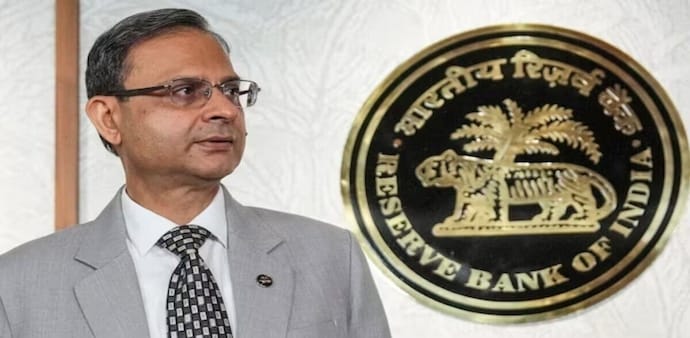
As technology expands and usage of Artificial Intelligence grows across the finance sector, Reserve Bank of India Governor Sanjay Malhotra has stressed that mitigating risks related to cybersecurity, data privacy, AI bias, and erosion of human judgement are extremely important to maintain consumer trust.
He also urged fintechs to treat data as a "fiduciary responsibility, not as a business asset."
"This data must be treated the way a trustee treats assets held for a beneficiary, collected with a clear purpose and used strictly within the consent provided, and protected as though it was one's own," Malhotra said at the Global Fintech Fest.
He also urged financial institutions to take systemic responsibility that scales with size. Many fintechs may be outside the perimeter of prudential regulation, but as their size (payment volumes, user base, lending book etc) grows to an extent where any disruption could affect the financial system, they had a responsibility beyond their own balance sheet, he stressed.
"I would describe this as the obligation to be not just too big to fail, but too significant to be careless. Operational resilience, business continuity, and cyber security are not burdens or costs to be minimized. They are the price of the scale a firm has achieved," he noted.
MUST READ: Here's what RBI DG Rohit Jain said on need for more safeguards at GFF 2026
India's finance and fintech ecosystem has made huge strides. With platforms like UPI, digital finance has now become a part of our everyday life. However, financial inclusion remains the single most important potential that fintech can deliver, said Malhotra.
According to him, modern tools for underwriting and credit assessment have made last-mile financial services delivery such as credit to MSMEs, women or small and marginal farmers in villages, commercially viable. However, he rued the fact that too much of the industry's efforts still gravitated towards customers who are already banked, already digitally literate and already visible to a credit bureau.
"The harder work of reaching those still outside the system is where the potential to impact is least realised today and where it matters the most. I would only ask that connecting the last man standing in the queue remains the focus of today's innovation for all of you present here and not merely a footnote to it," Malhotra pointed.
He noted that India's fintech ecosystem ranks third globally and is home to 30 unicorns. While the focus has been largely to build for India, Malhotra urged fintechs to build products for the world from India.
"Many emerging economies face challenges which are very similar to ours. As a result, our solutions for financial inclusion, affordable payments, digital identity, interoperable infrastructure, and trusted innovation can be appropriately repurposed for wider global adoption," he said.
Governor Malhotra, along with Securities and Exchange Board of India chairman Tuhin Kanta Pandey, on Thursday launched the tokenisation of corporate bonds.
Malhotra also announced that the United Fintech Forum has been recognised as the second self-regulatory organisation (SRO) of the fintech sector.
DO READ: Tier-2 cities lead India’s digital credit inclusion with highest DCII score: Report
For Unparalleled coverage of India's Businesses and Economy – Subscribe to Business Today Magazine
As technology expands and usage of Artificial Intelligence grows across the finance sector, Reserve Bank of India Governor Sanjay Malhotra has stressed that mitigating risks related to cybersecurity, data privacy, AI bias, and erosion of human judgement are extremely important to maintain consumer trust.
He also urged fintechs to treat data as a "fiduciary responsibility, not as a business asset."
"This data must be treated the way a trustee treats assets held for a beneficiary, collected with a clear purpose and used strictly within the consent provided, and protected as though it was one's own," Malhotra said at the Global Fintech Fest.
He also urged financial institutions to take systemic responsibility that scales with size. Many fintechs may be outside the perimeter of prudential regulation, but as their size (payment volumes, user base, lending book etc) grows to an extent where any disruption could affect the financial system, they had a responsibility beyond their own balance sheet, he stressed.
"I would describe this as the obligation to be not just too big to fail, but too significant to be careless. Operational resilience, business continuity, and cyber security are not burdens or costs to be minimized. They are the price of the scale a firm has achieved," he noted.
MUST READ: Here's what RBI DG Rohit Jain said on need for more safeguards at GFF 2026
India's finance and fintech ecosystem has made huge strides. With platforms like UPI, digital finance has now become a part of our everyday life. However, financial inclusion remains the single most important potential that fintech can deliver, said Malhotra.
According to him, modern tools for underwriting and credit assessment have made last-mile financial services delivery such as credit to MSMEs, women or small and marginal farmers in villages, commercially viable. However, he rued the fact that too much of the industry's efforts still gravitated towards customers who are already banked, already digitally literate and already visible to a credit bureau.
"The harder work of reaching those still outside the system is where the potential to impact is least realised today and where it matters the most. I would only ask that connecting the last man standing in the queue remains the focus of today's innovation for all of you present here and not merely a footnote to it," Malhotra pointed.
He noted that India's fintech ecosystem ranks third globally and is home to 30 unicorns. While the focus has been largely to build for India, Malhotra urged fintechs to build products for the world from India.
"Many emerging economies face challenges which are very similar to ours. As a result, our solutions for financial inclusion, affordable payments, digital identity, interoperable infrastructure, and trusted innovation can be appropriately repurposed for wider global adoption," he said.
Governor Malhotra, along with Securities and Exchange Board of India chairman Tuhin Kanta Pandey, on Thursday launched the tokenisation of corporate bonds.
Malhotra also announced that the United Fintech Forum has been recognised as the second self-regulatory organisation (SRO) of the fintech sector.
DO READ: Tier-2 cities lead India’s digital credit inclusion with highest DCII score: Report
For Unparalleled coverage of India's Businesses and Economy – Subscribe to Business Today Magazine