
A drone flying at 600 km/h? This Hyderabad startup wants to redefine aerial warfare
The company reached a significant milestone in early 2026 when it successfully test-launched its jet-powered UAV from a moving vehicle, demonstrating mobile launch capability that enhances battlefield flexibility.
- Jul 10, 2026,
- Updated Jul 10, 2026 5:54 PM IST
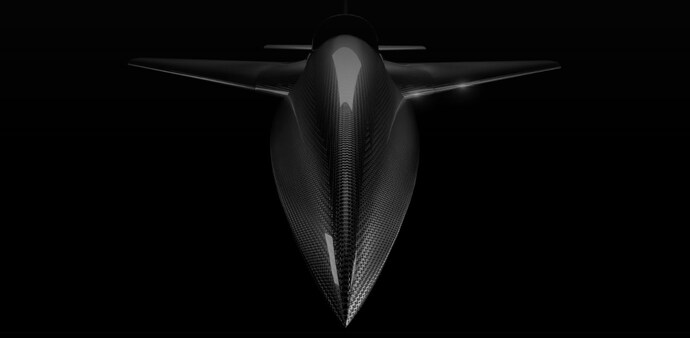
India's indigenous drone ecosystem is rapidly expanding beyond surveillance and logistics into high-speed combat systems. Among the latest entrants is the Nightshade ADX-1, a jet-powered unmanned aerial vehicle (UAV) being developed by Hyderabad-based defense startup Apollyon Dynamics.
The company says the UAV is designed for missions in heavily defended airspace, where speed, autonomy and electronic warfare resilience are critical. Its reported cruising and attack speeds of 600-700 km/h place it among the fastest tactical UAVs being developed by Indian startups.
Faster than Iran's Shahed-238
Iran's Shahed-238 has emerged as one of the world's most closely watched jet-powered loitering munitions because of its reported speed of around 520 km/h, making interception significantly more challenging than slower propeller-driven drones.
The Nightshade ADX-1 is claimed to outperform it in speed, with a top operational velocity of up to 700 km/h. According to Apollyon Dynamics, the aircraft has a maximum takeoff weight (MTOW) of 70 kg and can carry modular payloads, including up to 5 kg of explosives for precision strike missions.
The UAV is also designed to fly more than 100 km into hostile territory, with the company indicating that future variants could exceed 150 km depending on mission configuration.
Built for GPS-jammed battlefields
One of the defining features of the Nightshade ADX-1 is its ability to operate in environments where satellite navigation is unavailable or deliberately jammed.
Instead of relying solely on GPS, the drone combines an Inertial Navigation System (INS) with terrain-following capabilities. This enables it to continue flying accurately even under electronic warfare conditions, where GPS spoofing and jamming have become common tactics.
Flying at low altitude while following terrain contours also reduces radar exposure, improving its chances of penetrating sophisticated air-defense networks.
Designed to destroy enemy air defenses
The Nightshade ADX-1 is intended for Suppression of Enemy Air Defenses (SEAD) — missions that involve locating and destroying hostile radar systems before larger air operations begin.
The UAV is designed to carry anti-radiation homing sensors capable of detecting radar emissions and autonomously steering toward them. Neutralising enemy radar installations can create safer corridors for fighter aircraft, cruise missiles and other strike assets.
In addition to land targets, the drone incorporates Automatic Identification System (AIS) capabilities, allowing it to identify, track and engage maritime surface vessels.
Startup behind the project
Apollyon Dynamics was founded by BTech students Jayant Khatri and Sourya Choudhury and operates as a deep-tech defense startup incubated at BITS Pilani Hyderabad Campus.
The company reached a significant milestone in early 2026 when it successfully test-launched its jet-powered UAV from a moving vehicle, demonstrating mobile launch capability that enhances battlefield flexibility.
To accelerate production and development, the startup has secured ₹4 crore in pre-seed funding. It has also introduced what it describes as the Indian Army's first mobile drone laboratory, enabling frontline customisation and rapid deployment of first-person-view (FPV) drones.
The Russia-Ukraine war and conflicts across the Middle East have highlighted the growing importance of fast, autonomous drones capable of surviving contested airspace. As electronic warfare becomes more sophisticated, platforms that combine jet propulsion, autonomous navigation and radar-hunting capabilities are increasingly viewed as force multipliers.
For Unparalleled coverage of India's Businesses and Economy – Subscribe to Business Today Magazine
India's indigenous drone ecosystem is rapidly expanding beyond surveillance and logistics into high-speed combat systems. Among the latest entrants is the Nightshade ADX-1, a jet-powered unmanned aerial vehicle (UAV) being developed by Hyderabad-based defense startup Apollyon Dynamics.
The company says the UAV is designed for missions in heavily defended airspace, where speed, autonomy and electronic warfare resilience are critical. Its reported cruising and attack speeds of 600-700 km/h place it among the fastest tactical UAVs being developed by Indian startups.
Faster than Iran's Shahed-238
Iran's Shahed-238 has emerged as one of the world's most closely watched jet-powered loitering munitions because of its reported speed of around 520 km/h, making interception significantly more challenging than slower propeller-driven drones.
The Nightshade ADX-1 is claimed to outperform it in speed, with a top operational velocity of up to 700 km/h. According to Apollyon Dynamics, the aircraft has a maximum takeoff weight (MTOW) of 70 kg and can carry modular payloads, including up to 5 kg of explosives for precision strike missions.
The UAV is also designed to fly more than 100 km into hostile territory, with the company indicating that future variants could exceed 150 km depending on mission configuration.
Built for GPS-jammed battlefields
One of the defining features of the Nightshade ADX-1 is its ability to operate in environments where satellite navigation is unavailable or deliberately jammed.
Instead of relying solely on GPS, the drone combines an Inertial Navigation System (INS) with terrain-following capabilities. This enables it to continue flying accurately even under electronic warfare conditions, where GPS spoofing and jamming have become common tactics.
Flying at low altitude while following terrain contours also reduces radar exposure, improving its chances of penetrating sophisticated air-defense networks.
Designed to destroy enemy air defenses
The Nightshade ADX-1 is intended for Suppression of Enemy Air Defenses (SEAD) — missions that involve locating and destroying hostile radar systems before larger air operations begin.
The UAV is designed to carry anti-radiation homing sensors capable of detecting radar emissions and autonomously steering toward them. Neutralising enemy radar installations can create safer corridors for fighter aircraft, cruise missiles and other strike assets.
In addition to land targets, the drone incorporates Automatic Identification System (AIS) capabilities, allowing it to identify, track and engage maritime surface vessels.
Startup behind the project
Apollyon Dynamics was founded by BTech students Jayant Khatri and Sourya Choudhury and operates as a deep-tech defense startup incubated at BITS Pilani Hyderabad Campus.
The company reached a significant milestone in early 2026 when it successfully test-launched its jet-powered UAV from a moving vehicle, demonstrating mobile launch capability that enhances battlefield flexibility.
To accelerate production and development, the startup has secured ₹4 crore in pre-seed funding. It has also introduced what it describes as the Indian Army's first mobile drone laboratory, enabling frontline customisation and rapid deployment of first-person-view (FPV) drones.
The Russia-Ukraine war and conflicts across the Middle East have highlighted the growing importance of fast, autonomous drones capable of surviving contested airspace. As electronic warfare becomes more sophisticated, platforms that combine jet propulsion, autonomous navigation and radar-hunting capabilities are increasingly viewed as force multipliers.
For Unparalleled coverage of India's Businesses and Economy – Subscribe to Business Today Magazine