
Skyroot's Vikram-1 milestone: How TakeMe2Space's battery cleared space's toughest test
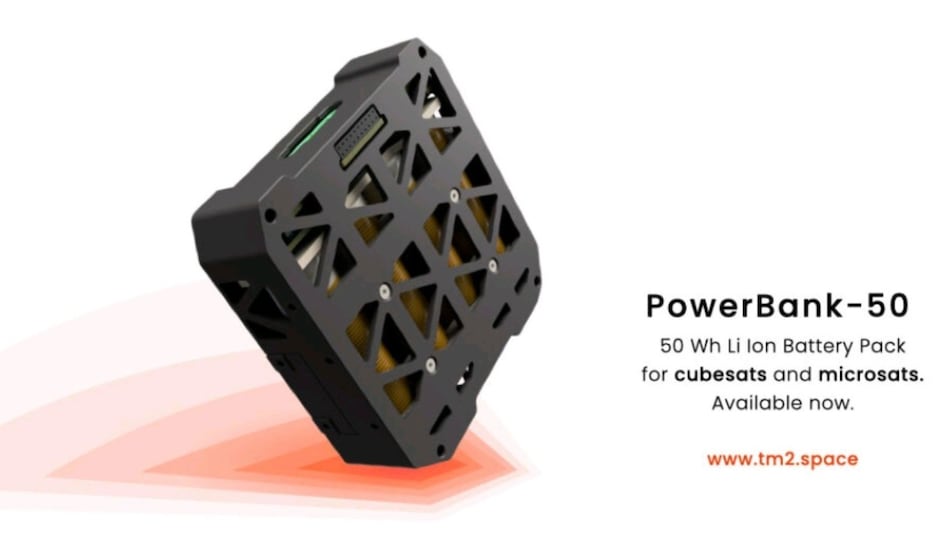
PowerBank-50 packs more than 50 Wh of energy into a unit weighing just 380 gm. TakeMe2Space has priced it at ₹1,04,900, positioning it as a lower-cost alternative to imported systems.
- Jul 31, 2026,
- Updated Jul 31, 2026 3:33 PM IST
When Skyroot Aerospace's Vikram-1 lifted off from Sriharikota on July 18, it carried more than India's first privately developed rocket to reach orbit. Hidden inside the mission was a compact battery built by Hyderabad startup TakeMe2Space — one that had never flown before. Days later, that battery returned with something every space hardware company wants but few achieve: flight heritage.
The successful mission has made PowerBank-50 India's first indigenous, commercially available satellite battery to prove itself in space, a milestone that could reduce the country's dependence on imported satellite power systems while giving domestic space startups access to a critical technology built at home.
A badge that cannot be earned on the ground
In the satellite industry, laboratory tests are only the beginning. The real test comes in orbit, where components must survive violent launch vibrations before operating reliably in the vacuum of space through radiation and extreme temperature swings.
That is why "flight heritage" carries enormous weight. Satellite manufacturers, launch providers and insurers overwhelmingly prefer hardware that has already performed successfully in space. Without that record, even well-tested components often struggle to find customers.
PowerBank-50 has now crossed that hurdle after powering Cosmoserve Space's experimental payload aboard Vikram-1's Orbital Adjustment Module at an altitude of 450 km.
"Every satellite mission lives or dies by its power system, which is why nobody wants to be the first to fly a new battery. We are grateful that Cosmoserve trusted PowerBank-50 on a mission of this significance. Flying on the first private Indian rocket to reach orbit, and performing flawlessly at 450 km, is the strongest validation a product can earn," said Ronak Kumar Samantray, Founder and CEO of TakeMe2Space.
Why batteries matter more than most people realise
Every satellite depends on sunlight for power — but only when it is exposed to the Sun. During every orbit, satellites pass through Earth's shadow, leaving their batteries to keep every onboard system alive.
A battery failure can end an entire satellite mission.
For years, Indian satellite developers have largely relied on imported battery packs, often facing high costs and long procurement timelines. A flight-proven battery manufactured in India could significantly reduce those barriers, especially for startups, universities and research institutions building small satellites.
Compact design, global ambitions
PowerBank-50 packs more than 50 Wh of energy into a unit weighing just 380 gm. It integrates high-energy-density lithium-ion cells, an intelligent battery management system, onboard heating for extreme orbital temperatures and health monitoring that continuously reports battery status to operators on the ground.
The battery can be configured for CubeSats as well as larger microsatellites, with an expected operational life of up to five years in low-Earth orbit. TakeMe2Space has priced it at ₹1,04,900, positioning it as a lower-cost alternative to imported systems.
A boost for India's private space ecosystem
The achievement comes at a pivotal moment for India's commercial space industry.
Vikram-1's successful mission established Skyroot Aerospace as the country's first private company to place a rocket into orbit. Riding on that landmark launch, TakeMe2Space demonstrated that an Indian-built satellite battery can survive launch, operate in orbit and earn the industry's most valuable credential.
Union Finance Minister Nirmala Sitharaman hailed the achievement on X, writing: "Brilliant! Until now, Indian satellite builders mostly had to import this critical component at high cost and long waiting times. TakeMe2Space's PowerBank-50 becomes first India-made satellite battery."
For India's rapidly expanding space sector, the milestone is about more than one successful mission. It signals that another critical piece of the satellite supply chain can now be designed, built and proven in India — potentially making future missions faster, cheaper and less dependent on overseas suppliers.
For Unparalleled coverage of India's Businesses and Economy – Subscribe to Business Today Magazine
When Skyroot Aerospace's Vikram-1 lifted off from Sriharikota on July 18, it carried more than India's first privately developed rocket to reach orbit. Hidden inside the mission was a compact battery built by Hyderabad startup TakeMe2Space — one that had never flown before. Days later, that battery returned with something every space hardware company wants but few achieve: flight heritage.
The successful mission has made PowerBank-50 India's first indigenous, commercially available satellite battery to prove itself in space, a milestone that could reduce the country's dependence on imported satellite power systems while giving domestic space startups access to a critical technology built at home.
A badge that cannot be earned on the ground
In the satellite industry, laboratory tests are only the beginning. The real test comes in orbit, where components must survive violent launch vibrations before operating reliably in the vacuum of space through radiation and extreme temperature swings.
That is why "flight heritage" carries enormous weight. Satellite manufacturers, launch providers and insurers overwhelmingly prefer hardware that has already performed successfully in space. Without that record, even well-tested components often struggle to find customers.
PowerBank-50 has now crossed that hurdle after powering Cosmoserve Space's experimental payload aboard Vikram-1's Orbital Adjustment Module at an altitude of 450 km.
"Every satellite mission lives or dies by its power system, which is why nobody wants to be the first to fly a new battery. We are grateful that Cosmoserve trusted PowerBank-50 on a mission of this significance. Flying on the first private Indian rocket to reach orbit, and performing flawlessly at 450 km, is the strongest validation a product can earn," said Ronak Kumar Samantray, Founder and CEO of TakeMe2Space.
Why batteries matter more than most people realise
Every satellite depends on sunlight for power — but only when it is exposed to the Sun. During every orbit, satellites pass through Earth's shadow, leaving their batteries to keep every onboard system alive.
A battery failure can end an entire satellite mission.
For years, Indian satellite developers have largely relied on imported battery packs, often facing high costs and long procurement timelines. A flight-proven battery manufactured in India could significantly reduce those barriers, especially for startups, universities and research institutions building small satellites.
Compact design, global ambitions
PowerBank-50 packs more than 50 Wh of energy into a unit weighing just 380 gm. It integrates high-energy-density lithium-ion cells, an intelligent battery management system, onboard heating for extreme orbital temperatures and health monitoring that continuously reports battery status to operators on the ground.
The battery can be configured for CubeSats as well as larger microsatellites, with an expected operational life of up to five years in low-Earth orbit. TakeMe2Space has priced it at ₹1,04,900, positioning it as a lower-cost alternative to imported systems.
A boost for India's private space ecosystem
The achievement comes at a pivotal moment for India's commercial space industry.
Vikram-1's successful mission established Skyroot Aerospace as the country's first private company to place a rocket into orbit. Riding on that landmark launch, TakeMe2Space demonstrated that an Indian-built satellite battery can survive launch, operate in orbit and earn the industry's most valuable credential.
Union Finance Minister Nirmala Sitharaman hailed the achievement on X, writing: "Brilliant! Until now, Indian satellite builders mostly had to import this critical component at high cost and long waiting times. TakeMe2Space's PowerBank-50 becomes first India-made satellite battery."
For India's rapidly expanding space sector, the milestone is about more than one successful mission. It signals that another critical piece of the satellite supply chain can now be designed, built and proven in India — potentially making future missions faster, cheaper and less dependent on overseas suppliers.
For Unparalleled coverage of India's Businesses and Economy – Subscribe to Business Today Magazine