
How Elon Musk's Starlink could interfere with sovereign nations. Ukraine war reveals the risks
A 2023 paper examines how Starlink became an important part of Ukraine's war against Russia
- Oct 11, 2026,
- Updated Oct 11, 2026 7:41 PM IST
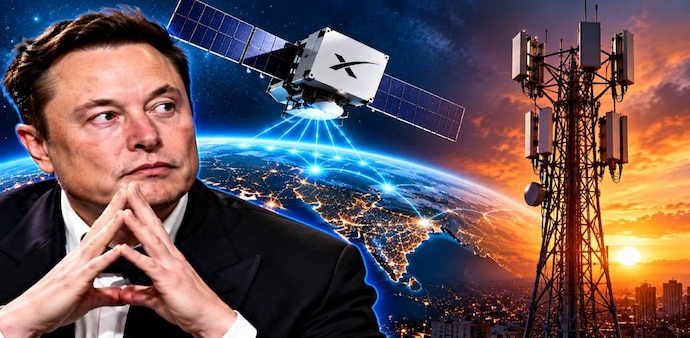
SpaceX CEO Elon Musk's Starlink, a satellite internet company, wants to launch its services in India, but security concerns have delayed its commercial rollout.
Musk has criticised the delay. But Indian defence experts have raised a different concern. Should India depend on a foreign-owned company for a communications network that could become critical during a conflict?
A 2023 research paper by the Manohar Parrikar Institute for Defence Studies and Analyses (MP-IDSA) offers some answers.
The paper, titled "Starlink's Role in Ukraine: Portent of a Space War?", was written by retired Colonel and defence expert Kaushik Ray and William Selvamurthy, a former chief controller of research and development at DRDO.
The paper examines how Starlink became an important part of Ukraine's war against Russia. It also raises a larger concern that a private company can become so important to a country's military operations that its decisions may affect national security, military strategy, and even relations between governments.
How Starlink became important in the Ukraine war
When Russia invaded Ukraine in February 2022, parts of Ukraine's communications infrastructure were damaged. The country needed a reliable way to stay connected. That was when Starlink stepped in.
Ukraine's then Deputy Prime Minister, Mykhailo Fedorov, asked Musk to provide satellite internet services. Musk agreed, and Starlink terminals began arriving in Ukraine. The network soon became important for both civilians and the military.
Ukrainian forces used Starlink to communicate with one another, share intelligence, and support drone operations.
The MP-IDSA paper describes how a Ukrainian unit called Aerorozvidka used drones to track Russian military movements. Some drones carried infrared cameras that could identify Russian tanks and other equipment at night.
Starlink helped provide the internet connectivity needed for these operations.
The researchers explain that Starlink became part of what the military calls C4ISR. This stands for command, control, communications, computers, intelligence, surveillance, and reconnaissance.
In simple terms, Starlink was no longer just helping people access the internet. It was also helping soldiers communicate and coordinate military operations.
Dmitry Rogozin, the then chief of the Russian space agency Roscosmos, had in 2021 said that "Starlink satellites...can be used for military purposes in the future, including for changing the flight path of cruise missiles and managing spy networks".
He also stated that Starlink could even be utilised to distribute 'purely political, and most likely, anti-Russian content directly to mobile phones'.
Did Starlink help Ukraine sink a Russian warship?
The paper also discusses the sinking of Russia's warship Moskva in April 2022.
Odessa's Governor Maksym Marchenko had claimed that Ukrainian forces had seriously damaged Moskva with two Neptune anti-ship missiles.
Some unconfirmed reports suggested that Starlink helped Ukrainian forces guide or adjust the missiles that caused the sinking of Moskva.
Moscow increasingly viewed Starlink as part of Ukraine's military infrastructure. Russian officials also warned that commercial satellites supporting military operations could become targets.
The paper explains that civilian infrastructure used for military purposes can, under certain conditions, become a military objective. But any attack must still comply with international humanitarian law.
Can Starlink influence a country's military decisions?
While Starlink's satellites operate in space, the company controls the software and network operations from the US. Its services can become essential to countries fighting wars. This gives a private company an unusual position.
A country may depend on its services for military communications. Yet it may not have full control over the technology.
Starlink can manage where its terminals operate through technical restrictions. Its operator also controls important parts of the network. This creates a potential risk. If a country becomes heavily dependent on the system, restrictions or disruptions could affect its communications at a critical moment.
On February 8, 2023, SpaceX President and COO Gwynne Shotwell announced, at a conference in Washington, that the company had taken steps to prevent Ukraine's military from using Starlink to control drones.
She said Starlink was never intended to be used for offensive military operations. "There are things that we can do to limit their ability to do that. There are things that we can do, and have done."
"For India, Starlink becomes an instrument of US policy. It is dangerous in any crisis with US-allied Pakistan. We are more concerned about that," Ray, co-author of the MP-IDSA paper, told Business Today.
"India should ensure the primacy of Indian laws, Indian-controlled gateways and geofencing, and exclusion from defence networks while it develops its own sovereign low Earth orbit constellation."
Ray, who holds a doctorate in defence studies and tracks space weaponisation, flagged risks related to sovereign control, data exposure and potential misuse of the network by non-state actors. "These risks can somehow be managed, though they cannot be fully eliminated."
He pointed out that Starlink has already partnered with Reliance Jio and Bharti Airtel. If India allows Starlink to operate here, he suggested, gateway operations could be placed under the licence of one of these Indian partners, with the physical infrastructure remaining under Indian control.
"Europe has this kind of arrangement. They have this concept of sovereign cloud where the local entity holds the keys. But SpaceX can still switch the service off from us. That is always possible. No safeguard can remove that."
Musk's attack on Zelensky
Musk publicly criticised Ukrainian President Volodymyr Zelensky in October 2026. "Zelensky has gone too far," he wrote on X.
He was reacting to US President Donald Trump's criticism of Ukrainian strikes on Russian oil infrastructure.
Trump told reporters: "We told Zelensky, 'You can do whatever you want to Russia, but don't hit the refineries because that's a world problem.' And what does he do? He goes and hits the diesel fuel. He better damn well stop."
Musk's statement is significant because his company provides a communications network that has been important to Ukraine during the war.
Imagine a situation where the owner of an important communications network takes a position against the leadership of a country that relies on that network.
Ex-Army chief Ved Malik on Starlink
India's former Army chief General Ved Prakash Malik, too, has flagged security concerns. Malik, who led the Indian Army during the 1999 Kargil War, said on Sunday that he would not want India to depend on foreign-owned telecommunications systems.
"With concern for national security, and my experience of defence sanctions imposed by USA during Kargil war period and tariff & other restrictions imposed by US recently, I would not like to depend on any foreign-owned telecom system in India," Malik wrote on X.
For Unparalleled coverage of India's Businesses and Economy – Subscribe to Business Today Magazine
SpaceX CEO Elon Musk's Starlink, a satellite internet company, wants to launch its services in India, but security concerns have delayed its commercial rollout.
Musk has criticised the delay. But Indian defence experts have raised a different concern. Should India depend on a foreign-owned company for a communications network that could become critical during a conflict?
A 2023 research paper by the Manohar Parrikar Institute for Defence Studies and Analyses (MP-IDSA) offers some answers.
The paper, titled "Starlink's Role in Ukraine: Portent of a Space War?", was written by retired Colonel and defence expert Kaushik Ray and William Selvamurthy, a former chief controller of research and development at DRDO.
The paper examines how Starlink became an important part of Ukraine's war against Russia. It also raises a larger concern that a private company can become so important to a country's military operations that its decisions may affect national security, military strategy, and even relations between governments.
How Starlink became important in the Ukraine war
When Russia invaded Ukraine in February 2022, parts of Ukraine's communications infrastructure were damaged. The country needed a reliable way to stay connected. That was when Starlink stepped in.
Ukraine's then Deputy Prime Minister, Mykhailo Fedorov, asked Musk to provide satellite internet services. Musk agreed, and Starlink terminals began arriving in Ukraine. The network soon became important for both civilians and the military.
Ukrainian forces used Starlink to communicate with one another, share intelligence, and support drone operations.
The MP-IDSA paper describes how a Ukrainian unit called Aerorozvidka used drones to track Russian military movements. Some drones carried infrared cameras that could identify Russian tanks and other equipment at night.
Starlink helped provide the internet connectivity needed for these operations.
The researchers explain that Starlink became part of what the military calls C4ISR. This stands for command, control, communications, computers, intelligence, surveillance, and reconnaissance.
In simple terms, Starlink was no longer just helping people access the internet. It was also helping soldiers communicate and coordinate military operations.
Dmitry Rogozin, the then chief of the Russian space agency Roscosmos, had in 2021 said that "Starlink satellites...can be used for military purposes in the future, including for changing the flight path of cruise missiles and managing spy networks".
He also stated that Starlink could even be utilised to distribute 'purely political, and most likely, anti-Russian content directly to mobile phones'.
Did Starlink help Ukraine sink a Russian warship?
The paper also discusses the sinking of Russia's warship Moskva in April 2022.
Odessa's Governor Maksym Marchenko had claimed that Ukrainian forces had seriously damaged Moskva with two Neptune anti-ship missiles.
Some unconfirmed reports suggested that Starlink helped Ukrainian forces guide or adjust the missiles that caused the sinking of Moskva.
Moscow increasingly viewed Starlink as part of Ukraine's military infrastructure. Russian officials also warned that commercial satellites supporting military operations could become targets.
The paper explains that civilian infrastructure used for military purposes can, under certain conditions, become a military objective. But any attack must still comply with international humanitarian law.
Can Starlink influence a country's military decisions?
While Starlink's satellites operate in space, the company controls the software and network operations from the US. Its services can become essential to countries fighting wars. This gives a private company an unusual position.
A country may depend on its services for military communications. Yet it may not have full control over the technology.
Starlink can manage where its terminals operate through technical restrictions. Its operator also controls important parts of the network. This creates a potential risk. If a country becomes heavily dependent on the system, restrictions or disruptions could affect its communications at a critical moment.
On February 8, 2023, SpaceX President and COO Gwynne Shotwell announced, at a conference in Washington, that the company had taken steps to prevent Ukraine's military from using Starlink to control drones.
She said Starlink was never intended to be used for offensive military operations. "There are things that we can do to limit their ability to do that. There are things that we can do, and have done."
"For India, Starlink becomes an instrument of US policy. It is dangerous in any crisis with US-allied Pakistan. We are more concerned about that," Ray, co-author of the MP-IDSA paper, told Business Today.
"India should ensure the primacy of Indian laws, Indian-controlled gateways and geofencing, and exclusion from defence networks while it develops its own sovereign low Earth orbit constellation."
Ray, who holds a doctorate in defence studies and tracks space weaponisation, flagged risks related to sovereign control, data exposure and potential misuse of the network by non-state actors. "These risks can somehow be managed, though they cannot be fully eliminated."
He pointed out that Starlink has already partnered with Reliance Jio and Bharti Airtel. If India allows Starlink to operate here, he suggested, gateway operations could be placed under the licence of one of these Indian partners, with the physical infrastructure remaining under Indian control.
"Europe has this kind of arrangement. They have this concept of sovereign cloud where the local entity holds the keys. But SpaceX can still switch the service off from us. That is always possible. No safeguard can remove that."
Musk's attack on Zelensky
Musk publicly criticised Ukrainian President Volodymyr Zelensky in October 2026. "Zelensky has gone too far," he wrote on X.
He was reacting to US President Donald Trump's criticism of Ukrainian strikes on Russian oil infrastructure.
Trump told reporters: "We told Zelensky, 'You can do whatever you want to Russia, but don't hit the refineries because that's a world problem.' And what does he do? He goes and hits the diesel fuel. He better damn well stop."
Musk's statement is significant because his company provides a communications network that has been important to Ukraine during the war.
Imagine a situation where the owner of an important communications network takes a position against the leadership of a country that relies on that network.
Ex-Army chief Ved Malik on Starlink
India's former Army chief General Ved Prakash Malik, too, has flagged security concerns. Malik, who led the Indian Army during the 1999 Kargil War, said on Sunday that he would not want India to depend on foreign-owned telecommunications systems.
"With concern for national security, and my experience of defence sanctions imposed by USA during Kargil war period and tariff & other restrictions imposed by US recently, I would not like to depend on any foreign-owned telecom system in India," Malik wrote on X.
For Unparalleled coverage of India's Businesses and Economy – Subscribe to Business Today Magazine