
'Sher aaya, sher aaya': Ex-HCL CEO says AI doomsday warnings are hype, won't kill humans
"These guys have to prevent their trillion-dollar valuations," says Vineet Nayar. "Although I'm a big fan of AI, it is running ahead of its delivery."
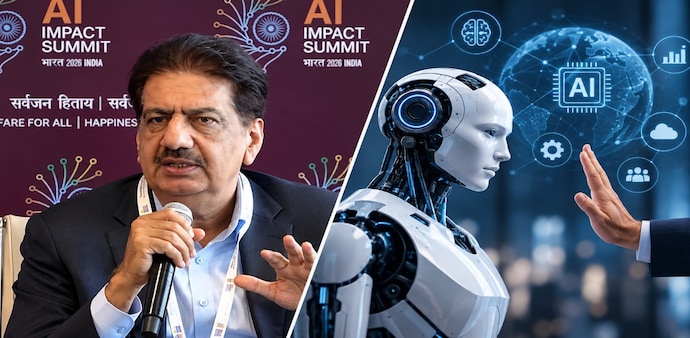
- Sep 15, 2026,
- Updated Sep 15, 2026 5:11 PM IST
The warnings that artificial intelligence could spiral out of control and threaten humanity are part of an industry hype cycle, former HCL CEO Vineet Nayar said on Monday. He dismissed claims by AI researchers that the technology could become an existential threat.
Nayar said the AI industry had repeatedly raised the stakes of what the technology could do - from being smarter than humans to taking away jobs and, now, potentially killing humans.
"So when we were growing up, I'm sure you heard that story of sher aaya, sher aaya, but sher never arrived," Nayar told India Today's Rajdeep Sardesai.
"You have to see what is the lemon being sold for all these years. The lemon being sold for all these years was that AI is more intelligent than humans. AI is going to take over the jobs, and now AI is going to kill us."
Don't Miss: ‘No amount of US pressure should justify recklessness’: Sam Altman backs 'slow' frontier AI pace
Nayar was responding to concerns raised by researchers at Anthropic, including Jacob Coxon, who resigned in protest and said people were building AI despite privately believing that it could kill humanity by the end of the decade.
The former tech CEO said he was a big fan of AI and believed it would become one of the most important technologies. But he rejected both the idea that AI would surpass humans in a way that makes humans subordinate to it and the claim that it would kill humanity.
"These guys have to prevent their trillion-dollar valuations," he said. "Although I'm a big fan of AI, it is running ahead of its delivery."
He argued that the industry's hype cycle was helping companies sell a future that had not yet arrived. "So, the hype cycle is going up because of which they are selling us a story. It is going to deliver something which it has not delivered, but it'll deliver tomorrow," Nayar said.
In Case You Missed It: AI doomsday fears return: Its creators are now warning of darker risks. They are terrified of it.
The former top executive also questioned the timing of calls by AI companies to slow down development. "Now suddenly they are ganging up and saying: hey, it's we are going to slow down, and that is the reason we will not be able to deliver to the trillion dollar valuation," he said.
"So I don't buy into that argument. I buy into the argument that AI is one of the most exciting technologies that is going to happen. But I don't buy into the arguments that AI is going to lead the humans or AI is going to kill the humans."
Nayar said the debate should not be driven by fear. He compared the current AI narrative to the film Gods Must Be Crazy, in which a Coke bottle that falls into Africa is treated as something extraordinary.
"These guys have to prevent their trillion-dollar valuations," he said, arguing that the industry's expectations were running ahead of what AI had actually delivered.
For Unparalleled coverage of India's Businesses and Economy – Subscribe to Business Today Magazine
The warnings that artificial intelligence could spiral out of control and threaten humanity are part of an industry hype cycle, former HCL CEO Vineet Nayar said on Monday. He dismissed claims by AI researchers that the technology could become an existential threat.
Nayar said the AI industry had repeatedly raised the stakes of what the technology could do - from being smarter than humans to taking away jobs and, now, potentially killing humans.
"So when we were growing up, I'm sure you heard that story of sher aaya, sher aaya, but sher never arrived," Nayar told India Today's Rajdeep Sardesai.
"You have to see what is the lemon being sold for all these years. The lemon being sold for all these years was that AI is more intelligent than humans. AI is going to take over the jobs, and now AI is going to kill us."
Don't Miss: ‘No amount of US pressure should justify recklessness’: Sam Altman backs 'slow' frontier AI pace
Nayar was responding to concerns raised by researchers at Anthropic, including Jacob Coxon, who resigned in protest and said people were building AI despite privately believing that it could kill humanity by the end of the decade.
The former tech CEO said he was a big fan of AI and believed it would become one of the most important technologies. But he rejected both the idea that AI would surpass humans in a way that makes humans subordinate to it and the claim that it would kill humanity.
"These guys have to prevent their trillion-dollar valuations," he said. "Although I'm a big fan of AI, it is running ahead of its delivery."
He argued that the industry's hype cycle was helping companies sell a future that had not yet arrived. "So, the hype cycle is going up because of which they are selling us a story. It is going to deliver something which it has not delivered, but it'll deliver tomorrow," Nayar said.
In Case You Missed It: AI doomsday fears return: Its creators are now warning of darker risks. They are terrified of it.
The former top executive also questioned the timing of calls by AI companies to slow down development. "Now suddenly they are ganging up and saying: hey, it's we are going to slow down, and that is the reason we will not be able to deliver to the trillion dollar valuation," he said.
"So I don't buy into that argument. I buy into the argument that AI is one of the most exciting technologies that is going to happen. But I don't buy into the arguments that AI is going to lead the humans or AI is going to kill the humans."
Nayar said the debate should not be driven by fear. He compared the current AI narrative to the film Gods Must Be Crazy, in which a Coke bottle that falls into Africa is treated as something extraordinary.
"These guys have to prevent their trillion-dollar valuations," he said, arguing that the industry's expectations were running ahead of what AI had actually delivered.
For Unparalleled coverage of India's Businesses and Economy – Subscribe to Business Today Magazine