
After complaints over 'Jo Bachay Hain Sang Samait Lo', govt directs Netflix to avoid streaming Pakistan-based content in India
The Ministry received several complaints regarding the possible India release of Pakistan-based Jo Bachay Hain Sang Samait Lo (promoted internationally as All the Love Our Hearts Carry), sources added.
- Nov 26, 2026,
- Updated Nov 26, 2026 1:06 PM IST
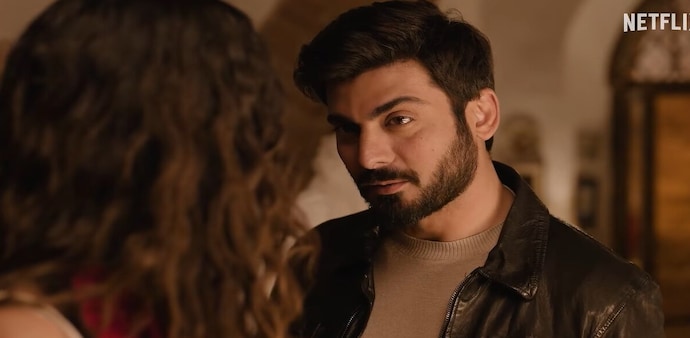
The Ministry of Information and Broadcasting (I&B) on Friday asked Netflix to ensure that content originating from Pakistan is not streamed in India, sources told PTI. The Ministry received several complaints regarding the possible India release of Pakistan-based series Jo Bachay Hain Sang Samait Lo (promoted internationally as All the Love Our Hearts Carry), featuring Fawad Khan and Mahira Khan, sources added.
The trailer of the show dropped on Tuesday and it is scheduled to be streamed on December 4.
Why the government has reminded Netflix of its June 2025 commitment
The government asked Netflix to stand by its commitment given in June last year, when it vowed to not make any film or series originating in Pakistan available to subscribers in India following the Pahalgam attack and subsequent Operation Sindoor. On May 8 last year, the I&B Ministry issued an advisory directing OTT and streaming platforms to immediately discontinue Pakistani-origin content in India including web series, films, songs, podcasts, and other streaming content, due to national security concerns.
AICWA threatens Netflix boycott, demands removal of Pakistani show
Previously, the All Indian Cine Workers Association (AICWA) issued a strong warning to Netflix over the upcoming Pakistani series, demanding that the OTT platform remove the show from its India catalogue before its premiere on December 4. The AICWA threatened to gherao the Netflix office and launch a nationwide boycott campaign if its demand is not met.
In a statement, the cine workers' association accused the streaming company of providing a platform and work to Pakistani actor Hamza Ali Abbasi, who supported the Lashkar-e-Taiba (LeT) founder and UN-designated terrorist Hafiz Saeed in the past. It further appealed to Indians to cancel their Netflix subscriptions if the platform proceeds to release the Pakistani series.
The AICWA called on the government to introduce a permanent legal provision prohibiting Pakistani films, TV shows, artists and other entertainment content from appearing on Indian platforms.
FWICE seeks PM Modi's intervention to stop December 4 release
Besides this, the Federation of Western India Cine Employees (FWICE) has sought Prime Minister Narendra Modi's intervention to stop the release of the upcoming Pakistani series. In a letter, the FWICE instructed its affiliated associations and members to refrain from employing or working with Pakistani actors, singers, musicians, technicians and other entertainment professionals in Indian films, TV shows, web series and music videos.
It also urged industry members to avoid participating in, promoting or providing any kind of support to concerts, cultural programmes, and entertainment events organised by Pakistani individuals or organisations. The restrictions also extend to digital and online collaborations, as per FWICE.
There, however, is no clarity on whether the show will release in India or not. The show has been commissioned by Netflix Middle East and North Africa.
Pakistani minister responds to India
Pakistan Planning and Development Minister Ahsan Iqbal used the hashtag #GrowUpIndia to push back against the boycott calls, saying this amounts to weaponising art and culture.
"First weaponising sports, then water, and now art and culture. The All Indian Cine Workers Association is urging New Delhi to permanently ban Pakistani content. How insecure do you have to be to see a cricket match as a political threat and a television drama as a national security concern? India, grow up,” Iqbal said on X.
Jo Bachay Hain Sang Samait Lo story, cast
Created, directed and produced by Momina Duraid, Jo Bachay Hain Sang Samait Lo is an adaptation of Pakistani novelist Farhat Ishtiaq's 2013 bestselling Urdu novel of the same name. Besides Fawad Khan and Mahira Khan, it features Sanam Saeed, Hania Aamir, Hamza Ali Abbasi, Ahad Raza Mir, and Iqra Aziz.
(With agency inputs)