
Why Falguni Pathak’s songs surge on YouTube every Navratri, year after year
Why Falguni Pathak’s songs surge on YouTube every Navratri, year after year
Falguni Pathak’s songs have become an integral part of Navratri celebrations, returning to playlists and dance floors every year. Google Trends data shows a recurring spike in YouTube searches for the singer around the festival, highlighting the enduring appeal of her music across generations.
Business Today Desk
- Oct 16, 2026,
- Updated Oct 16, 2026 4:20 AM IST
Every Navratri, as cities across India prepare for nights of Garba and Dandiya, Falguni Pathak’s music finds its way back into the spotlight. Songs released decades ago continue to accompany festive gatherings, drawing listeners to YouTube and turning the singer’s catalogue into an annual soundtrack for the festival.
Advertisement
A visualisation by Visualized.in, tracking YouTube searches for Falguni Pathak in India from 2020 to 2026, illustrates this recurring pattern. Search interest rises sharply around Navratri, with the brighter dots on its calendar showing days when searches were higher than the usual daily level for that year. The pattern repeats across successive years, suggesting that interest in the singer is closely tied to the festival calendar.
A musical tradition that returns every year
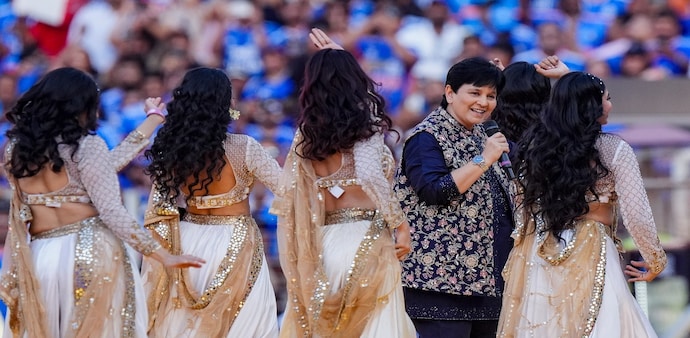
Pathak’s association with Navratri goes beyond the popularity of individual songs. Her live performances, rooted in Gujarati folk music and shaped by contemporary arrangements, have helped make her a familiar presence at Garba and Dandiya celebrations.
The singer began performing professionally at the age of nine and formed her own group, Ta Thaiyaa, in 1994. Over the years, her annual Garba shows developed a loyal following, extending her reach beyond Gujarat to audiences across India and overseas.
Advertisement
Her performances have also helped preserve a direct connection with listeners. While recorded music travels through streaming platforms and social media, the collective experience of dancing to familiar songs remains central to Navratri celebrations.
From Indipop hits to festive favourites
Pathak’s appeal is not limited to traditional Garba music. Her 1998 album Yaad Piya Ki Aane Lagi introduced her to a much wider audience during the Indipop boom of the late 1990s.
Songs such as Maine Payal Hai Chhankai, Meri Chunar Udd Udd Jaye and Chudi Jo Khanke Haathon Mein became familiar to listeners through music television and popular culture. Many of these tracks have since acquired a second life at weddings, parties and festive gatherings.
This crossover between Indipop and Gujarati folk music helps explain her enduring appeal. Listeners who discovered her through romantic pop songs can also associate her music with the energy of Navratri nights.
Advertisement
Why the search spike matters
The annual rise in YouTube searches points to the role of seasonality in music discovery. As Navratri approaches, people may look up familiar tracks, prepare playlists or revisit songs associated with earlier celebrations.
The 2020 data offers a different backdrop. Public Garba celebrations were disrupted by the Covid-19 pandemic, although searches around the festival period remained visible in the visualisation. This suggests that online interest in the singer can persist even when opportunities for large public gatherings are limited.
The data, however, measures searches rather than actual song streams, concert attendance or total listeners. It establishes a recurring association between Navratri and online interest in Pathak, rather than proving what drives every search.
A legacy renewed every Navratri
Pathak’s journey from earning Rs 25 for early performances to becoming one of the most recognisable voices associated with Navratri reflects decades of live shows, popular albums and audience loyalty.
Her continued relevance is not simply the result of nostalgia. Each Navratri brings another opportunity for familiar songs to reach younger listeners and return to the playlists of older fans.
Advertisement
In an industry shaped by rapidly changing musical trends, Pathak’s recurring search spikes point to something more enduring: music that has become part of a festival ritual. Every year, as Navratri returns, so does Falguni Pathak.
Every Navratri, as cities across India prepare for nights of Garba and Dandiya, Falguni Pathak’s music finds its way back into the spotlight. Songs released decades ago continue to accompany festive gatherings, drawing listeners to YouTube and turning the singer’s catalogue into an annual soundtrack for the festival.
Advertisement
A visualisation by Visualized.in, tracking YouTube searches for Falguni Pathak in India from 2020 to 2026, illustrates this recurring pattern. Search interest rises sharply around Navratri, with the brighter dots on its calendar showing days when searches were higher than the usual daily level for that year. The pattern repeats across successive years, suggesting that interest in the singer is closely tied to the festival calendar.
A musical tradition that returns every year
Pathak’s association with Navratri goes beyond the popularity of individual songs. Her live performances, rooted in Gujarati folk music and shaped by contemporary arrangements, have helped make her a familiar presence at Garba and Dandiya celebrations.
The singer began performing professionally at the age of nine and formed her own group, Ta Thaiyaa, in 1994. Over the years, her annual Garba shows developed a loyal following, extending her reach beyond Gujarat to audiences across India and overseas.
Advertisement
Her performances have also helped preserve a direct connection with listeners. While recorded music travels through streaming platforms and social media, the collective experience of dancing to familiar songs remains central to Navratri celebrations.
From Indipop hits to festive favourites
Pathak’s appeal is not limited to traditional Garba music. Her 1998 album Yaad Piya Ki Aane Lagi introduced her to a much wider audience during the Indipop boom of the late 1990s.
Songs such as Maine Payal Hai Chhankai, Meri Chunar Udd Udd Jaye and Chudi Jo Khanke Haathon Mein became familiar to listeners through music television and popular culture. Many of these tracks have since acquired a second life at weddings, parties and festive gatherings.
This crossover between Indipop and Gujarati folk music helps explain her enduring appeal. Listeners who discovered her through romantic pop songs can also associate her music with the energy of Navratri nights.
Advertisement
Why the search spike matters
The annual rise in YouTube searches points to the role of seasonality in music discovery. As Navratri approaches, people may look up familiar tracks, prepare playlists or revisit songs associated with earlier celebrations.
The 2020 data offers a different backdrop. Public Garba celebrations were disrupted by the Covid-19 pandemic, although searches around the festival period remained visible in the visualisation. This suggests that online interest in the singer can persist even when opportunities for large public gatherings are limited.
The data, however, measures searches rather than actual song streams, concert attendance or total listeners. It establishes a recurring association between Navratri and online interest in Pathak, rather than proving what drives every search.
A legacy renewed every Navratri
Pathak’s journey from earning Rs 25 for early performances to becoming one of the most recognisable voices associated with Navratri reflects decades of live shows, popular albums and audience loyalty.
Her continued relevance is not simply the result of nostalgia. Each Navratri brings another opportunity for familiar songs to reach younger listeners and return to the playlists of older fans.
Advertisement
In an industry shaped by rapidly changing musical trends, Pathak’s recurring search spikes point to something more enduring: music that has become part of a festival ritual. Every year, as Navratri returns, so does Falguni Pathak.
Read more!