
Budget 2026: Derisking the economy from global shocks
The Union Budget 2026 underscores the government’s intent to build a resilient, self-reliant growth model by insulating India from global uncertainties, leveraging strong macro fundamentals to pursue long-term strategic priorities alongside near-term risk management.
- Feb 5, 2026,
- Updated Feb 5, 2026 6:06 PM IST
The Union Budget 2026 signals a clear intent to steer India’s growth towards a more resilient, sustainable and future-ready economy, with a strong focus on insulating the country from global shocks. The Budget was presented against the backdrop of a relatively strong domestic macro environment, marked by low inflation, stable current account dynamics and healthy bank and corporate balance sheets.
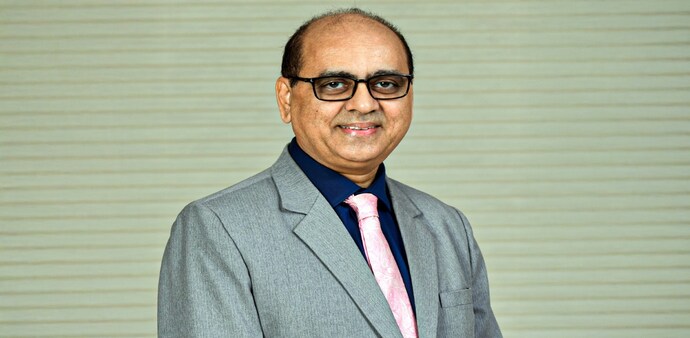
Dr. Rajan Pental, Executive Director,YES BANK, said the macro fundamentals provided policymakers with room to pursue longer-term strategic goals while addressing near-term risks. “The recently published Economic Survey indicated that ‘Swadeshi’ was a legitimate policy instrument in a global environment where trade is no longer fully reciprocal,” he said. “It also outlined India’s shift from traditional import substitution towards strategic resilience and strategic indispensability.”
According to Pental, this thinking forms one of the key building blocks of the Budget. “We find this as one of the building blocks of the Budget – that of building a self-reliant, vibrant growth economy, aimed at achieving the objectives of Viksit Bharat,” he said. He added that the Budget strikes a balance between addressing immediate challenges and keeping sight of long-term strategic priorities. “Importantly, the focus is on continuing the reform momentum, building a robust and resilient financial sector, and using technology, including AI applications, to improve governance.”
The Budget places renewed emphasis on manufacturing, particularly legacy and strategic industries. It proposes scaling up production across seven strategic and frontier sectors, including semiconductors, alongside continued support for the Electronics Components Manufacturing Scheme launched in April 2025. Pental noted that these measures reflect a deliberate push to strengthen domestic capabilities in critical areas.
He added that the Budget also envisages boosting production of high-value and technologically advanced construction and infrastructure equipment. On the services side, measures have been announced to attract global investments into data centres, including a tax holiday until 2047 for foreign companies providing global cloud services using data centre infrastructure located in India. Labour-intensive sectors impacted by higher US tariffs have also received attention.
Public capital expenditure remains a central pillar of the government’s growth strategy. “It is heartening to see the Finance Minister continuing to push public capex with a target spend of Rs 12.2 lakh crore, or 3.1% of GDP,” Pental said. The focus areas include dedicated freight corridors, the development of 20 new national waterways over the next five years, high-speed rail corridors between cities, a ship repair ecosystem and a coastal cargo promotion scheme.
However, he pointed out that private investment demand has remained subdued despite strong government capex. To address this, the Budget has proposed setting up an Infrastructure Risk Guarantee Fund to provide partial credit guarantees to lenders. “There is also an attempt to develop the corporate bond and municipal bond markets with larger issuance sizes,” he said, noting that these steps address concerns highlighted in the Economic Survey about India’s relatively high cost of capital.
Pental emphasised that progress towards Viksit Bharat will require sustained effort beyond a single Budget. “This remains a process,” he said, adding that continued structural reforms, employment generation, skill development, technological adoption and productivity-led growth will be critical. Overall, he said, the Budget deserves credit for balancing the near-term objective of ringfencing the economy from external shocks with the longer-term goal of sustaining growth momentum.
The Union Budget 2026 signals a clear intent to steer India’s growth towards a more resilient, sustainable and future-ready economy, with a strong focus on insulating the country from global shocks. The Budget was presented against the backdrop of a relatively strong domestic macro environment, marked by low inflation, stable current account dynamics and healthy bank and corporate balance sheets.
Dr. Rajan Pental, Executive Director,YES BANK, said the macro fundamentals provided policymakers with room to pursue longer-term strategic goals while addressing near-term risks. “The recently published Economic Survey indicated that ‘Swadeshi’ was a legitimate policy instrument in a global environment where trade is no longer fully reciprocal,” he said. “It also outlined India’s shift from traditional import substitution towards strategic resilience and strategic indispensability.”
According to Pental, this thinking forms one of the key building blocks of the Budget. “We find this as one of the building blocks of the Budget – that of building a self-reliant, vibrant growth economy, aimed at achieving the objectives of Viksit Bharat,” he said. He added that the Budget strikes a balance between addressing immediate challenges and keeping sight of long-term strategic priorities. “Importantly, the focus is on continuing the reform momentum, building a robust and resilient financial sector, and using technology, including AI applications, to improve governance.”
The Budget places renewed emphasis on manufacturing, particularly legacy and strategic industries. It proposes scaling up production across seven strategic and frontier sectors, including semiconductors, alongside continued support for the Electronics Components Manufacturing Scheme launched in April 2025. Pental noted that these measures reflect a deliberate push to strengthen domestic capabilities in critical areas.
He added that the Budget also envisages boosting production of high-value and technologically advanced construction and infrastructure equipment. On the services side, measures have been announced to attract global investments into data centres, including a tax holiday until 2047 for foreign companies providing global cloud services using data centre infrastructure located in India. Labour-intensive sectors impacted by higher US tariffs have also received attention.
Public capital expenditure remains a central pillar of the government’s growth strategy. “It is heartening to see the Finance Minister continuing to push public capex with a target spend of Rs 12.2 lakh crore, or 3.1% of GDP,” Pental said. The focus areas include dedicated freight corridors, the development of 20 new national waterways over the next five years, high-speed rail corridors between cities, a ship repair ecosystem and a coastal cargo promotion scheme.
However, he pointed out that private investment demand has remained subdued despite strong government capex. To address this, the Budget has proposed setting up an Infrastructure Risk Guarantee Fund to provide partial credit guarantees to lenders. “There is also an attempt to develop the corporate bond and municipal bond markets with larger issuance sizes,” he said, noting that these steps address concerns highlighted in the Economic Survey about India’s relatively high cost of capital.
Pental emphasised that progress towards Viksit Bharat will require sustained effort beyond a single Budget. “This remains a process,” he said, adding that continued structural reforms, employment generation, skill development, technological adoption and productivity-led growth will be critical. Overall, he said, the Budget deserves credit for balancing the near-term objective of ringfencing the economy from external shocks with the longer-term goal of sustaining growth momentum.