
Budget 2026: Increase investment in R&D, women's participation in STEM fields — Education sector's wishlist for Nirmala Sitharaman
With the National Education Policy (NEP) 2020 now in its implementation phase, the upcoming budget is expected to focus not only on funding levels but also on quality, future readiness, and inclusion across the education system.
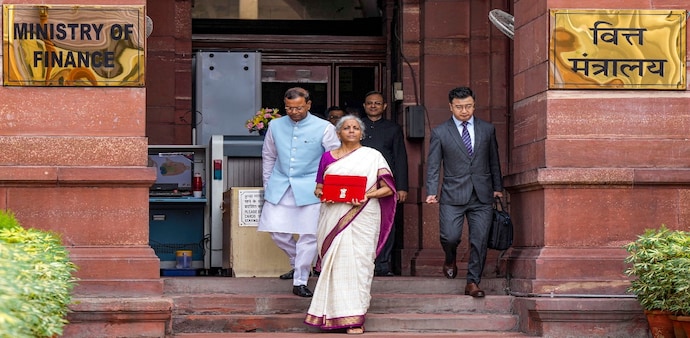
- Jan 20, 2026,
- Updated Jan 20, 2026 3:53 PM IST
As the Union Budget 2026 draws closer, education sector is eyeing a string of reforms. The importance of this year’s budget is reinforced by the record allocation in FY 2025–26, which saw the highest-ever outlay of ₹78,572 crore for the Department of School Education & Literacy.
This represented a ₹5,074 crore increase (7%) over the Budget Estimates of FY 2024–25, signalling a clear policy focus on strengthening school education.
However, Budget 2026 is viewed as particularly significant because it comes at a stage where education policy must move decisively from intent to outcomes. With the National Education Policy (NEP) 2020 now in its implementation phase, the upcoming budget is expected to focus not only on funding levels but also on quality, future readiness, and inclusion across the education system.
Early education and future-ready skills
Industry experts emphasise that education investment must begin at an early stage itself. “There is also a timely opportunity to strengthen STEM education and skill-oriented, application-based learning from an early stage, helping students develop and strengthen future-ready skills. Technology integration should remain a key focus, enabling wider access to high-quality, personalised learning resources while advancing equity and inclusion,” said Shweta Sastri, Managing Director, Canadian International School, Bangalore.
Another area gaining attention is the need to increase women’s participation in STEM fields, which is seen as essential for building an inclusive and globally competitive workforce. In parallel, easing financial barriers through measures such as lower interest rates on education loans could significantly improve access to quality higher education for families across income groups, she said.
Universities and research capacity
At the higher education level, Budget 2026 is expected to strike a balance between regulatory reform and financial support. As the Viksit Bharat Shiksha Adhishthan Bill, 2025 raises expectations around accreditation and compliance, Prof. P. S. Sastry Dean & Distinguished Professor, School of Engineering and Technology, Vidyashilp University stresses the importance of ensuring that smaller and regional universities are not left behind.
“As the Viksit Bharat Shiksha Adhishthan Bill, 2025 raises expectations around compliance and accreditation, it is vital that the Budget also enables smaller universities to participate meaningfully in research. Even modest, well-structured funding for small research projects and basic lab infrastructure can make a decisive difference. Without such support, capable institutions and regional talent risk being inadvertently disadvantaged. Thoughtful funding provisions will ensure that regulatory reform strengthens, rather than narrows, India’s academic and research ecosystem.”
Global ambitions in education
Internationalisation is another area where Budget 2026 is seen as decisive. “India has set an ambitious goal of hosting over one million international students by 2047, and education leaders argue that achieving this will require more than policy announcements.
The NITI Aayog roadmap makes it clear that growth without quality will not create a sustainable global reputation. Accordingly, funding priorities are expected to focus on globally benchmarked curricula, strong research ecosystems, and transparent quality assurance mechanisms,” said Tripti Maheshwari, Co-Founder & Director of Student Circus.
She also noted that international students increasingly choose destinations based on employability, industry linkages, and post-study outcomes. Budgetary support that encourages industry-integrated learning, international faculty collaboration, and outcome-linked incentives could significantly strengthen India’s position as an emerging global study destination.
The road ahead
The upcoming budget can therefore, consolidate recent gains and address long-standing gaps across school education, higher education, as well as international engagement. With focused investments in STEM education, research capacity, gender inclusion, and global competitiveness, the budget can help build an education system that is equitable, future-ready, and aligned with India’s long-term development goals.
As the Union Budget 2026 draws closer, education sector is eyeing a string of reforms. The importance of this year’s budget is reinforced by the record allocation in FY 2025–26, which saw the highest-ever outlay of ₹78,572 crore for the Department of School Education & Literacy.
This represented a ₹5,074 crore increase (7%) over the Budget Estimates of FY 2024–25, signalling a clear policy focus on strengthening school education.
However, Budget 2026 is viewed as particularly significant because it comes at a stage where education policy must move decisively from intent to outcomes. With the National Education Policy (NEP) 2020 now in its implementation phase, the upcoming budget is expected to focus not only on funding levels but also on quality, future readiness, and inclusion across the education system.
Early education and future-ready skills
Industry experts emphasise that education investment must begin at an early stage itself. “There is also a timely opportunity to strengthen STEM education and skill-oriented, application-based learning from an early stage, helping students develop and strengthen future-ready skills. Technology integration should remain a key focus, enabling wider access to high-quality, personalised learning resources while advancing equity and inclusion,” said Shweta Sastri, Managing Director, Canadian International School, Bangalore.
Another area gaining attention is the need to increase women’s participation in STEM fields, which is seen as essential for building an inclusive and globally competitive workforce. In parallel, easing financial barriers through measures such as lower interest rates on education loans could significantly improve access to quality higher education for families across income groups, she said.
Universities and research capacity
At the higher education level, Budget 2026 is expected to strike a balance between regulatory reform and financial support. As the Viksit Bharat Shiksha Adhishthan Bill, 2025 raises expectations around accreditation and compliance, Prof. P. S. Sastry Dean & Distinguished Professor, School of Engineering and Technology, Vidyashilp University stresses the importance of ensuring that smaller and regional universities are not left behind.
“As the Viksit Bharat Shiksha Adhishthan Bill, 2025 raises expectations around compliance and accreditation, it is vital that the Budget also enables smaller universities to participate meaningfully in research. Even modest, well-structured funding for small research projects and basic lab infrastructure can make a decisive difference. Without such support, capable institutions and regional talent risk being inadvertently disadvantaged. Thoughtful funding provisions will ensure that regulatory reform strengthens, rather than narrows, India’s academic and research ecosystem.”
Global ambitions in education
Internationalisation is another area where Budget 2026 is seen as decisive. “India has set an ambitious goal of hosting over one million international students by 2047, and education leaders argue that achieving this will require more than policy announcements.
The NITI Aayog roadmap makes it clear that growth without quality will not create a sustainable global reputation. Accordingly, funding priorities are expected to focus on globally benchmarked curricula, strong research ecosystems, and transparent quality assurance mechanisms,” said Tripti Maheshwari, Co-Founder & Director of Student Circus.
She also noted that international students increasingly choose destinations based on employability, industry linkages, and post-study outcomes. Budgetary support that encourages industry-integrated learning, international faculty collaboration, and outcome-linked incentives could significantly strengthen India’s position as an emerging global study destination.
The road ahead
The upcoming budget can therefore, consolidate recent gains and address long-standing gaps across school education, higher education, as well as international engagement. With focused investments in STEM education, research capacity, gender inclusion, and global competitiveness, the budget can help build an education system that is equitable, future-ready, and aligned with India’s long-term development goals.