
Union Budget 2026: Will middle class get some Income Tax respite on February 1?
Union Budget 2026: For the middle class, steady employment and controlled inflation result in higher purchasing power.
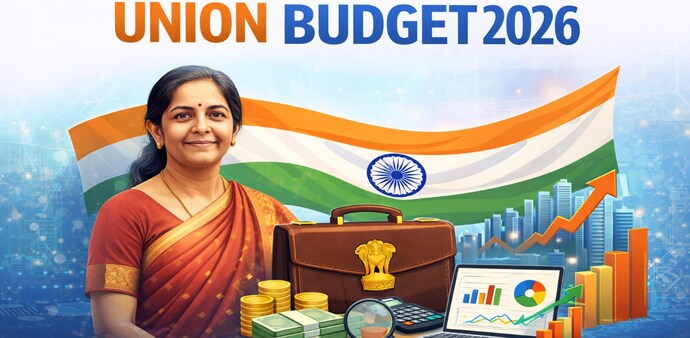
- Jan 30, 2026,
- Updated Jan 30, 2026 6:17 PM IST
With the Union Budget 2026 approaching, expectations among middle-income households are marked by restraint rather than big-bang demands. The focus is on income stability, manageable prices and policy measures that ease daily expenses ranging from housing and healthcare to routine household costs.
Ahead of the Union Budget, Ram Medury, Founder & CEO, Maxiom Wealth, noted that “Budget conversations often circle back to the same question for salaried Indians. Will this be the year taxes finally feel fairer? Budget 2026 has created that expectation.
He said there is growing talk of raising the 30 per cent slab, smoothing the steps in between, and possibly linking tax slabs to inflation. For middle-class households, any tax talk is a potential relief for their monthly cash flows. Indian salaries grow gradually, but tax slabs remain unchanged for long periods.
For the middle class, steady employment and controlled inflation result in higher purchasing power.
Viram Shah, Founder and CEO of Vested Finance, said that investors are looking at global investing as a long-term diversification strategy instead of an opportunity to make short-term gains. Shah mentioned that there is a structural shift in investor behaviour from retirement planning to overseas education and dollar-denominated exposure.
He said, “In this context, the upcoming Union Budget 2026 presents an opportunity to support this evolution by reducing friction and enabling smoother participation in global markets. Easing global investing under the LRS through measures such as building on the higher TCS threshold and rationalising TCS rates can enhance liquidity and make long-term overseas allocation more seamless."
He also argued that strengthening GIFT City as India’s global investment gateway complements these efforts. "Clear tax-neutral treatment for outbound investments and global funds can help India align with leading international financial hubs and encourage structured, goal-based allocation to global assets. Maintaining the $250,000 LRS limit provides stability, allowing investors to plan global diversification with confidence and discipline in a world of currency volatility and evolving capital flows.”
Housing affordability remains one of the biggest issues for middle-income households, as property prices and construction costs continue to rise.
Atul Monga, Co-Founder and CEO, BASIC Home Loan(Real Estate), stated that India’s macroeconomic outlook remains resilient despite global uncertainty as inflation has largely stayed within the RBI’s tolerance band of 4% ±2%, while public capital expenditure, budgeted at over ₹11 lakh crore in FY25, continues to anchor growth.
He also said that housing, which contributes nearly 7% to GDP and employs millions, is emerging as a key pillar of this growth story. Today, demand for housing is no longer concentrated in metros alone.
While the top eight cities continue to account for 50 per cent of sales by value, over 40% first-time homebuyers now come from Tier 2 and Tier 3 cities like Jaipur, Surat, Coimbatore and Bhubaneshwar. These markets are driven by demand from end-users, making affordability and access to long-term finance the most decisive demand.
He noted that homebuyer demographics have shifted dynamically. Nearly 55 per cent of buyers are under 40, with first-time homebuyers dominating transactions below Rs 50 lakh, especially in non-metro markets. For such households, a 20-25-year home loan represents a long-term commitment and confidence in income stability. Predictable EMIs, clarity on tax benefits, and ease of credit access matter far more than short-term interest rate movements".
Union Budget 2026 will be presented by Finance Minister Nirmala Sitharaman on Sunday, February 1, 2026, at 11:00 AM in Parliament.
With the Union Budget 2026 approaching, expectations among middle-income households are marked by restraint rather than big-bang demands. The focus is on income stability, manageable prices and policy measures that ease daily expenses ranging from housing and healthcare to routine household costs.
Ahead of the Union Budget, Ram Medury, Founder & CEO, Maxiom Wealth, noted that “Budget conversations often circle back to the same question for salaried Indians. Will this be the year taxes finally feel fairer? Budget 2026 has created that expectation.
He said there is growing talk of raising the 30 per cent slab, smoothing the steps in between, and possibly linking tax slabs to inflation. For middle-class households, any tax talk is a potential relief for their monthly cash flows. Indian salaries grow gradually, but tax slabs remain unchanged for long periods.
For the middle class, steady employment and controlled inflation result in higher purchasing power.
Viram Shah, Founder and CEO of Vested Finance, said that investors are looking at global investing as a long-term diversification strategy instead of an opportunity to make short-term gains. Shah mentioned that there is a structural shift in investor behaviour from retirement planning to overseas education and dollar-denominated exposure.
He said, “In this context, the upcoming Union Budget 2026 presents an opportunity to support this evolution by reducing friction and enabling smoother participation in global markets. Easing global investing under the LRS through measures such as building on the higher TCS threshold and rationalising TCS rates can enhance liquidity and make long-term overseas allocation more seamless."
He also argued that strengthening GIFT City as India’s global investment gateway complements these efforts. "Clear tax-neutral treatment for outbound investments and global funds can help India align with leading international financial hubs and encourage structured, goal-based allocation to global assets. Maintaining the $250,000 LRS limit provides stability, allowing investors to plan global diversification with confidence and discipline in a world of currency volatility and evolving capital flows.”
Housing affordability remains one of the biggest issues for middle-income households, as property prices and construction costs continue to rise.
Atul Monga, Co-Founder and CEO, BASIC Home Loan(Real Estate), stated that India’s macroeconomic outlook remains resilient despite global uncertainty as inflation has largely stayed within the RBI’s tolerance band of 4% ±2%, while public capital expenditure, budgeted at over ₹11 lakh crore in FY25, continues to anchor growth.
He also said that housing, which contributes nearly 7% to GDP and employs millions, is emerging as a key pillar of this growth story. Today, demand for housing is no longer concentrated in metros alone.
While the top eight cities continue to account for 50 per cent of sales by value, over 40% first-time homebuyers now come from Tier 2 and Tier 3 cities like Jaipur, Surat, Coimbatore and Bhubaneshwar. These markets are driven by demand from end-users, making affordability and access to long-term finance the most decisive demand.
He noted that homebuyer demographics have shifted dynamically. Nearly 55 per cent of buyers are under 40, with first-time homebuyers dominating transactions below Rs 50 lakh, especially in non-metro markets. For such households, a 20-25-year home loan represents a long-term commitment and confidence in income stability. Predictable EMIs, clarity on tax benefits, and ease of credit access matter far more than short-term interest rate movements".
Union Budget 2026 will be presented by Finance Minister Nirmala Sitharaman on Sunday, February 1, 2026, at 11:00 AM in Parliament.