
Budget bets on AI for farms with Bharat-VISTAAR, backs push with semiconductor and data-centre incentives
“I propose to launch Bharat-VISTAAR, a multilingual AI tool that shall integrate the AgriStack portals and the ICAR package on agricultural practices with AI systems. This will enhance farm productivity,” Sitharaman said in her Budget speech.
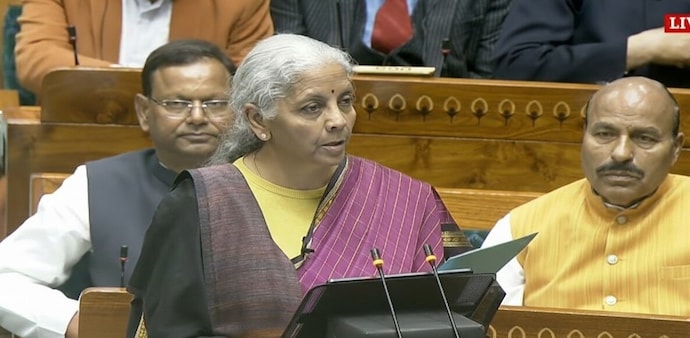
- Feb 1, 2026,
- Updated Feb 1, 2026 1:19 PM IST
Finance minister Nirmala Sitharaman on 1 February put artificial intelligence (AI) at the centre of the government’s agriculture modernisation push, announcing a new multilingual platform aimed at lifting farm productivity, while also rolling out incentives for semiconductors and data centres to strengthen the digital backbone needed to power such systems.
Presenting the Union Budget 2026, Sitharaman said the government will roll out a new AI-led initiative for farmers.
“I propose to launch Bharat-VISTAAR, a multilingual AI tool that shall integrate the AgriStack portals and the ICAR package on agricultural practices with AI systems. This will enhance farm productivity,” Sitharaman said in her Budget speech.
The move signals a sharper focus on using AI to bridge information gaps at the farm level by combining government datasets with research-backed agricultural practices, as policymakers look to move beyond pilots towards real-world deployment.
The agriculture push is part of a broader technology agenda outlined in the Budget. Sitharaman underlined that emerging technologies will increasingly shape employment and skills.
“21st Century is technology driven. Adoption of technology is for the benefit of all people, farmers in the field, women in STEM, youth keen to upskill and Divyangjan to access newer opportunities. The Government has taken several steps to support new technologies through AI Mission, National Quantum Mission, Anusandhan National Research Fund, and Research, Development and Innovation Fund,” she said.
She added that the government will also examine how AI reshapes jobs.
“I propose to set up a High-Powered ‘Education to Employment and Enterprise’ Standing Committee… They will also assess the impact of emerging technologies, including AI, on jobs and skill requirements and propose measures thereof,” Sitharaman said.
To support the compute and hardware stack required for large-scale AI deployment, the Budget also laid out an expanded roadmap for domestic semiconductor manufacturing.
“India Semiconductor Mission (ISM) 1.0 expanded India’s semiconductor sector capabilities. Building on this, we will launch ISM 2.0 to produce equipment and materials, design full-stack Indian IP, and fortify supply chains. We will also focus on industry-led research and training centres to develop technology and skilled workforce,” the finance minister said.
Alongside chips, the government is seeking to position India as a global hub for cloud and data-centre infrastructure.
“Recognising the need to enable critical infrastructure and boost investment in data centres, I propose to provide tax holiday till 2047 to any foreign company that provides cloud services to customers globally by using data centre services from India,” Sitharaman announced.
She further said, “I also propose to provide a safe harbour of 15 percent on cost in case the company providing data centre services from India is a related entity.”
"The Government’s focus on building India into a global digital infrastructure hub is both visionary and timely. The tax holiday for cloud services and data centre operations announced in the Union Budget 2026 reflects a strong commitment to attracting long-term capital and enhancing India’s competitiveness in the digital economy," Amit Sarin, Managing Director, Anant Raj Ltd told Business Today.
"These measures will improve the viability of large-scale data centre investments, enable faster capacity addition, and strengthen the broader technology ecosystem. Beyond infrastructure, this push is expected to create high-quality employment, encourage innovation, and position India as a preferred destination for data-driven businesses and next-generation technology deployments,” Sarin added.
Finance minister Nirmala Sitharaman on 1 February put artificial intelligence (AI) at the centre of the government’s agriculture modernisation push, announcing a new multilingual platform aimed at lifting farm productivity, while also rolling out incentives for semiconductors and data centres to strengthen the digital backbone needed to power such systems.
Presenting the Union Budget 2026, Sitharaman said the government will roll out a new AI-led initiative for farmers.
“I propose to launch Bharat-VISTAAR, a multilingual AI tool that shall integrate the AgriStack portals and the ICAR package on agricultural practices with AI systems. This will enhance farm productivity,” Sitharaman said in her Budget speech.
The move signals a sharper focus on using AI to bridge information gaps at the farm level by combining government datasets with research-backed agricultural practices, as policymakers look to move beyond pilots towards real-world deployment.
The agriculture push is part of a broader technology agenda outlined in the Budget. Sitharaman underlined that emerging technologies will increasingly shape employment and skills.
“21st Century is technology driven. Adoption of technology is for the benefit of all people, farmers in the field, women in STEM, youth keen to upskill and Divyangjan to access newer opportunities. The Government has taken several steps to support new technologies through AI Mission, National Quantum Mission, Anusandhan National Research Fund, and Research, Development and Innovation Fund,” she said.
She added that the government will also examine how AI reshapes jobs.
“I propose to set up a High-Powered ‘Education to Employment and Enterprise’ Standing Committee… They will also assess the impact of emerging technologies, including AI, on jobs and skill requirements and propose measures thereof,” Sitharaman said.
To support the compute and hardware stack required for large-scale AI deployment, the Budget also laid out an expanded roadmap for domestic semiconductor manufacturing.
“India Semiconductor Mission (ISM) 1.0 expanded India’s semiconductor sector capabilities. Building on this, we will launch ISM 2.0 to produce equipment and materials, design full-stack Indian IP, and fortify supply chains. We will also focus on industry-led research and training centres to develop technology and skilled workforce,” the finance minister said.
Alongside chips, the government is seeking to position India as a global hub for cloud and data-centre infrastructure.
“Recognising the need to enable critical infrastructure and boost investment in data centres, I propose to provide tax holiday till 2047 to any foreign company that provides cloud services to customers globally by using data centre services from India,” Sitharaman announced.
She further said, “I also propose to provide a safe harbour of 15 percent on cost in case the company providing data centre services from India is a related entity.”
"The Government’s focus on building India into a global digital infrastructure hub is both visionary and timely. The tax holiday for cloud services and data centre operations announced in the Union Budget 2026 reflects a strong commitment to attracting long-term capital and enhancing India’s competitiveness in the digital economy," Amit Sarin, Managing Director, Anant Raj Ltd told Business Today.
"These measures will improve the viability of large-scale data centre investments, enable faster capacity addition, and strengthen the broader technology ecosystem. Beyond infrastructure, this push is expected to create high-quality employment, encourage innovation, and position India as a preferred destination for data-driven businesses and next-generation technology deployments,” Sarin added.