
Union Budget 2026: Pollution control funding cut even as cities struggle with smog, toxic air
Budget 2026: In 2024–25, the pollution control budget was initially set at Rs 854 crore, later increased to address shortfalls, but actual expenditure for the year was just Rs 16 crore.
- Feb 2, 2026,
- Updated Feb 2, 2026 11:25 AM IST
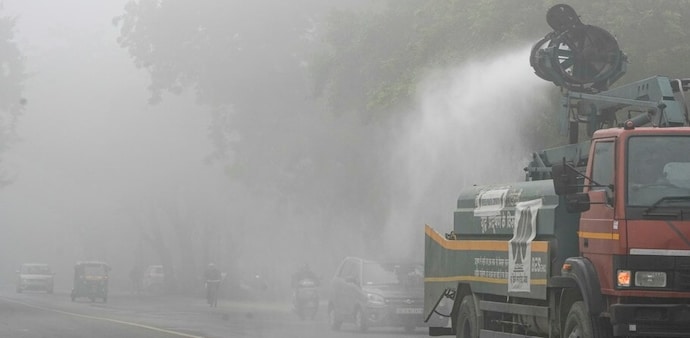
Union Budget 2026–27 has reduced the allocation for pollution abatement to Rs 1,091 crore, down from Rs 1,300 crore in the previous year's revised estimates. This move comes as major cities continue to struggle with toxic smog and an increasing number of extreme climate events, leaving clean-air initiatives with fewer resources at a critical moment. The reduction signals a step back in budgetary support for immediate pollution control measures, raising questions about the prioritisation of environmental health in government policy.
The historical spending pattern highlights the challenge. In 2024–25, the pollution control budget was initially set at Rs 854 crore, later increased to address shortfalls, but actual expenditure for the year was just Rs 16 crore.
The government maintains that pollution remains a central focus, with multiple funding channels targeting air and water quality improvement. According to Anuradha Thakur, Department of Economic Affairs Secretary, "Pollution is a priority for the government. We are working with many state governments on projects related to air and water pollution. There is a significant budgetary outlay on sewage control as well as drainage."
"A large portion of the grants is tied to water and sanitation, particularly sanitation. Pollution of all kinds remains our top priority, and there are different ways in which we are trying to tackle it," she stated.
Despite these assurances, opposition leaders and environmental activists have criticised the reduced funding for pollution control. Rahul Gandhi, Leader of the Opposition in the Lok Sabha, has called for urgent action, stating, "It is about time the government allows a discussion in Parliament and the Prime Minister declares pollution a national health emergency. We need to come together and develop a serious plan, and we need to make sure there is enough money in the Budget to tackle this problem."
Environmental experts also express concern over the adequacy of the overall funding, noting that it remains disproportionately low relative to India's climate vulnerabilities, ecological degradation, and international commitments on adaptation and mitigation.
Climate activist Licypria Kangujam expressed disappointment with the budget, writing, "Very disappointed to see the 2026–27 Budget allocate only Rs 1,091 crore to pollution control, down from Rs 1,300 crore last year. Ignoring a public health emergency will only worsen the air pollution crisis."
India’s budget for the Ministry of Environment, Forest and Climate Change (MoEFCC) increased to Rs 3,759.46 crore for 2026–27, an 8 per cent rise from the previous year. However, experts argue these modest increases largely restore deferred spending, and major pledges, including land restoration, forest expansion and improved resilience, demand far more robust financing.
Union Budget 2026–27 has reduced the allocation for pollution abatement to Rs 1,091 crore, down from Rs 1,300 crore in the previous year's revised estimates. This move comes as major cities continue to struggle with toxic smog and an increasing number of extreme climate events, leaving clean-air initiatives with fewer resources at a critical moment. The reduction signals a step back in budgetary support for immediate pollution control measures, raising questions about the prioritisation of environmental health in government policy.
The historical spending pattern highlights the challenge. In 2024–25, the pollution control budget was initially set at Rs 854 crore, later increased to address shortfalls, but actual expenditure for the year was just Rs 16 crore.
The government maintains that pollution remains a central focus, with multiple funding channels targeting air and water quality improvement. According to Anuradha Thakur, Department of Economic Affairs Secretary, "Pollution is a priority for the government. We are working with many state governments on projects related to air and water pollution. There is a significant budgetary outlay on sewage control as well as drainage."
"A large portion of the grants is tied to water and sanitation, particularly sanitation. Pollution of all kinds remains our top priority, and there are different ways in which we are trying to tackle it," she stated.
Despite these assurances, opposition leaders and environmental activists have criticised the reduced funding for pollution control. Rahul Gandhi, Leader of the Opposition in the Lok Sabha, has called for urgent action, stating, "It is about time the government allows a discussion in Parliament and the Prime Minister declares pollution a national health emergency. We need to come together and develop a serious plan, and we need to make sure there is enough money in the Budget to tackle this problem."
Environmental experts also express concern over the adequacy of the overall funding, noting that it remains disproportionately low relative to India's climate vulnerabilities, ecological degradation, and international commitments on adaptation and mitigation.
Climate activist Licypria Kangujam expressed disappointment with the budget, writing, "Very disappointed to see the 2026–27 Budget allocate only Rs 1,091 crore to pollution control, down from Rs 1,300 crore last year. Ignoring a public health emergency will only worsen the air pollution crisis."
India’s budget for the Ministry of Environment, Forest and Climate Change (MoEFCC) increased to Rs 3,759.46 crore for 2026–27, an 8 per cent rise from the previous year. However, experts argue these modest increases largely restore deferred spending, and major pledges, including land restoration, forest expansion and improved resilience, demand far more robust financing.