
Budget 2026 Reactions Live Updates: From energy to taxes, big changes introduced for overall growth
Business Today Desk | Updated Feb 1, 2026 6:13 PM IST
A key proposal being pushed by taxpayers and financial experts is the introduction of joint income tax filing for married couples, a change seen as particularly beneficial for dual-income families facing mounting cost-of-living pressures in urban India.
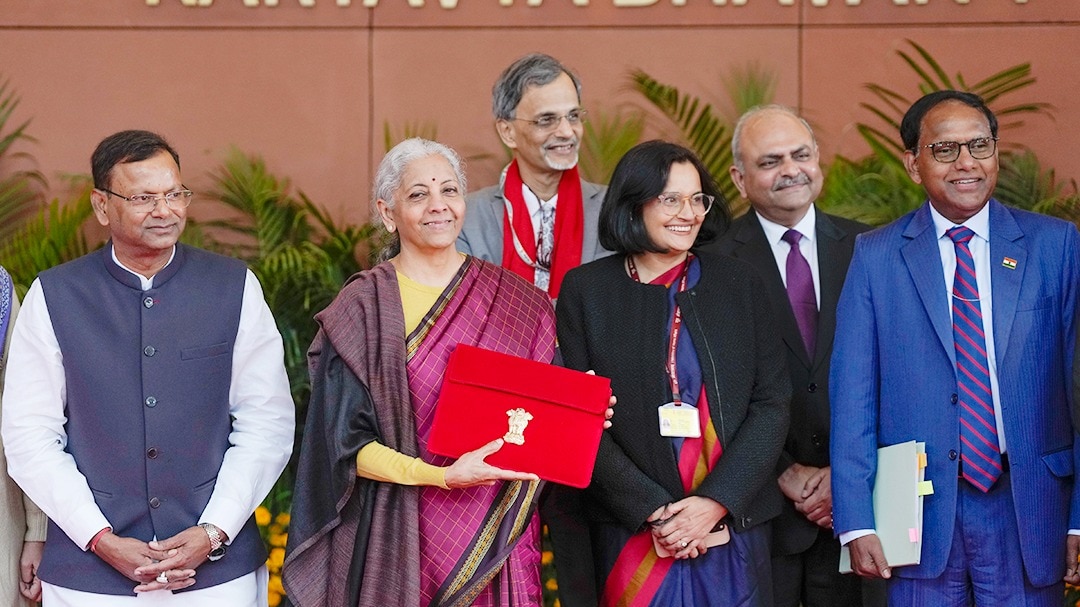 As Sitharaman prepares to present the Union Budget in Parliament, there have been demands for deeper tax reforms. I
Union Budget 2026 placed strong emphasis on simplifying India’s tax framework, with the government rolling out a series of measures aimed at reducing compliance burden, litigation and procedural friction. The centrepiece of the reform is the Income Tax Act, 2025, which will come into force from April 1, 2026, replacing the 1961 law. The new Act sharply reduces the number of sections and introduces clearer drafting, while keeping tax rates unchanged.
For individual taxpayers, income tax slabs under the new regime remain the same, with annual income up to ₹12 lakh effectively tax-free. Salaried taxpayers continue to benefit from a ₹75,000 standard deduction, pushing the effective exemption to ₹12.75 lakh. In a major relief, the government has extended the timeline for revising income tax returns to March 31, and taxpayers will be allowed to claim TDS refunds even if returns are filed after the due date.
The Budget also rationalised withholding taxes. TCS on overseas tour packages and LRS remittances for education and medical purposes has been cut to 2%, while TDS on manpower supply has been simplified to lower rates. For NRIs, PAN-based TDS will replace TAN for property transactions.
A one-time foreign asset disclosure window for small taxpayers, decriminalisation of procedural lapses, and alignment of buyback taxation with capital gains further underline the government’s shift towards trust-based, predictable taxation.
Harendra Kumar, MD, Elara Capital
"The Budget builds on the series of free trade agreements signed by the government and focuses on creating an ecosystem that enhances productivity, production and value-chain integration, with the aim of positioning India as a global export champion.
As outlined in the Economic Survey, India’s potential growth rate has increased to around 7–7.5 per cent, a level that would have been difficult to sustain over the long term without structural reforms. With FTAs now in effect, the creation of a strong manufacturing ecosystem has become imperative, and the Budget seeks to catalyse this transition.
If the measures announced are implemented as intended, India could see an incremental increase in annual GDP growth from 2027–28 onwards. Overall, the Budget signals a decisive shift towards a manufacturing- and export-led growth model.
Key focus areas include medical tourism, the export of skilled professionals to markets such as the UK and the EU, and investments in textile parks, semiconductors, data centres and nuclear energy. While the impact will ultimately depend on execution, the Budget presents a clear direction and potential opportunities for long-term growth."
Garima Kapoor, Deputy Head of Research & Chief Economist, Elara Capital on Union Budget
The messaging is that the polices and taxation is being aligned towards making India as a export hub. The budget focuses on fiscal consolidation while maintaining its thrust on new age sectors and export oriented sectors. The allocation to capex is high especially led by defense which is positive. Among announcements, the tax holiday for cloud services for data centers and customs duty exemption on nuclear power components is encouraging.
Sanjeev Krishan – Chairperson, PwC in India “Amidst geopolitical concerns, fragmentation, and financial tightening across the globe, this year’s Union Budget lays emphasis on the collective strength of Bharat. From domestic manufacturing and infrastructure-led investments to targeted sector-specific reforms and expanding the workforce, these interventions reflect conscious choices—a clear effort to balance macroeconomic priorities with micro-level necessities. This is a Budget anchored in India’s potential and vision of becoming ‘Viksit Bharat’—boosting employment, while combining technologies of the future with India’s legacy industries. This is a push for resilience—to drive long-term, equitable, and sustainable growth backed by a ‘Kartavya’ approach.”
Koheli J Puri, Managing Director & Founder, StudioXP
“Budget 2026 is an important moment for India’s office market to focus on long-term growth and impact. The push towards green energy, AI-led development, and ease of doing business can change how offices are planned, built, and used. The proposed Education-to-Employment-and-Enterprise committee on AI is a positive step towards preparing the workforce for future jobs. I’m especially hopeful about the ₹10,000 crore SME Growth Fund, which can help MSMEs take part in urban infrastructure and expansion. Alongside investments in skilling the construction workforce, these measures can unlock growth in Tier 2 and Tier 3 cities and build smarter, greener, and more inclusive workspaces across India.”
Dr Prathap C Reddy, Chairman- Apollo Hospitals
"The Union Budget 2026–27 sends a reassuring message that India’s growth will be anchored in healthier citizens and stronger health systems. The continued focus on expanding public health capacity, strengthening prevention, and improving access across tier-2 and tier-3 India is consistent with the vision of Viksit Bharat. We welcome the emphasis to deepen India’s life sciences and innovation ecosystem through Biopharma SHAKTI, including new and upgraded education and research institutions and a nationwide network of 1000 accredited clinical trial sites. These steps will accelerate the development of advanced therapies and reinforce India’s position as a trusted global destination for healthcare and life sciences.
The focus on people is especially heartening. Adding 10,000 medical seats in the coming year, alongside training 1.5 lakh caregivers and scaling allied health disciplines, can strengthen the Prime Minister's vision of Heal in India, Heal by India. Supporting states to create five hubs for medical tourism will elevate quality standards across regions. We appreciate the reaffirmed commitment to mental health and trauma care through the proposal to establish NIMHANS-2, upgrade apex mental health institutions in Ranchi and Tezpur, and expand emergency and trauma care capacity by 50% in district hospitals through dedicated centres.
Measures to improve affordability, including duty-free access to 36 life-saving drugs, can ease the financial burden for patients. At Apollo Hospitals, we remain committed to working closely with the government and all stakeholders to translate these priorities into measurable health outcomes for every Indian."
Dr Prathap C Reddy, Chairman- Apollo Hospitals
"The Union Budget 2026–27 sends a reassuring message that India’s growth will be anchored in healthier citizens and stronger health systems. The continued focus on expanding public health capacity, strengthening prevention, and improving access across tier-2 and tier-3 India is consistent with the vision of Viksit Bharat. We welcome the emphasis to deepen India’s life sciences and innovation ecosystem through Biopharma SHAKTI, including new and upgraded education and research institutions and a nationwide network of 1000 accredited clinical trial sites. These steps will accelerate the development of advanced therapies and reinforce India’s position as a trusted global destination for healthcare and life sciences.
The focus on people is especially heartening. Adding 10,000 medical seats in the coming year, alongside training 1.5 lakh caregivers and scaling allied health disciplines, can strengthen the Prime Minister's vision of Heal in India, Heal by India. Supporting states to create five hubs for medical tourism will elevate quality standards across regions. We appreciate the reaffirmed commitment to mental health and trauma care through the proposal to establish NIMHANS-2, upgrade apex mental health institutions in Ranchi and Tezpur, and expand emergency and trauma care capacity by 50% in district hospitals through dedicated centres.
Measures to improve affordability, including duty-free access to 36 life-saving drugs, can ease the financial burden for patients. At Apollo Hospitals, we remain committed to working closely with the government and all stakeholders to translate these priorities into measurable health outcomes for every Indian."
Atul Monga - CEO& Co-Founder, BASIC Home Loan
"Union Budget 2026 outlines important measures that encourage long-term development of India's housing ecosystem. The focus on REITs and infrastructure spending is a step in the right direction, as it can unlock institutional capital investments, improve transparency and create growth corridors. This will eventually improve the housing demand, especially in smaller cities and towns.
However, the budget could have gone a step further by directly supporting homebuyers through higher home-loan interest benefits and targeted tax reliefs for first-time buyers. These measures would have improved housing affordability and strengthened buyer confidence.
The foundations for housing-led growth are in place, but sharper demand-side interventions would have helped secure faster, broader housing demand.”
Vijay Kuppa, CEO at InCred Money
The Union Budget 2026-27 is a confident stride towards a 'Viksit Bharat', effectively balancing growth ambitions with fiscal prudence.
By adhering to a fiscal deficit target of 4.3% while simultaneously elevating public capital expenditure to ₹12.2 lakh Cr (from 11 lakh Cr in FY26 (RE)), the government has ensured that the momentum of economic growth is sustained without compromising stability.
The focus of the Budget has been towards the manufacturing push in the new age sectors like Biopharma, semiconductors, electronics and rare-earths. Along with that, there is a push to make India as a global leader in services with 10% global share by 2047. This is in the right direction as it takes the issue of employment generation heads on.
After the direct tax cuts and GST cuts last year, there was not much expected on the personal tax front in the budget and it has transpired similarly. The change in the Buyback tax is welcome as it helps companies distribute cash without significant tax burden on investors. One dampener for the capital markets segment is the increase in the Securities Transaction Tax (STT) on the F&O segment which will deter many high frequency traders because of higher costs.
Abhilash Maurya, co-founder and CEO at Naxatra-
“The Union Budget 2026 lays out a strong roadmap for India’s high-tech manufacturing and EV ecosystem, reinforcing the vision of a self-reliant industrial economy. The increased outlay for electronics manufacturing to ₹40,000 crore and the launch of India Semiconductor Mission 2.0 will strengthen domestic production of critical components and materials, supporting the entire semiconductor and electronics value chain. These initiatives are particularly important for next-generation EV motors, industrial machinery, and advanced electronics.
The announcement of dedicated rare earth corridors in states such as Odisha, Andhra Pradesh, Tamil Nadu, and Kerala will ensure a steady domestic supply of rare earth elements and permanent magnets—key inputs for high-performance EV motors, generators, sensors, and traction systems. This will significantly enhance India’s ability to produce technology-intensive products locally.
Coupled with the increase in public capital expenditure to ₹12.2 lakh crore and the ₹10,000 crore SME Growth Fund, the budget provides critical support for infrastructure development, technology-linked manufacturing, and industrial innovation. These measures also improve the ease of doing business and foster a more enabling environment for SMEs and startups.
Overall, Budget 2026 strengthens India’s industrial and clean mobility ecosystem, creating the foundation for innovation, scalable manufacturing, and long-term, self-reliant growth in the EV and advanced manufacturing sectors.”
Dibyanshu Tripathi, CEO & CoFounder of Hexalog
The Union Budget 2026–27 comes across as clearly pro growth, with strong emphasis on manufacturing, trade, customs, logistics, technology enablement and infrastructure. The reduction of duty rates on all dutiable goods imported for personal use from 20% to 10% is a positive step to boost consumption, while duty-free imports of specified inputs for leather and textile garments signal a renewed manufacturing push aligned with global demand and quality standards.
The focus on enabling just-in-time logistics for electronics manufacturing, along with tax holidays for cloud data centres, reflects a well-calibrated effort to scale domestic capabilities across sectors and support global output generation. These measures strengthen India’s position in global value chains while improving efficiency and competitiveness.
As an annual exercise of national expectation, this year’s Budget stands out for being pragmatic, targeted and outcome-oriented. It demonstrates a more surgical approach towards advancing the larger Viksit Bharat agenda through global expansion, capacity building and trust-based governance.
Overall, the Budget delivers meaningful inputs for manufacturing, MSMEs, exports and long-term capability creation, reinforcing India’s ambition to emerge as a globally competitive economic powerhouse
Sarvjeet Singh Virk -CoFounder and MD, Finvasia
The Union Budget 2026 takes a balanced approach to growth with a clear focus on Trade, Technology, and long-term transformation, in the spirit of Atmanirbhar Bharat and Sabka Saath, Sabka Vikas. The increase in public capital spending to ₹12.2 lakh crore, along with the proposed Infrastructure Risk Guarantee Fund, reflects a strong focus on building quality infrastructure and boosting confidence in project financing. In addition, the budget’s emphasis on strengthening domestic supply chains, improving export competitiveness, and supporting trade-linked manufacturing is a timely step towards enhancing India’s position in global trade and cross-border commerce.
Measures to strengthen the banking system, support NBFCs, and improve credit access for MSMEs—through initiatives such as the SME Growth Fund and Corporate Mitras—are important steps that can meaningfully support smaller businesses, especially in non-metro regions. The sustained and targeted focus on infrastructure development in Tier-2 and Tier-3 cities is particularly encouraging, as these regions are emerging as major engines of economic activity, entrepreneurship, and job creation, driving more balanced and inclusive growth across the country. These initiatives, together with reforms aimed at streamlining regulatory processes, enhancing transparency, and simplifying compliance, are expected to further improve the ease of doing business and foster a more enabling environment for enterprise.
The budget’s emphasis on technology, including AI and the creation of a new institute to advance modern farming practices, demonstrates a forward-looking approach to innovation in both industry and agriculture. The budget’s emphasis on healthcare, including improved access, stronger infrastructure, and greater affordability, is a significant step towards building a healthier and more productive population. On the tax front, the introduction of the Income Tax Act, 2025 from April 2026 is a welcome move towards simpler rules, staggered filing deadlines, and easier compliance, which should strengthen taxpayer confidence and create a more predictable environment for individuals and businesses alike.
Vikram Chhabra, Senior Economist, 360 ONE Asset
The budget emphasises focused and targeted reforms to build resilience, unlock productivity gains, and accelerate economic growth. It lays out a roadmap to scale up manufacturing across seven strategic sectors, back SMEs with dedicated funds and faster financing, and enhance infrastructure in Tier II and III cities, and expand cargo corridors, waterways, and seaplane connectivity. The budget also aims to deepen corporate bond markets, attract global businesses via targeted tax incentives, and reduce key input customs duties while streamlining procedures. At the same time, it maintains fiscal consolidation and stays committed to the 50% debt-to-GDP target by FY31. Overall, the budget seeks to build a more resilient and dynamic economy for the future.
Gunjan Vijay Jain, President,NDFC(I)
-“The Union Budget 2026 sends a strong and positive signal for the nuts and dry fruits sector by recognising high-value agriculture as a key driver of farm income growth and export competitiveness. For NDFC(I) and stakeholders across the value chain, the focused support for cashew, almonds and walnuts is both timely and impactful.
The dedicated programme for raw cashew is particularly important, as it addresses challenges around domestic availability, processing capacity and value addition. Strengthening raw material production will support Indian processors and enhance the global positioning of Indian cashew products as premium offerings.
Targeted interventions for almonds and walnuts will encourage scientific cultivation in suitable regions, improve yield and quality, and gradually reduce long-term import dependence while improving farm-level economics.
These measures resonate strongly with the ongoing dialogue between NDFC(I), the nuts and dry fruits industry, and the Government on encouraging greater domestic production of high-value nut crops and strengthening farmer-linked supply chains. We are thankful to the Government for recognising these priorities in the Budget, especially as similar themes were discussed at MEWA India 2026 with the Ministry of Agriculture and farmers Welfare, APEDA and World Bank delegates. With effective implementation, these initiatives can significantly strengthen India’s nuts and dry fruits ecosystem.”
Subrata Mondal, Managing Director & CEO, IFFCO-TOKIO General Insurance Company Limited
The Union Budget 2026 is a balanced and growth-oriented budget that addresses key structural and sectoral priorities. The exemption of MACT interest from income tax and removal of TDS will significantly ease motor claim settlements and improve claimant experience. The proposed review of FEMA NDI Rules is a positive step towards creating a more investor-friendly environment, supporting capital flexibility and global participation in the insurance sector. The Infrastructure Risk Guarantee Fund, along with the continued public capex push of ₹12.2 lakh crore, will enhance project bankability, expand insurable assets, and unlock opportunities across infrastructure, health, and specialty insurance segments.
Sunil Arora, National Head, Taxation, ASA & Associates said, "The taxation of buybacks as capital gains is a welcome step towards simplification of shareholder taxation, specifically beneficial for minority and non-promoter investors. The additional levy of on promoters at 30% (non-corporate) /22% (corporate) appears to be an anti-arbitrage measure that addresses the use of buybacks as a dividend substitute. This could materially alter promoter-level tax outcomes and requires revisiting exit strategies."
George Alexander Muthoot, Managing Director, Muthoot Finance, said: “As an NBFC deeply embedded in India’s household and MSME economy, we welcome the Union Budget 2026-27’s clear recognition of NBFCs as key enablers of credit delivery for Viksit Bharat, along with the proposed comprehensive review of the banking ecosystem. This reinforces the importance of diversified, last-mile lending models in expanding formal credit access across semi-formal and informal segments of the economy. Measures such as the Rs. 10,000 crore SME Growth Fund, deeper integration of TReDS with credit guarantee mechanisms, and initiatives to strengthen corporate bond markets are expected to meaningfully improve liquidity and financing options for MSMEs and small entrepreneurs."
"At a macro level, the Budget reflects a fiscally disciplined framework that prioritises sustainable, long-term growth over short-term stimulus. The Government’s commitment to fiscal consolidation, evident in the reduction of the fiscal deficit to 4.3% of GDP and an increase in public capital expenditure to Rs. 12.2 lakh crore, provides a stable foundation for growth, particularly in an environment of global uncertainty. The focus on Tier II and Tier III cities, rejuvenation of legacy industrial clusters, and technology-led compliance simplification aligns well with the operating realities of India’s informal and semi-formal economy. As a household-focused lender with deep roots across the country, we see this Budget as reinforcing the role of responsible, customer-centric NBFCs in supporting entrepreneurship, consumption-led growth and financial inclusion, while maintaining financial stability.”
Amit Singhania, Partner, Areete Law Offices
Major amendments from fine prints: 1. Now, penalty order will be passed along with Assessment Orders and accordingly interest on penalty will be charged post CIT(A) orders; 2. No interest deduction on loans taken to invest in mutual funds; 3. Exemption on Sovereign Bonds restricted to original subscriber and not secondary purchase; 4. Taxation of Buyback more tax inefficient for small and middle class promoters, who are not paying tax at maximum marginal rate of 30%. Please let me know if you would like me to elaborate on any of above.
Rajiv Anand, Managing Director & CEO, IndusInd Bank
“The Union Budget 2026 maintains continuity by focusing on capital expenditure, with a moderate increase in budgetary spending, while keeping the tax code largely unchanged, thereby providing policy stability. Fiscal consolidation anchored in a debt-to-GDP target offers flexibility to pursue countercyclical support, if needed, amid a challenging external environment. A comprehensive review of banking system regulations, development of transport and logistics infrastructure, capital and liquidity support for MSMEs, budgetary support for strategic sectors in manufacturing and services, and initiatives to develop skills will help enhance factor productivity and drive long-term growth.”
Natasha Treasurywala, Partner at Desai & Diwanji
Increasing the limits on persons resident outside India to invest in listed equity instruments a welcome move to increase foreign participation. This attracts higher foreign investments through an easier route at a time when more liquidity is required in the markets
Himanshu Sinha, Partner - Tax Practice, Trilegal “The Union Budget 2026 continues the government’s emphasis on growth, employment generation, and improving compliance through greater ease of doing business.
A standout initiative aimed at promoting the AI ecosystem is the introduction of a tax holiday until 2047 for foreign companies providing cloud services to global customers using data centre infrastructure located in India. On the corporate tax front, the Budget rationalises the taxation of share buybacks by reclassifying them from dividend income to capital gains. However, the introduction of three retrospective procedural amendments raises concerns around certainty and fairness in tax administration. In transfer pricing, a uniform safe harbour arm’s length rate of 15.5% has been proposed for IT services and the applicability threshold has been substantially increased from ₹300 to ₹2,000 crore – this would increase its adoption. Procedural reforms relating to tax return filing, assessment processes, and the decriminalisation of minor offences are targeted to reduce litigation and foster a non-adversarial tax regime. That said, the significant increase in Securities Transaction Tax on futures and options may adversely impact market depth and liquidity. On the indirect tax side, proposed GST amendments such as liberalising post-sale discount conditions, aligning place-of-supply rules for intermediary services, and expanding provisional refunds to include inverted duty structures are very positive. The extension of validity of customs advance rulings to five years, along with tariff rationalisation in key sectors like critical minerals, renewable and nuclear energy, aviation and pharma should support manufacturing and exports.”