
Budget 2026: Demystifying the Economic Survey -- The blueprint behind the Union Budget
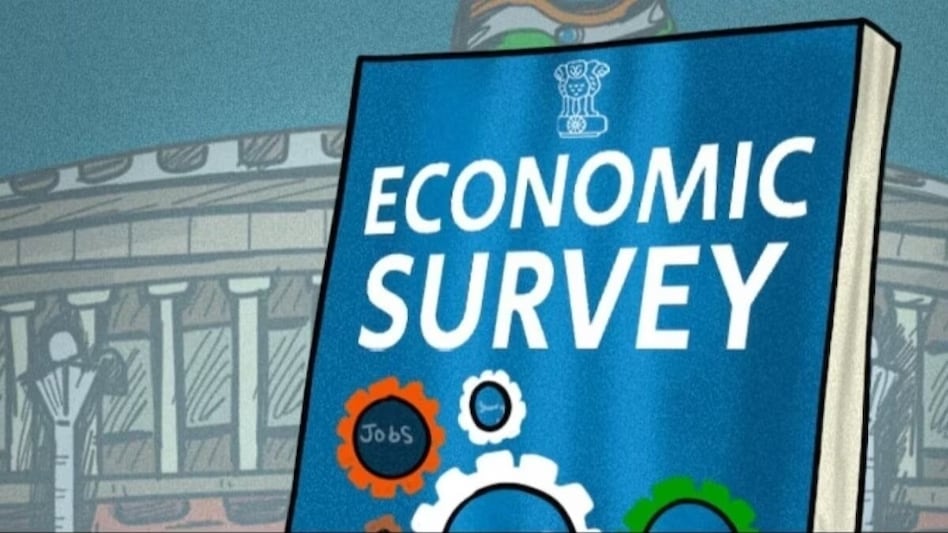
Released just before the Budget, the Economic Survey is the government’s economic report card—decoding growth trends, risks, and policy priorities that shape every major Budget decision.
- Jan 22, 2026,
- Updated Feb 1, 2026 11:42 AM IST
Budget 2026 | Union Finance Minister Nirmala Sitharaman’s presented her ninth consecutive Budget in the Parliament on February 1 2026. The Finance Minister emphasised that the government has consistently chosen reform over rhetoric and addressed global uncertainty.
What is the Economic Survey?
The Economic Survey is an annual document prepared by the Department of Economic Affairs under the Ministry of Finance and presented in Parliament a day before the Budget. Unlike the Budget, it does not announce schemes or taxes. Instead, it provides a detailed assessment of the economy and offers policy insights that guide Budget decisions.
What does the Economic Survey include?
- State of the Economy: It presents a comprehensive review of India’s macroeconomic performance—GDP growth, inflation, fiscal deficit, current account balance, and employment trends. This section explains how the economy performed in the past year and sets expectations for the next.
- Sector-wise Analysis: The Survey breaks down performance across key sectors such as agriculture, industry, manufacturing, services, and infrastructure, highlighting growth drivers and bottlenecks in each.
- Thematic Chapters: Each Economic Survey focuses on a few core themes—such as capital expenditure, productivity, climate action, digitalisation, or human capital. These chapters often signal the government’s long-term policy thinking.
- External Sector Review: It examines exports, imports, foreign exchange reserves, global risks, and India’s position in the world economy—crucial in an uncertain global environment.
- Social Sector and Human Development: Education, healthcare, poverty reduction, gender inclusion, and employment trends are analysed to assess the quality of growth, not just its speed.
- Policy Recommendations: The Survey offers evidence-based policy suggestions, which often translate into Budget proposals or future reforms.
Why the Economic Survey matters?
The Economic Survey acts as the intellectual foundation of the Budget. Its growth projections, reform priorities, and risk assessment influence tax policy, spending choices, and fiscal strategy in Budget 2026.
Budget 2026 | Union Finance Minister Nirmala Sitharaman’s presented her ninth consecutive Budget in the Parliament on February 1 2026. The Finance Minister emphasised that the government has consistently chosen reform over rhetoric and addressed global uncertainty.
What is the Economic Survey?
The Economic Survey is an annual document prepared by the Department of Economic Affairs under the Ministry of Finance and presented in Parliament a day before the Budget. Unlike the Budget, it does not announce schemes or taxes. Instead, it provides a detailed assessment of the economy and offers policy insights that guide Budget decisions.
What does the Economic Survey include?
- State of the Economy: It presents a comprehensive review of India’s macroeconomic performance—GDP growth, inflation, fiscal deficit, current account balance, and employment trends. This section explains how the economy performed in the past year and sets expectations for the next.
- Sector-wise Analysis: The Survey breaks down performance across key sectors such as agriculture, industry, manufacturing, services, and infrastructure, highlighting growth drivers and bottlenecks in each.
- Thematic Chapters: Each Economic Survey focuses on a few core themes—such as capital expenditure, productivity, climate action, digitalisation, or human capital. These chapters often signal the government’s long-term policy thinking.
- External Sector Review: It examines exports, imports, foreign exchange reserves, global risks, and India’s position in the world economy—crucial in an uncertain global environment.
- Social Sector and Human Development: Education, healthcare, poverty reduction, gender inclusion, and employment trends are analysed to assess the quality of growth, not just its speed.
- Policy Recommendations: The Survey offers evidence-based policy suggestions, which often translate into Budget proposals or future reforms.
Why the Economic Survey matters?
The Economic Survey acts as the intellectual foundation of the Budget. Its growth projections, reform priorities, and risk assessment influence tax policy, spending choices, and fiscal strategy in Budget 2026.