
Setting the stage for Budget 2024-25
India is on a high growth path. The next FY will be crucial to maintain and up the growth trajectory built so far. It will be equally vital to undertake decisive measures so that India’s economic position is strengthened further for achieving $5 trillion economy at the earliest.
- Feb 1, 2024,
- Updated Feb 1, 2024 8:04 AM IST
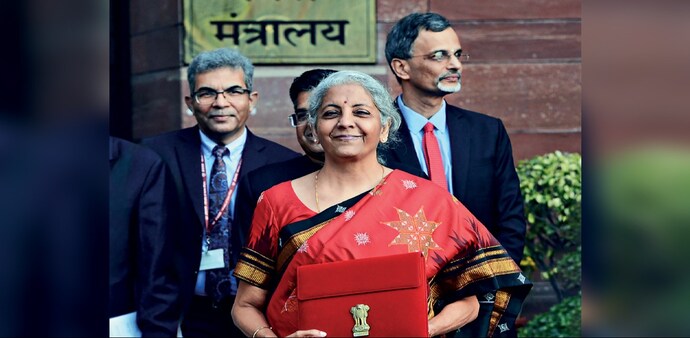
India prepares for interim budget on February 1, 2024. Anticipation is building around faster economic growth and skillful fiscal balancing. Existing schemes would certainly demand priority, real opportunity lies in July 2024 when the full budget is presented.
India is on a high growth path. The next FY will be crucial to maintain and up the growth trajectory built so far. It will be equally vital to undertake decisive measures so that India’s economic position is strengthened further for achieving $5 trillion economy at the earliest.
Boosting consumption
India’s private final consumption is about 61% of the GDP. Growth in that has been only 4.4% in the current FY. This is lowest since FY2003. Key reason for the slowdown is low rural demand. Signs of its improvement are there, but more attention is required. Putting more money in the hands of rural folks will be a clear agenda. That may need allocating more money in MNREGA. But, that itself will not be sustainable or fundamental. Boosting agriculture productivity, reducing input cost, focusing on increasing yields, diversifying to higher value crops, improving value chains to reduce marketing costs and better rural connectivity will be crucial policy measures with clear outcome attention. Embracing digital farming, including smart irrigation systems, can optimize water usage and reduce the risk of crop loss, particularly since climate change is staring at us. Efficiency attention can help cut down farm subsidy, currently at 2% of India's GDP.
Urban consumption has so far supported the growth, presently at 7.4%. This is three-year high. Per-capita urban consumption is about double the per-capita consumption in rural areas. So, any lag or slowdown in rural consumption, despite budgetary push, will require to be offset by urban consumption growth. Hence, this would require creating opportunities to spend more, largely on capital items such as housing, computer, and other goods. Government can bring this by improving the new tax regime, which is somewhat restrictive at present, by introducing important deductions such as home loan interest.
Continued attention on infra spending
GDP growth in the current FY has been led by 9.3% growth in gross fixed capital formation. This has largely been due to increased infrastructure spending, with focus on transport connectivity such as roads, railways, and metros. The present budgetary allocation (33%) should thus continue; in absolute numbers it will go up given that the size of budget normally goes up by 10%, as this has created significant economic stimulus (new projects have multiplier effect of about 3.5), compared to other forms of spending.
Government spending capacity is finite, and so a shift towards more private sector involvement (currently at 85:15 ratio) is essential for augmentation and acceleration of infra development. Bold measures, like bringing tax consolidation method used in many countries (Malaysia, for example), can be employed to incentivize private sector participation, albeit with anti-abuse provisions. India also needs to move away from carbon-heavy infrastructure, given its commitment to climate goals. Sectors such as ports, inland waterways, and digital infrastructure will require special attention.
Urban development of tier 2 and tier 3 cities should be an area of special attention. This FY, an allocation of Rs. 10,000 crores were made, but so far only Rs. 280 crores were spent. As part of Viksit Bharat strategy, projects based on smart initiatives such as IoT, AI and GIS can be undertaken.
Incentivizing R&D and Innovation
R&D and innovation has been a clear policy attention for the government, and it allocated Rs. 50,000 crores for creating National Research Foundation. However, the allocation from the fund is yet to take off. Inclusion of private sector for R&D and innovation is key. Most of the countries have tax deduction higher than 100% for R&D and innovation. India reduced it some years ago to 100%. It is important to bring private sector with a higher deduction than 100%, at par with other countries. This incentive should be focused on outcome, and with anti-abuse provisions.
Boosting export growth
Service exports are performing well, on the back of 6% growth in Global In-house Centers. Merchandise exports has, however, been a major concern for the government. CSO estimates that net exports growth was (-)8.2% over last FY period, creating a drag of 144.2% on GDP growth as compared to 79.7% last FY. Enhancing India's Global Value Chain output, currently at 3.17%, is important. PLI schemes, Rs.1.97 trillion for 14 sectors, is a positive measure, but requires a revisit as the total spend so far is less than Rs.4,000 crores, largely claimed by mobile manufacturers. So, a revisit is crucial. Another step will be putting in place a market-specific strategy. India's exports to major markets, particularly to the US, is much less than Vietnam and Indonesia. Land allocation for manufacturing is important, and if we want to perform better than Vietnam (land reforms there are now underway), this should be a clear agenda along with the states.
There can certainly be more suggestions. Expectations for the government to stay on the fiscal consolidation and avoid populist spending will be a key aspect going forward as it is time to use the tax revenues (buoyancy 1.2) gainfully.
India prepares for interim budget on February 1, 2024. Anticipation is building around faster economic growth and skillful fiscal balancing. Existing schemes would certainly demand priority, real opportunity lies in July 2024 when the full budget is presented.
India is on a high growth path. The next FY will be crucial to maintain and up the growth trajectory built so far. It will be equally vital to undertake decisive measures so that India’s economic position is strengthened further for achieving $5 trillion economy at the earliest.
Boosting consumption
India’s private final consumption is about 61% of the GDP. Growth in that has been only 4.4% in the current FY. This is lowest since FY2003. Key reason for the slowdown is low rural demand. Signs of its improvement are there, but more attention is required. Putting more money in the hands of rural folks will be a clear agenda. That may need allocating more money in MNREGA. But, that itself will not be sustainable or fundamental. Boosting agriculture productivity, reducing input cost, focusing on increasing yields, diversifying to higher value crops, improving value chains to reduce marketing costs and better rural connectivity will be crucial policy measures with clear outcome attention. Embracing digital farming, including smart irrigation systems, can optimize water usage and reduce the risk of crop loss, particularly since climate change is staring at us. Efficiency attention can help cut down farm subsidy, currently at 2% of India's GDP.
Urban consumption has so far supported the growth, presently at 7.4%. This is three-year high. Per-capita urban consumption is about double the per-capita consumption in rural areas. So, any lag or slowdown in rural consumption, despite budgetary push, will require to be offset by urban consumption growth. Hence, this would require creating opportunities to spend more, largely on capital items such as housing, computer, and other goods. Government can bring this by improving the new tax regime, which is somewhat restrictive at present, by introducing important deductions such as home loan interest.
Continued attention on infra spending
GDP growth in the current FY has been led by 9.3% growth in gross fixed capital formation. This has largely been due to increased infrastructure spending, with focus on transport connectivity such as roads, railways, and metros. The present budgetary allocation (33%) should thus continue; in absolute numbers it will go up given that the size of budget normally goes up by 10%, as this has created significant economic stimulus (new projects have multiplier effect of about 3.5), compared to other forms of spending.
Government spending capacity is finite, and so a shift towards more private sector involvement (currently at 85:15 ratio) is essential for augmentation and acceleration of infra development. Bold measures, like bringing tax consolidation method used in many countries (Malaysia, for example), can be employed to incentivize private sector participation, albeit with anti-abuse provisions. India also needs to move away from carbon-heavy infrastructure, given its commitment to climate goals. Sectors such as ports, inland waterways, and digital infrastructure will require special attention.
Urban development of tier 2 and tier 3 cities should be an area of special attention. This FY, an allocation of Rs. 10,000 crores were made, but so far only Rs. 280 crores were spent. As part of Viksit Bharat strategy, projects based on smart initiatives such as IoT, AI and GIS can be undertaken.
Incentivizing R&D and Innovation
R&D and innovation has been a clear policy attention for the government, and it allocated Rs. 50,000 crores for creating National Research Foundation. However, the allocation from the fund is yet to take off. Inclusion of private sector for R&D and innovation is key. Most of the countries have tax deduction higher than 100% for R&D and innovation. India reduced it some years ago to 100%. It is important to bring private sector with a higher deduction than 100%, at par with other countries. This incentive should be focused on outcome, and with anti-abuse provisions.
Boosting export growth
Service exports are performing well, on the back of 6% growth in Global In-house Centers. Merchandise exports has, however, been a major concern for the government. CSO estimates that net exports growth was (-)8.2% over last FY period, creating a drag of 144.2% on GDP growth as compared to 79.7% last FY. Enhancing India's Global Value Chain output, currently at 3.17%, is important. PLI schemes, Rs.1.97 trillion for 14 sectors, is a positive measure, but requires a revisit as the total spend so far is less than Rs.4,000 crores, largely claimed by mobile manufacturers. So, a revisit is crucial. Another step will be putting in place a market-specific strategy. India's exports to major markets, particularly to the US, is much less than Vietnam and Indonesia. Land allocation for manufacturing is important, and if we want to perform better than Vietnam (land reforms there are now underway), this should be a clear agenda along with the states.
There can certainly be more suggestions. Expectations for the government to stay on the fiscal consolidation and avoid populist spending will be a key aspect going forward as it is time to use the tax revenues (buoyancy 1.2) gainfully.