
Union Budget 2024: Why it's time for Nirmala Sitharaman to put more money in your hands
Consumption provides a greater trickle-down effect - increased consumption leads to increased demand for goods and services, which in turn leads to more jobs and vibrant economic activity.
- Jul 18, 2024,
- Updated Jul 19, 2024 11:52 AM IST
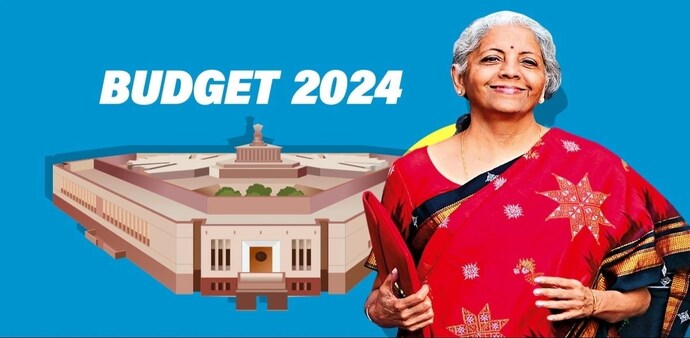
The Union Budget 2024 is around the corner. While the budget in recent years has largely been a non-event, except for the excitement around direct tax rates, this year promises to be different. The Finance Minister is likely to reveal the direction to achieve the goal of ‘Viksit Bharat’. As long-term plans are laid out, quick solutions to address the much-talked-about unemployment and rural distress need to be prioritized.
Growth in the last few years has been driven by increased infrastructure spending, from roads to rural houses to railways. It is now time for budget provisions to support consumption-led growth. The rural consumption CAGR from 2004-05 to 2011-12 was 13.8%, and the urban consumption during the same period was 13.2%. Conversely, rural consumption CAGR from 2011-12 to 2022-23 was 8.4%, while urban consumption was 7.8% (Source: Government of India Household Consumption Expenditure Survey: 2022-23). While these numbers are not inflation-adjusted, it is evident that consumption growth was higher between 2004-05 and 2011-12 compared to a decade later. This provided stability to the economy, with unemployment and rural distress not as ubiquitous (unemployment rate has risen from 5.5% in 2014 to 8% at present, Source: CMIE). This is despite the government at the time facing multiple issues like macro-economic stressors and poor bank health.
Consumption provides a greater trickle-down effect - increased consumption leads to increased demand for goods and services, which in turn leads to more jobs and vibrant economic activity. This sets up a virtuous cycle with greater participation in economic growth from the general population. What measures can the government implement in the budget to boost consumption? Quite simply, the government needs to put more money in the hands of consumers. This could be through tax cuts, increased allocation to MNREGA, an increase in MSP, or direct cash transfers. While these measures are easy to implement and will give a short-term boost to consumption, they are not sustainable in the long term from a fiscal prudence point of view. The long-term solution is to work on creating more jobs - low unemployment is the only solution to attaining sustained and inclusive growth.
While one can write a separate article on the multiple ways to create jobs, here are a couple of opportunities the government can implement to achieve quick results:
Immediately bridge the demand-supply gap where employers are not able to find employees for vacant jobs through the revival of Employment Exchanges. Given their wide geographical spread and by leveraging technology and active marketing, Employment Exchanges can bridge the demand-supply gap. For example, a situation like the Tirupur Knits industry not being able to fill 150K vacant worker jobs could be resolved with an Employment Exchange connecting potential employers and employees.
Replicate the ITI model and set up institutes to train workers in labor-intensive industries. Two industries which are labor-intensive and provide opportunities for large-scale job creation are the textile and healthcare industries. The textile industry ($165B in size) currently employs 45 million directly and 60 million indirectly. The employment potential of the textile industry is huge, given that the industry is expected to more than double to $350B by 2030 due to the government’s goals to double exports and an estimated 10% CAGR for the domestic market (Source: FICCI-Wazir report). Similarly, the healthcare industry is expected to see a significant rise in jobs given the ambitious initiative of health for everyone with Jan Arogya Yojana. Both textile and healthcare industries will need large-scale upskilling, which in turn requires a huge outlay that should not be left to the private sector. By replicating the ITI model, the government can set up institutes to train textile and healthcare workers, thereby creating a pool of trained workers ready to be employed. These are only two sample sectors, but many others, like retail, including gig workers, can further give an impetus to job creation for low-skilled and semi-skilled workers. This, combined with the government’s initiatives to develop other manufacturing sectors and the revival of IT services with mushrooming Global Capability Centers (GCC), can kickstart a cycle of employment opportunities for skilled workers and professionals, similar to the IT services boom of the early 2000s. These measures can effectively put an end to the debate on whether India can create 12 million jobs every year.
Given all its merits, consumption-led growth measures require funding. Tax buoyancy and renewed public sector privatization efforts can provide funding for large-scale upskilling initiatives. If there is still a shortfall, the Finance Minister should not hesitate to consider marginal cuts in allocation to other budget heads like infrastructure and railways, particularly railways which saw a 48% increase in budget allocation in the 23-24 budget compared to 22-23.
We look forward to budget provisions that will kickstart the virtuous cycle of consumption-led growth, leading to more jobs, leading to a further increase in consumption, and ushering in Amrit Kaal for India.Views expressed do not reflect that of BT
The Union Budget 2024 is around the corner. While the budget in recent years has largely been a non-event, except for the excitement around direct tax rates, this year promises to be different. The Finance Minister is likely to reveal the direction to achieve the goal of ‘Viksit Bharat’. As long-term plans are laid out, quick solutions to address the much-talked-about unemployment and rural distress need to be prioritized.
Growth in the last few years has been driven by increased infrastructure spending, from roads to rural houses to railways. It is now time for budget provisions to support consumption-led growth. The rural consumption CAGR from 2004-05 to 2011-12 was 13.8%, and the urban consumption during the same period was 13.2%. Conversely, rural consumption CAGR from 2011-12 to 2022-23 was 8.4%, while urban consumption was 7.8% (Source: Government of India Household Consumption Expenditure Survey: 2022-23). While these numbers are not inflation-adjusted, it is evident that consumption growth was higher between 2004-05 and 2011-12 compared to a decade later. This provided stability to the economy, with unemployment and rural distress not as ubiquitous (unemployment rate has risen from 5.5% in 2014 to 8% at present, Source: CMIE). This is despite the government at the time facing multiple issues like macro-economic stressors and poor bank health.
Consumption provides a greater trickle-down effect - increased consumption leads to increased demand for goods and services, which in turn leads to more jobs and vibrant economic activity. This sets up a virtuous cycle with greater participation in economic growth from the general population. What measures can the government implement in the budget to boost consumption? Quite simply, the government needs to put more money in the hands of consumers. This could be through tax cuts, increased allocation to MNREGA, an increase in MSP, or direct cash transfers. While these measures are easy to implement and will give a short-term boost to consumption, they are not sustainable in the long term from a fiscal prudence point of view. The long-term solution is to work on creating more jobs - low unemployment is the only solution to attaining sustained and inclusive growth.
While one can write a separate article on the multiple ways to create jobs, here are a couple of opportunities the government can implement to achieve quick results:
Immediately bridge the demand-supply gap where employers are not able to find employees for vacant jobs through the revival of Employment Exchanges. Given their wide geographical spread and by leveraging technology and active marketing, Employment Exchanges can bridge the demand-supply gap. For example, a situation like the Tirupur Knits industry not being able to fill 150K vacant worker jobs could be resolved with an Employment Exchange connecting potential employers and employees.
Replicate the ITI model and set up institutes to train workers in labor-intensive industries. Two industries which are labor-intensive and provide opportunities for large-scale job creation are the textile and healthcare industries. The textile industry ($165B in size) currently employs 45 million directly and 60 million indirectly. The employment potential of the textile industry is huge, given that the industry is expected to more than double to $350B by 2030 due to the government’s goals to double exports and an estimated 10% CAGR for the domestic market (Source: FICCI-Wazir report). Similarly, the healthcare industry is expected to see a significant rise in jobs given the ambitious initiative of health for everyone with Jan Arogya Yojana. Both textile and healthcare industries will need large-scale upskilling, which in turn requires a huge outlay that should not be left to the private sector. By replicating the ITI model, the government can set up institutes to train textile and healthcare workers, thereby creating a pool of trained workers ready to be employed. These are only two sample sectors, but many others, like retail, including gig workers, can further give an impetus to job creation for low-skilled and semi-skilled workers. This, combined with the government’s initiatives to develop other manufacturing sectors and the revival of IT services with mushrooming Global Capability Centers (GCC), can kickstart a cycle of employment opportunities for skilled workers and professionals, similar to the IT services boom of the early 2000s. These measures can effectively put an end to the debate on whether India can create 12 million jobs every year.
Given all its merits, consumption-led growth measures require funding. Tax buoyancy and renewed public sector privatization efforts can provide funding for large-scale upskilling initiatives. If there is still a shortfall, the Finance Minister should not hesitate to consider marginal cuts in allocation to other budget heads like infrastructure and railways, particularly railways which saw a 48% increase in budget allocation in the 23-24 budget compared to 22-23.
We look forward to budget provisions that will kickstart the virtuous cycle of consumption-led growth, leading to more jobs, leading to a further increase in consumption, and ushering in Amrit Kaal for India.Views expressed do not reflect that of BT