
Union Budget 2026 : 2020 — The year the Economic Survey served up ‘Thalinomics’
Union Budget 2026: In order to inform the general public about changes in food and beverage prices, the Centre used the ubiquitous 'thali'.
- Jan 27, 2026,
- Updated Feb 1, 2026 11:57 AM IST
Budget 2026 | Union Finance Minister Nirmala Sitharaman’s presented her ninth consecutive Budget in the Parliament on February 1 2026. The Finance Minister emphasised that the government has consistently chosen reform over rhetoric and addressed global uncertainty.
With budget being presented discussions around inflation, food prices, and cost of living once again take centre stage. While headline numbers and indices often dominate economic debates, translating these trends into something the common citizen can relate to has always been a challenge.
It was this gap that the Economic Survey 2020 attempted to bridge through an innovative concept called ‘Thalinomics’—using the price of an everyday Indian meal to explain how food affordability has changed over time.
Chief Economic Advisor Krishnamurthy Subramanian added a flavourful twist to the Economic Survey 2020, presented ahead of the Union Budget, by introducing the concept of ‘Thalinomics’—India’s unique take on measuring consumption and affordability through a common plate of food.
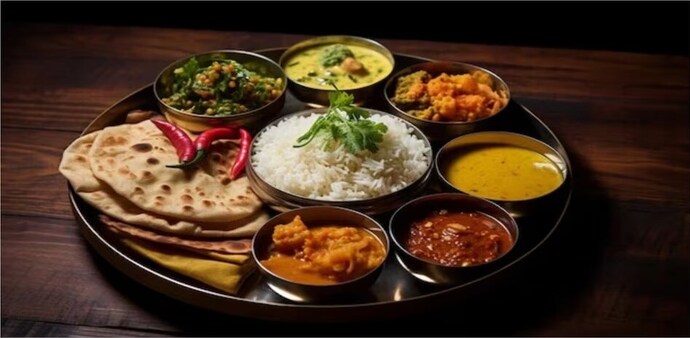
To help the public better understand changes in food and beverage prices, the government chose the ubiquitous Indian thali as a relatable economic indicator. The idea was simple yet powerful: to assess whether a standard thali had become more or less affordable for the average Indian over time. This analysis formed the basis of a 27-page chapter titled “Thalinomics: The Economics of a Plate of Food in India.”
Using the National Institute of Nutrition’s dietary guidelines, economists calculated the cost of a nutritious thali and compared it with price data from the Consumer Price Index for Industrial Workers (CPI-IW). The study covered around 80 centres across 25 states and Union Territories, tracking data from April 2006 to October 2019.
The findings revealed a clear improvement in affordability. For a vegetarian thali, the survey found that in 2019–20 (April to October), an individual needed to spend about 50 per cent of their daily wage to buy the same quantity of thalis that would have cost nearly 70 per cent of daily wages in 2006–07 for a household of five. Non-vegetarian thalis also became more affordable, with the wage share required declining from around 93 per cent to about 79 per cent over the same period.
Regionally, Jharkhand emerged as the most affordable state in 2019–20, where two vegetarian thalis for a family of five cost just around 25 per cent of an employee’s daily wage.
The survey also identified 2015–16 as a turning point in thali price dynamics. It attributed the shift to a series of agricultural and market reforms introduced after 2014–15, aimed at boosting farm productivity and improving efficiency and transparency in agricultural markets. These measures, the survey noted, played a key role in better price discovery and improved food affordability.
Budget 2026 | Union Finance Minister Nirmala Sitharaman’s presented her ninth consecutive Budget in the Parliament on February 1 2026. The Finance Minister emphasised that the government has consistently chosen reform over rhetoric and addressed global uncertainty.
With budget being presented discussions around inflation, food prices, and cost of living once again take centre stage. While headline numbers and indices often dominate economic debates, translating these trends into something the common citizen can relate to has always been a challenge.
It was this gap that the Economic Survey 2020 attempted to bridge through an innovative concept called ‘Thalinomics’—using the price of an everyday Indian meal to explain how food affordability has changed over time.
Chief Economic Advisor Krishnamurthy Subramanian added a flavourful twist to the Economic Survey 2020, presented ahead of the Union Budget, by introducing the concept of ‘Thalinomics’—India’s unique take on measuring consumption and affordability through a common plate of food.
To help the public better understand changes in food and beverage prices, the government chose the ubiquitous Indian thali as a relatable economic indicator. The idea was simple yet powerful: to assess whether a standard thali had become more or less affordable for the average Indian over time. This analysis formed the basis of a 27-page chapter titled “Thalinomics: The Economics of a Plate of Food in India.”
Using the National Institute of Nutrition’s dietary guidelines, economists calculated the cost of a nutritious thali and compared it with price data from the Consumer Price Index for Industrial Workers (CPI-IW). The study covered around 80 centres across 25 states and Union Territories, tracking data from April 2006 to October 2019.
The findings revealed a clear improvement in affordability. For a vegetarian thali, the survey found that in 2019–20 (April to October), an individual needed to spend about 50 per cent of their daily wage to buy the same quantity of thalis that would have cost nearly 70 per cent of daily wages in 2006–07 for a household of five. Non-vegetarian thalis also became more affordable, with the wage share required declining from around 93 per cent to about 79 per cent over the same period.
Regionally, Jharkhand emerged as the most affordable state in 2019–20, where two vegetarian thalis for a family of five cost just around 25 per cent of an employee’s daily wage.
The survey also identified 2015–16 as a turning point in thali price dynamics. It attributed the shift to a series of agricultural and market reforms introduced after 2014–15, aimed at boosting farm productivity and improving efficiency and transparency in agricultural markets. These measures, the survey noted, played a key role in better price discovery and improved food affordability.